
📑 Table of Contents ▶
- Korean Shrimp
- Korean Shrimp Delight
- Fundamentals
- Preparation/setup
- Mastering the Korean Shrimp Technique
- Technique
- Tips/tricks
- Perfecting and Troubleshooting Korean Shrimp
- Perfecting results
- Troubleshooting/variations
- Serving and Storing Your Korean Shrimp
- Serving/presentation
- Pairings/storage
- Conclusion
- FAQs – Korean Shrimp
Growing up by the sea, the scent of sizzling seafood was a staple in our household. One of my earliest memories involves the delightful aroma of Korean Shrimp wafting through the air, a dish my family would often prepare on weekends. The combination of spicy, sweet, and savory flavors enchanted me from the start.
Inspired by those memories, I’ve spent years perfecting my own version of Korean Shrimp. It’s a dish that captures both the essence of home and the vibrant flavors of Korean cuisine. The succulent shrimp, marinated in a blend of soy sauce, sesame oil, and gochujang, offers a taste that’s both nostalgic and exciting.
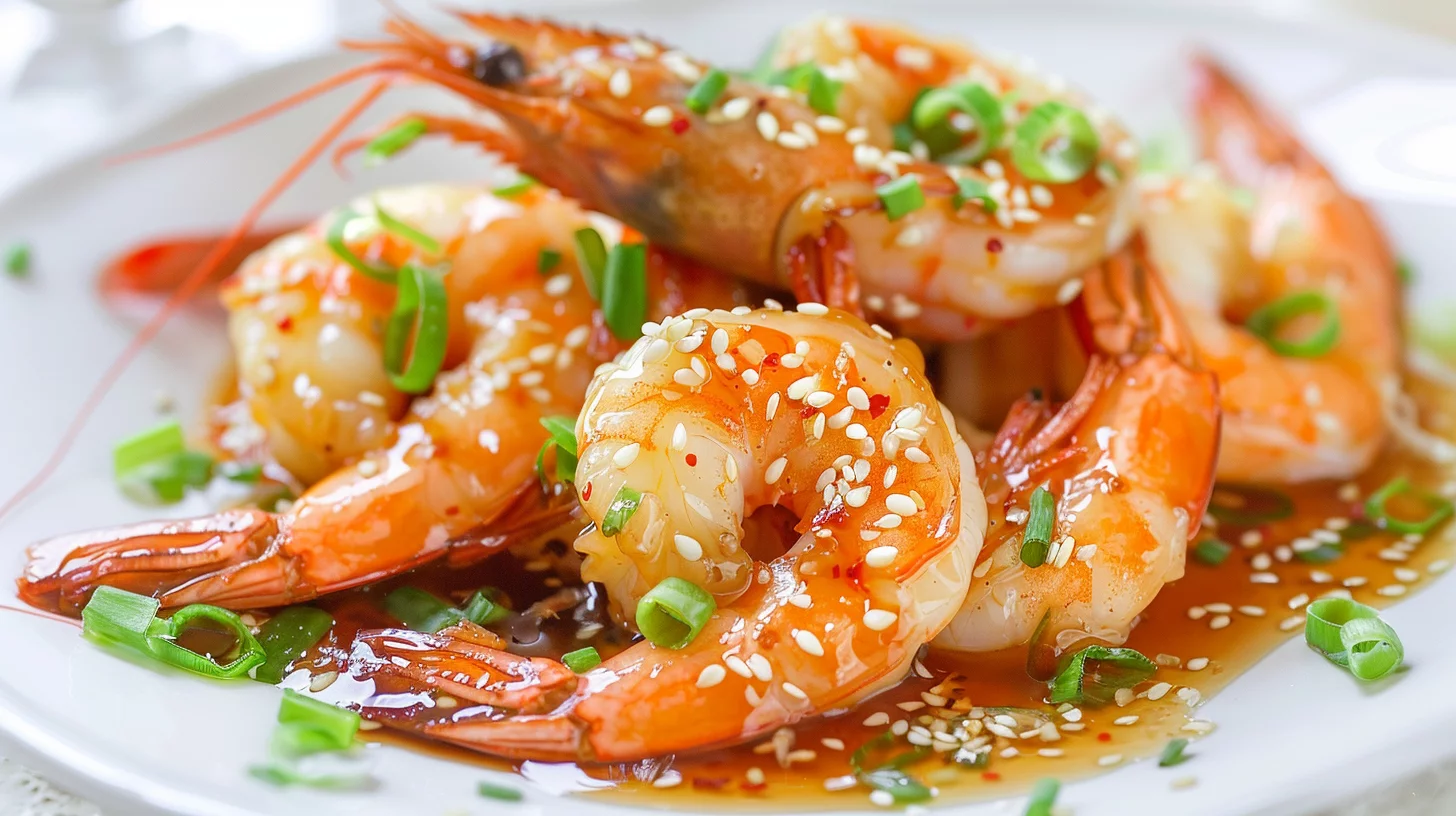
This Korean Shrimp recipe has become a favorite in my kitchen. It’s quick, it’s easy, and it brings back the joyful gatherings of my childhood. The shrimp, cooked to perfection with a sprinkle of sesame seeds and green onions, is a testament to the beauty of simple ingredients working in harmony.
Join me as we dive into the art of making Korean Shrimp, a dish that not only satisfies the palate but also tells a story of culinary heritage. Let’s explore how this flavorful seafood delight can become a staple in your home, too.
Print
Korean Shrimp
- Prep Time: 15 minutes
- Cook Time: 6 minutes
- Total Time: 21 minutes
- Yield: 4 servings
- Category: Main Course
- Method: Frying
- Cuisine: Asian
Description
Discover how to make delicious Korean shrimp with this easy recipe. Learn the secrets to perfecting this flavorful dish that will impress your taste buds!
Ingredients
- 1 pound (454 g) shrimp, peeled and deveined (450 grams)
- 2 tablespoons (30 ml) soy sauce (30 milliliters)
- 1 tablespoon (15 ml) sesame oil (15 milliliters)
- 1 tablespoon (15 ml) gochujang (15 grams)
- 1 tablespoon (15 ml) honey (15 grams)
- 2 cloves garlic, minced
- 1 teaspoon (5 ml) ginger, grated (2 grams)
- 4 green onions, chopped
- 1 tablespoon (15 ml) vegetable oil (15 milliliters)
- 1 teaspoon (5 ml) sesame seeds (2 grams)
- Salt, to taste
- Black pepper, to taste
Instructions
- In a bowl, combine soy sauce, sesame oil, gochujang, honey, minced garlic, and grated ginger.
- Mix well to create a marinade.
- Add the shrimp to the marinade and toss to coat evenly.
- Let the shrimp marinate for at least 15 minutes.
- Heat vegetable oil in a large skillet over medium-high heat.
- Add the marinated shrimp to the skillet in a single layer.
- Cook the shrimp for 2-3 minutes on one side without moving them.
- Flip the shrimp and cook for another 2-3 minutes until fully cooked and pink.
- Add chopped green onions to the skillet and stir to combine.
- Season with salt and black pepper to taste.
- Sprinkle sesame seeds over the shrimp before serving.
- Serve hot, garnished with additional green onions if desired.
Notes
- Marinate the shrimp for longer than 15 minutes for a richer flavor profile.
- Avoid overcooking the shrimp to maintain their tender texture.
- Adjust the gochujang amount to customize the spiciness of the dish.
Korean Shrimp Delight
Fundamentals
The secret to a delightful Korean Shrimp dish lies in the marinade. Soy sauce, sesame oil, and gochujang form the holy trinity of flavors that coat the shrimp. This combination ensures a balance of saltiness, nuttiness, and heat that is essential for an authentic taste.
Gochujang, a key ingredient, is a Korean red chili paste that adds depth and a subtle kick to the dish. Pairing it with honey introduces a sweet counterpoint, harmonizing with the spice. Minced garlic and grated ginger add aromatic notes, making the marinade complex yet approachable.
Preparation/setup
Start by gathering all your ingredients. Having everything prepped and ready ensures a smooth cooking process. Peel and devein the shrimp, ensuring they are clean and ready to absorb the delicious marinade.
Mix the marinade ingredients in a bowl. Once combined, add the shrimp, ensuring each piece is thoroughly coated. Let the shrimp marinate for at least 15 minutes, allowing the flavors to penetrate the surface. This step is crucial for achieving depth in taste.
Mastering the Korean Shrimp Technique
Technique
Cooking Korean Shrimp to perfection involves mastering the art of timing and heat. Heat vegetable oil in a large skillet over medium-high heat, ensuring it’s hot enough to sear the shrimp quickly. The goal is to achieve a slight caramelization while keeping the shrimp tender.
Place the marinated shrimp in the skillet in a single layer. Cook them for about 2-3 minutes on one side without moving them. This allows a crust to form, locking in the marinade’s flavors. Flip and cook for another 2-3 minutes until the shrimp turn a lovely pink.
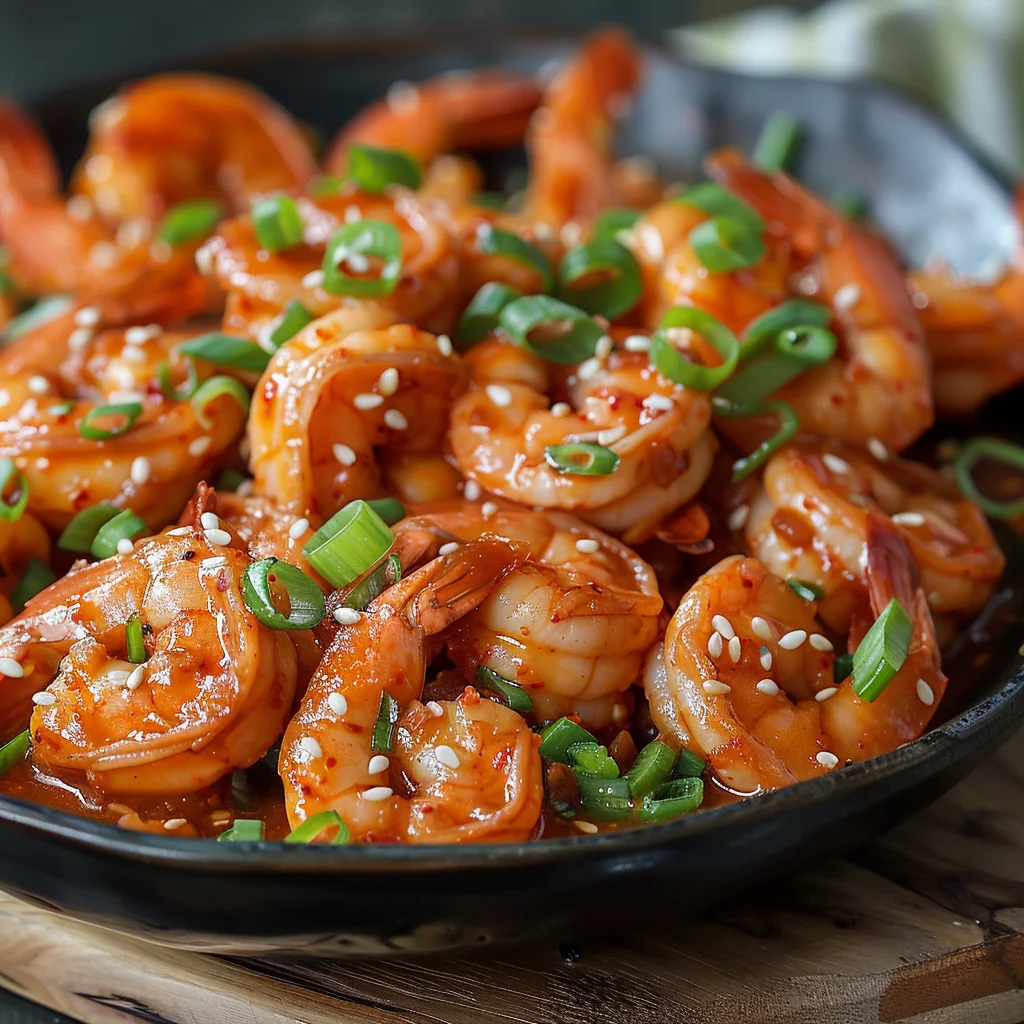
Korean Shrimp
Tips/tricks
For an even cook, ensure the shrimp are similar in size. If you prefer a bit more heat, increase the amount of gochujang or add a pinch of crushed red pepper flakes. Adjusting these elements can personalize the spice level to your liking.
Adding the green onions at the last minute preserves their freshness and adds a pop of color. For an added touch, sprinkle sesame seeds over the shrimp just before serving to enhance the nutty flavor.
Perfecting and Troubleshooting Korean Shrimp
Perfecting results
To perfect your Korean Shrimp, focus on the balance of flavors in the marinade. The soy sauce should not overpower the sweetness of the honey or the heat of the gochujang. Taste the marinade before adding the shrimp and adjust as needed.
Understand that shrimp cook quickly, and overcooking can lead to a rubbery texture. Keep an eye on the color change from gray to pink as an indicator of doneness. Use a timer to prevent overcooking, especially if you’re multitasking in the kitchen.
Troubleshooting/variations
Should you find the dish too spicy, lessen the gochujang or increase the honey slightly. If the shrimp lack flavor, consider extending the marination time. Variations can also include adding vegetables such as bell peppers or snap peas for added texture and nutrition.
For a different take, consider using the marinade for grilling shrimp. Check out this Honey Garlic Korean BBQ Grilled Shrimp recipe for inspiration.
Serving and Storing Your Korean Shrimp
Serving/presentation
Presentation can elevate the dining experience. Serve the Korean Shrimp hot, garnished with additional green onions for a fresh bite. Pair this dish with steamed rice or use it as a filling for tacos, as seen in Korean Shrimp Tacos.
The vibrant colors of the shrimp and green onions create an appealing visual contrast. Arranging them neatly on a platter adds a touch of sophistication, making it a perfect dish for entertaining.
Pairings/storage
For pairings, consider complementing the Korean Shrimp with a light salad or a side dish like Shrimp and Asparagus Stir Fry with Mushrooms. If storing leftovers, keep the shrimp in an airtight container in the refrigerator for up to two days. Reheat gently to preserve the texture.
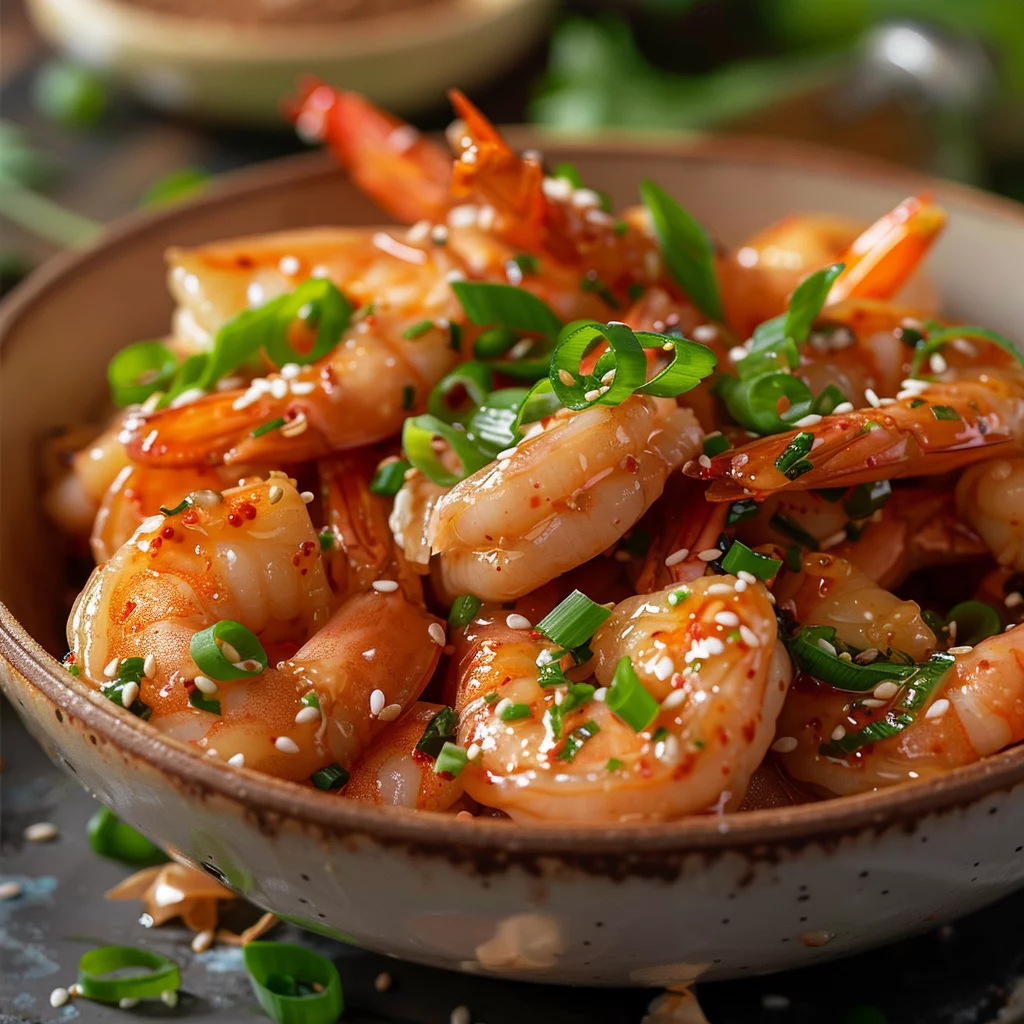
Korean Shrimp
For those exploring new flavors, the versatility of shrimp is showcased in recipes like Easy Korean Squid Stir Fry or Shrimp Dirty Rice, offering diverse culinary experiences.
Conclusion
Korean Shrimp is a dish that combines simplicity with rich flavors, making it a must-try for seafood enthusiasts. The marinade’s perfect balance of spicy, sweet, and savory brings out the best in the shrimp, ensuring a satisfying meal every time.
This recipe showcases the versatility of shrimp, allowing for creative adaptations and pairings. Whether served as a main dish or part of a larger spread, Korean Shrimp offers a delightful taste of Korean cuisine that can easily become a staple in your kitchen.
Explore the joy of cooking with shrimp through this recipe and others, such as the Creamy Gochujang Pasta with Shrimp, and discover the endless possibilities of seafood delights.
