
📑 Table of Contents ▶
- What Makes Thai Coconut Shrimp Curry Special
- Fundamentals
- Preparation/Setup
- Directions
- Capturing the Essence of Thai Coconut Shrimp Curry
- Technique
- Tips/Tricks
- Perfecting Your Thai Coconut Shrimp Curry
- Perfecting Results
- Troubleshooting/Variations
- Serving Your Thai Coconut Shrimp Curry
- Serving/Presentation
- Pairings/Storage
Thai Coconut Shrimp Curry
Shrimp always brings me back to sunny beach days, where the salty air mingles with the rich flavors of tropical cuisines. Thai coconut shrimp curry embodies that feeling perfectly, transporting you to a warm getaway right from your kitchen. The combination of fresh shrimp, aromatic spices, and creamy coconut milk creates a dish bursting with flavor, simplicity, and warmth.
Growing up, my family had a special affinity for seafood dishes, often gathering around the table to enjoy a hearty curry loaded with spices and textures. With every bite, the savory notes of coconut and the vibrant punch of curry always took me back to those shared moments of laughter and love. Now, I cherish recreating those memories through Thai coconut shrimp curry, allowing my loved ones to savor the comforting and exhilarating tastes that encapsulate seaside joy.
The allure of this dish stems not only from its delectable flavor but also from its quick preparation. In just a few steps, you can create an impressive meal that dazzles the taste buds and warms the soul. Dive into this delightful recipe and discover a way to bring the coastal charm to your dining table.
What Makes Thai Coconut Shrimp Curry Special
Fundamentals
At its core, Thai coconut shrimp curry showcases the perfect blend of sweet, spicy, and savory notes. The pairing of shrimp with coconut milk delivers a rich and creamy base, allowing the vibrant spices to shine. The use of fresh ingredients, like ginger, garlic, and bell pepper, enhances the dish, adding layers of flavor and texture.
The curry paste serves as the star of this dish, infusing it with aromatic spices that transport your taste buds straight to Thailand. Whether you’re cooking for a cozy weeknight dinner or a lively gathering, this recipe adapts beautifully to any occasion. The balance of flavors and textures offers comfort while tantalizing your palate with exciting seasonings.
Cooking with shrimp adds not only deliciousness but also a sense of elegance. The quick searing of shrimp gives it a delightful texture that complements the creamy curry base. The interplay between the sweet coconut milk and spicy curry paste creates a dynamic flavor experience that leaves everyone craving more.
Preparation/Setup
Before you get started, prepare your ingredients to ensure a smooth cooking process. Gather everything you’ll need, as timing can make all the difference in achieving a perfectly cooked shrimp. Chop the bell pepper, finely chop the shallot, and grate the ginger and garlic. This step establishes a strong foundation for your Thai coconut shrimp curry.
For the shrimp, combine the peeled and deveined pieces in a bowl with low sodium soy sauce, red pepper flakes, turmeric, garlic powder, and white pepper. This marination infuses the shrimp with flavor and creates a delicious depth to the dish. Set your seasoned shrimp aside while you focus on the rest of the preparation.
Having all your ingredients ready to go allows you to move swiftly through the cooking process. It prevents any last-minute scrambling and keeps your focus on developing the rich flavors of your Thai coconut shrimp curry.
Ingredients
- 1 pound shrimp (peeled and deveined)
- 1 tsp low sodium soy sauce
- ½ tsp red pepper flakes
- ½ tsp turmeric
- 1 tsp garlic powder
- ¼ tsp white pepper
- 1 tbsp vegetable oil
- 1 tbsp unsalted butter
- 1 bell pepper (sliced)
- 4 garlic cloves (grated)
- 1 tbsp freshly grated ginger
- 1 shallot (finely chopped)
- ½ cup chicken broth (or vegetable broth)
- 3 tbsp Thai red curry paste
- 2 tsp brown sugar
- ½ tsp turmeric
- ½ tsp ground cumin
- ½ tsp ground coriander
- ¼ tsp white pepper
- 2 tbsp low sodium soy sauce
- 1 tbsp fish sauce
- 1 can (14 oz/400 ml) unsweetened coconut milk (full fat)
- ½ lime (juiced)
- 1 tsp sriracha (optional)
- 1 handful of torn Thai basil
- Garnishes: scallions, fried onions, cilantro, chili pepper
Directions
Begin by getting your cooking space organized. It’s crucial to have all the ingredients ready before you heat anything. Combine the shrimp, soy sauce, red pepper flakes, turmeric, garlic powder, and white pepper in a bowl. Stir everything together, ensuring the shrimp is evenly coated. Set this bowl aside while you gather the rest of your ingredients.
Grate the ginger and garlic cloves, finely chop the shallot, and slice the bell pepper into thin strips. These aromatic veggies will add depth to your curry, contributing to its incredible flavor profile. Once prepped, you can heat the oil and butter in a large skillet over high heat.
When the oil shimmers, place the shrimp in a single layer. Sear the shrimp for one minute on each side until they turn pink and develop a golden crust. Then, remove them from the skillet and set aside. This quick cooking step keeps the shrimp tender and moist, making them the star of your curry.
In the same skillet, add the bell pepper. Sauté it for about five minutes until it begins to soften. Then add the grated garlic, ginger, and chopped shallot. Cook these fragrant ingredients together for about two minutes until everything smells amazing. Deglaze the pan with chicken broth, simmering for two more minutes while you scrape up the flavorful brown bits sticking to the bottom.
Stir in the Thai red curry paste, allowing it to incorporate into the sautéed vegetables. Add the brown sugar, turmeric, cumin, coriander, white pepper, soy sauce, and fish sauce, cooking for one minute while stirring frequently. The mixture should be aromatic and colorful.
Pour in the coconut milk and bring the combination to a gentle boil. Let it simmer for five minutes or until the sauce begins to thicken, creating a luscious texture for your dish. Finally, add the lime juice, sriracha, and torn Thai basil. Stir everything together, then toss in the shrimp, simmering for no longer than one minute to ensure the shrimp don’t overcook.
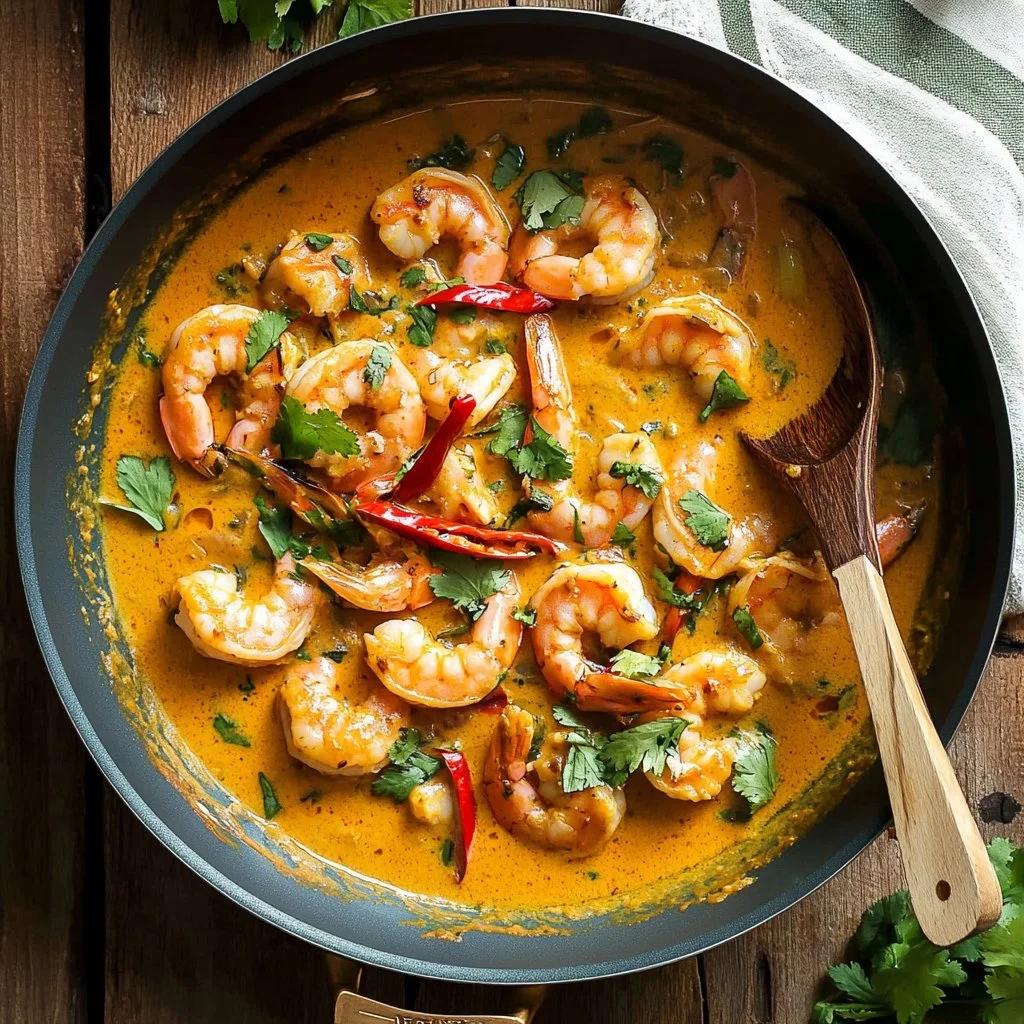
To serve, top your Thai coconut shrimp curry with fragrant cilantro leaves, crispy fried onions, and a splash of chili pepper for a bit of heat. This dish pairs perfectly with a crunchy cucumber salad and steaming rice.
Capturing the Essence of Thai Coconut Shrimp Curry
Technique
Achieving perfection with Thai coconut shrimp curry revolves around mastering a few key techniques. The searing of the shrimp ensures that you unlock the natural flavors while keeping it tender. Precision with timing is crucial; remember that shrimp cooks quickly, and overcooking can lead to a rubbery texture.
Shellfish, like shrimp, thrives on high heat. Start your cooking process with a hot skillet. This method allows for a quick caramelization of the shrimp, sending those delightful flavors into the air and enhancing the entire dish.
Tips/Tricks
-
Prep Aromatics in Advance: The success of your curry relies on properly prepped aromatics. Take the time to chop and grate before you start cooking. This effort pays off in the cooking process.
-
Adjust Spice Levels: Customize the heat level to your taste. For a milder corn, reduce the red pepper flakes or skip the sriracha. To ramp up the heat, consider adding a sliced fresh chili into the mix.
-
Ripen Your Sauce: If you want a thicker consistency, simmer the sauce longer. Conversely, add a splash of broth if it becomes too thick.
-
Fresh Herbs Matter: The use of fresh Thai basil elevates this dish, providing a burst of flavor. Don’t skip this step; the herbs contribute a fresh dimension to your curry.
Perfecting Your Thai Coconut Shrimp Curry
Perfecting Results
To refine your Thai coconut shrimp curry, consistency and flavor balance are vital. Taste the sauce before you add the shrimp; adjust the seasoning based on your preferences. You may want more lime juice for acidity or additional soy sauce for umami.
Keep in mind that coconut milk can vary in richness. Choosing full-fat coconut milk enhances the creaminess of your sauce, while light options yield different results. Keep this in mind when preparing your dish.
Consider garnishing with scallions or more fresh herbs to add an extra layer of flavor and visual appeal. These small touches make a big difference when it comes to presentation.
Troubleshooting/Variations
In case your curry doesn’t come out as you expected, don’t fret. Here are a few quick fixes:
-
Sauce Too Thin: If the sauce lacks thickness, continue to simmer it until it reaches a desirable consistency. Adding a bit more coconut milk can also provide richness and thickness.
-
Too Spicy: If the curry turns out too spicy, balance the heat by stirring in a bit of brown sugar or additional coconut milk. These elements introduce sweetness and help mellow the flavors.
-
Shrimp Overcooked: If your shrimp turns rubbery, be cautious in the future to monitor cooking times closely. Remember, shrimp only needs a minute or so to cook once added to the sauce.
-
Out of Ingredients: Don’t hesitate to experiment! Swap ingredients based on your pantry. You can replace shrimp with chicken or tofu while utilizing the same base flavors.
Serving Your Thai Coconut Shrimp Curry
Serving/Presentation
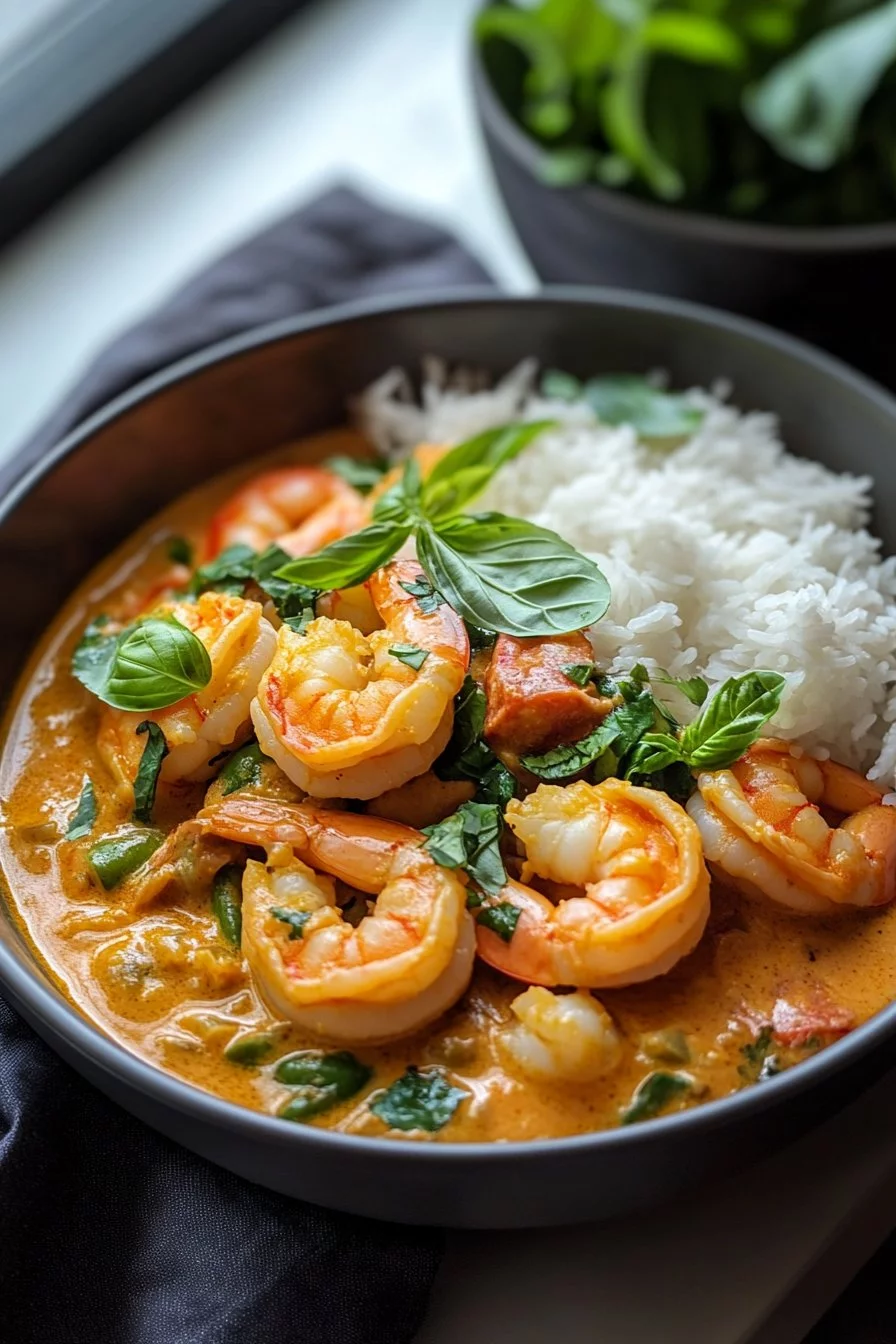
The art of serving Thai coconut shrimp curry comes down to presentation. Consider using a shallow bowl or plate where the vibrant colors of the shrimp and creamy sauce can shine. Garnishing goes a long way in elevating your dish. Fresh cilantro leaves, fried onions, and sprigs of Thai basil create an inviting and colorful platter.
You can serve your curry with a side of warm steamed rice or rice noodles. Both options complement the rich sauce beautifully, ensuring you soak up every drop of flavor.
Pairings/Storage
While the flavors of Thai coconut shrimp curry tantalize the taste buds on their own, consider pairing it with a crunchy cucumber salad to balance the richness. The coolness of the salad refreshes the palate, creating a harmonious dining experience.
When it comes to leftovers, store any uneaten curry in an airtight container in the refrigerator for up to three days. Reheat gently on the stovetop, adding a splash of coconut milk or broth to refresh the sauce’s consistency.
If freezing, portion the curry into freezer-safe bags or containers for easy future meals. This way, you can enjoy the lovely aroma and delightful flavor of Thai coconut shrimp curry at another time without the hassle of cooking from scratch.
Enjoy your journey into the world of Thai coconut shrimp curry. Each bite reflects the vibrant colors and flavors associated with coastal cuisine, leaving a lasting impression on your culinary repertoire.
Print
Thai Coconut Shrimp Curry
- Prep Time: 15 minutes
- Cook Time: 20 minutes
- Total Time: 35 minutes
- Yield: 4 servings
- Category: Main Course
- Method: Sautéing
- Cuisine: Thai
- Diet: Seafood
Description
A delightful Thai coconut shrimp curry that combines fresh shrimp with aromatic spices and creamy coconut milk, perfect for bringing coastal flavors to your kitchen.
Ingredients
- 1 pound shrimp (peeled and deveined)
- 1 tsp low sodium soy sauce
- ½ tsp red pepper flakes
- ½ tsp turmeric
- 1 tsp garlic powder
- ¼ tsp white pepper
- 1 tbsp vegetable oil
- 1 tbsp unsalted butter
- 1 bell pepper (sliced)
- 4 garlic cloves (grated)
- 1 tbsp freshly grated ginger
- 1 shallot (finely chopped)
- ½ cup chicken broth (or vegetable broth)
- 3 tbsp Thai red curry paste
- 2 tsp brown sugar
- ½ tsp turmeric
- ½ tsp ground cumin
- ½ tsp ground coriander
- ¼ tsp white pepper
- 2 tbsp low sodium soy sauce
- 1 tbsp fish sauce
- 1 can (14 oz/400 ml) unsweetened coconut milk (full fat)
- ½ lime (juiced)
- 1 tsp sriracha (optional)
- 1 handful of torn Thai basil
- Garnishes: scallions, fried onions, cilantro, chili pepper
Instructions
- Prepare ingredients: Combine shrimp with soy sauce, red pepper flakes, turmeric, garlic powder, and white pepper in a bowl; set aside.
- Grate ginger and garlic, finely chop shallot, and slice bell pepper.
- Heat oil and butter in a large skillet over high heat.
- Sear shrimp for 1 minute on each side; remove from skillet and set aside.
- Sauté bell pepper for 5 minutes; add garlic, ginger, and shallot, and cook for 2 minutes.
- Deglaze the pan with chicken broth, simmer for 2 minutes.
- Add Thai red curry paste, brown sugar, turmeric, cumin, coriander, white pepper, soy sauce, and fish sauce; cook for 1 minute.
- Pour in coconut milk and bring to a gentle boil; simmer for 5 minutes.
- Add lime juice, sriracha, and torn Thai basil, then return shrimp to the skillet, simmering for 1 minute.
- Serve with garnishes of cilantro, fried onions, and chili pepper.
Notes
Adjust spice levels by modifying the amount of red pepper flakes and sriracha. Pairs well with rice or noodles.
