
📑 Table of Contents ▶
- Fundamentals
- Preparation/setup
- Directions
- Elevating Your Halibut with White Beans
- Technique
- Tips and Tricks
- Perfecting Your Results with Halibut and White Beans
- Perfecting Results
- Troubleshooting and Variations
- Serving and Storing Pan-Seared Halibut with White Beans
- Serving and Presentation
- Pairings and Storage
Pan Seared Halibut with White Beans
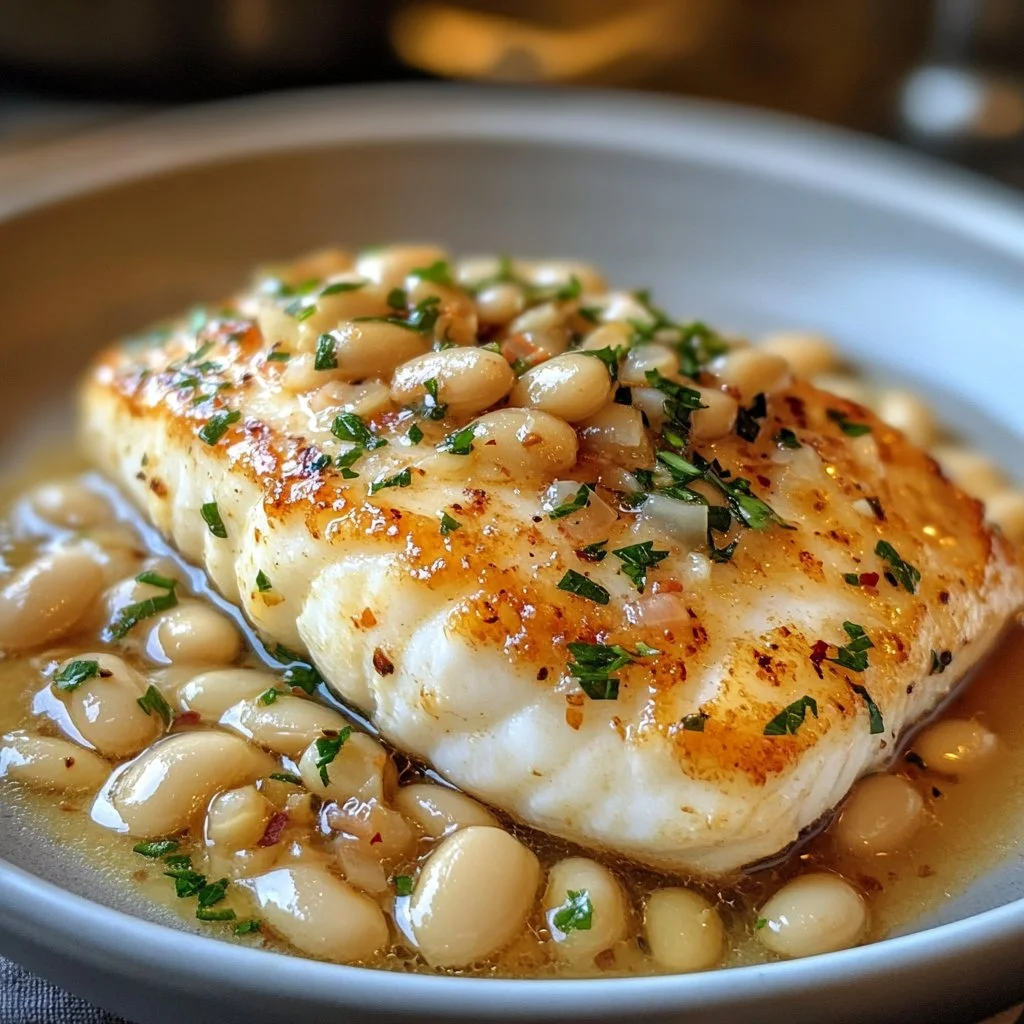
Seafood takes me back to my childhood by the coast, where every meal featured the freshest catch of the day. Those sun-soaked days spent by the water inspired a deep love for dishes like pan-seared halibut. The delicate flesh of halibut, paired with creamy white beans, creates a harmony that speaks to the heart of coastal cooking.
Over the years, my passion for seafood has led to countless recipes that combine simple ingredients to create delightful meals. This dish shines brightly with its vibrant flavors and straightforward preparation. The halibut fillets, encased in a rich layer of garlic and olive oil, dance beautifully with the creamy cannellini beans and fresh spinach. Each bite bursts with the essence of the sea and the garden.
There’s a magic in cooking halibut that transforms dinner into a special occasion. The combination of refreshing lemon zest and hearty beans makes it a complete meal, perfect for weekday dinners or weekend gatherings. Let’s delve into this delectable recipe that highlights the beauty of seafood cooking.
Pan Seared Halibut with White Beans
Fundamentals
To make pan-seared halibut with white beans, understanding some fundamentals is essential. Halibut shines as a protein source that’s not only tasty but also rich in omega-3 fatty acids. A fillet at least one inch thick ensures even cooking, giving you a crispy exterior while keeping the inside moist and flaky.
Pairing halibut with white beans offers a balance of flavors and textures. Cannellini beans bring creaminess, while spinach provides a fresh, vibrant touch. This combination introduces layers of nutrients, making your meal both satisfying and healthy.
As you prepare, keep your ingredients within reach for a smooth cooking experience. Cooking involves timing, especially when sautéing garlic and searing fish. Read through the entire recipe before starting so you’re ready for each step.
Preparation/setup
Before sizzling your halibut, it’s crucial to prepare your kitchen and ingredients. First, remove the skin from the halibut fillets if it isn’t already done. Rinse and pat them dry with paper towels to ensure a perfect sear. Generously season both sides with kosher salt and black pepper to enhance their natural flavor.
Gather your remaining ingredients: minced garlic, drained cannellini beans, chicken stock, sundried tomatoes, lemon zest, chopped spinach, fresh rosemary, and lemon juice. Placing them in small bowls can streamline your cooking process.
Next, heat a large skillet over medium-high heat. Add olive oil and let it shimmer, indicating it’s ready for the halibut. Preparing the skillet ahead of time ensures a lovely, golden crust on your fish once it touches the hot surface.
Ingredients
- 4 5-6 oz halibut fillets (at least 1 inch thick, skin removed)
- Kosher salt and black pepper (to taste)
- 1 tbsp olive oil (for searing)
- 1 tbsp olive oil (for sautéing)
- 3 cloves garlic (minced)
- 2 15-oz cans cannellini beans (drained and rinsed)
- 1/2 cup chicken stock
- 1/4 cup chopped sundried tomatoes (in olive oil)
- 1 tsp lemon zest
- 6 cups chopped spinach
- 1 tbsp minced fresh rosemary
- 2 tbsp lemon juice
Directions
-
Start by heating 1 tablespoon of olive oil in a large pan over medium-high heat. Once it’s hot, carefully add halibut fillets to the pan, skin side down. Sear for about 4-5 minutes on each side until they achieve a beautiful golden brown color and are cooked through.
-
While the halibut cooks, prepare to create the white bean mixture. In another skillet, add the remaining tablespoon of olive oil and minced garlic. Sauté over medium heat until the garlic becomes fragrant and lightly golden.
-
Incorporate the cannellini beans, chicken stock, chopped sundried tomatoes, lemon zest, and rosemary into the skillet. Stir well and let it simmer for about 5 minutes to allow the flavors to meld together.
-
Add the chopped spinach to the bean mixture and stir well until wilted. Finish the dish with a splash of lemon juice and stir to incorporate.
-
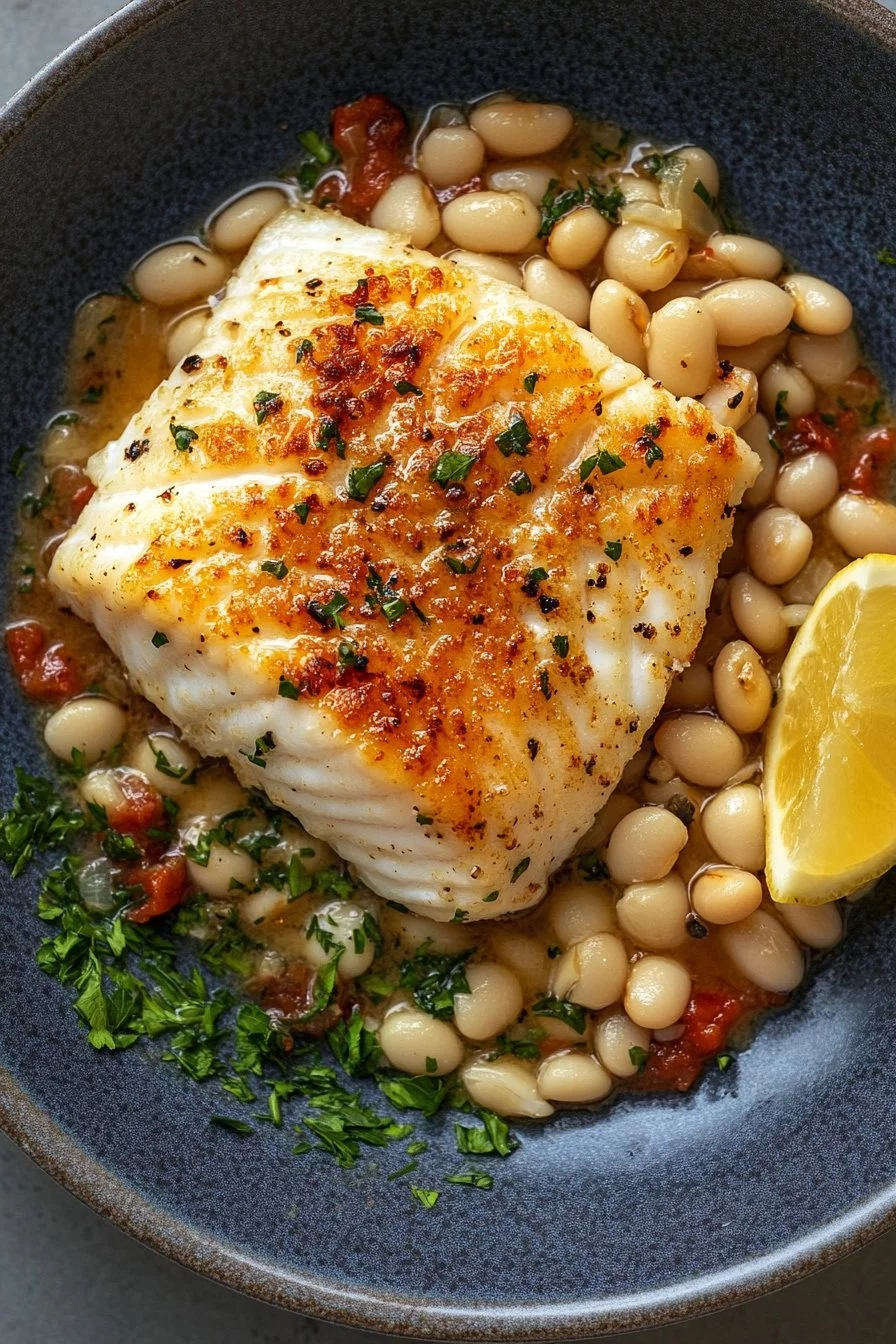
Serve the pan-seared halibut over a generous mound of the creamy white bean mixture. Enjoy the bright, fresh flavors of this coastal dish.
Elevating Your Halibut with White Beans
Technique
Mastering the technique behind pan searing halibut is crucial for a successful meal. The key is maintaining the right heat throughout the cooking process. A medium-high heat ensures that the fillet seals quickly, retaining moisture without overcooking.
Using fresh ingredients makes a substantial difference. Fresh garlic brings aromatic depth, while crisp spinach brightens the dish. Always consider the quality of your components, as they contribute significantly to flavor and texture.
Timing plays a vital role when searing halibut. Allow the fish to sear without moving it for a few minutes. This technique creates a crust, enhancing the overall experience. Patience during this stage rewards you with beautifully caramelized fish.
Tips and Tricks
Several tips can elevate your pan-seared halibut with white beans experience. First, consider letting the halibut rest for a few minutes after cooking. This allows the juices to redistribute, ensuring tender bites.
Don’t skimp on seasoning. A good sprinkle of kosher salt and freshly cracked black pepper can intensify the flavors of the fish. These everyday ingredients make a world of difference when you’re working with a simple recipe.
Experiment with lemon juice and zest. The acidity brightens the entire dish, cutting through the richness of the halibut and beans beautifully. Don’t hesitate to add a little more if you’re a fan of that vibrant zing.
Perfecting Your Results with Halibut and White Beans
Perfecting Results
To perfect your pan-seared halibut with white beans, focus on both temperature and timing. Ensure your skillet is adequately preheated before introducing the fish. A properly heated skillet prevents sticking and promotes that beautiful golden crust.
Monitor the cooking time closely. Depending on the thickness of your halibut fillets, cooking times can vary. The best way to check for doneness is by using a fork to gently flake the fish. It should be opaque and flake easily if fully cooked.
As with any recipe, practice makes perfect. The more familiar you become with pan-searing techniques and timing, the better your results will be. Learn to rely on your instincts and senses to achieve that ideal sear every time.
Troubleshooting and Variations
Not every cooking attempt will go perfectly. If your halibut sticks to the pan, it may not have been heated adequately or may need a touch more oil. Always ensure both your pan and oil are hot before adding fish.
Experimentation is encouraged in the kitchen. If you want variety, consider different beans or vegetables. Chickpeas can offer a hearty swap for cannellini beans, while kale provides an excellent alternative to spinach.
For a spicy kick, consider adding a pinch of red pepper flakes to the sautéed garlic. This can add warmth to the plate while balancing the creamy elements of the beans. When you switch it up, you may discover new flavor combinations that become family favorites.
Serving and Storing Pan-Seared Halibut with White Beans
Serving and Presentation
Presentation adds an important element to your dining experience. Serve your pan-seared halibut on a rustic plate for an inviting look. Scoop the creamy white bean mixture onto the plate and carefully place the halibut fillet on top.
A sprig of fresh rosemary or a twist of lemon on the side can enhance visual appeal. These little details create a lovely dining experience, making it feel special even on a regular weeknight.
Use this dish as a centerpiece for your next gathering. The vibrant colors and fresh flavors will surely impress your guests. Pair it with a light green salad for a delightful complete meal.
Pairings and Storage
For sides, consider a fresh arugula or mixed green salad with a simple dressing. This adds a nice crunch while balancing the richness of the halibut and beans.
Storing leftovers is straightforward. Keep the halibut and white bean mixture in an airtight container in the refrigerator for up to two days. Reheat gently on the stovetop, adding a splash of chicken stock to keep the beans creamy.
Halibut may not reheat as well, but it can still be enjoyed cold over salads or in wraps the next day. Get creative and use the leftovers to whip up something new!
This pan-seared halibut with white beans captures the essence of coastal dining, offering fresh flavors and simple preparation. Dive into this easy recipe and bring the taste of the sea to your own kitchen.
Print
Pan Seared Halibut with White Beans
- Prep Time: 15 minutes
- Cook Time: 20 minutes
- Total Time: 35 minutes
- Yield: 4 servings
- Category: Main Course
- Method: Searing
- Cuisine: Seafood
- Diet: Gluten-Free
Description
Delicate halibut fillets paired with creamy white beans and vibrant spinach for a delightful coastal meal.
Ingredients
- 4 5-6 oz halibut fillets (at least 1 inch thick, skin removed)
- Kosher salt and black pepper (to taste)
- 1 tbsp olive oil (for searing)
- 1 tbsp olive oil (for sautéing)
- 3 cloves garlic (minced)
- 2 15-oz cans cannellini beans (drained and rinsed)
- 1/2 cup chicken stock
- 1/4 cup chopped sundried tomatoes (in olive oil)
- 1 tsp lemon zest
- 6 cups chopped spinach
- 1 tbsp minced fresh rosemary
- 2 tbsp lemon juice
Instructions
- Heat 1 tablespoon of olive oil in a large pan over medium-high heat.
- Carefully add halibut fillets to the pan, skin side down, and sear for about 4-5 minutes on each side until golden brown and cooked through.
- In another skillet, add the remaining tablespoon of olive oil and minced garlic. Sauté over medium heat until fragrant and lightly golden.
- Incorporate the cannellini beans, chicken stock, chopped sundried tomatoes, lemon zest, and rosemary into the skillet. Stir well and let simmer for about 5 minutes.
- Add the chopped spinach to the bean mixture and stir until wilted. Finish with a splash of lemon juice.
- Serve the pan-seared halibut over the creamy white bean mixture and enjoy.
Notes
Let the halibut rest for a few minutes after cooking to redistribute juices. Experiment with lemon juice for added brightness.
