
📑 Table of Contents ▶
Kerala Prawn Curry
Malabar tamarind, known locally as goraka or kudam puli, often reminds me of summer evenings spent with family by the coast. The tangy flavor of this unique fruit complements seafood beautifully, creating dishes that burst with flavor and nostalgia. Kerala Prawn Curry celebrates this beloved ingredient, delivering a dish that’s both satisfying and approachable for any home cook.
I have fond memories of watching my grandmother prepare prawn curry, her hands gracefully mixing spices, with the luscious smell of coconut milk wafting through the kitchen. Each ingredient plays a role in crafting a harmonious blend of tastes, from the spice of kashmiri chili powder to the distinct sharpness of lime. Authenticity shines through every step, inviting the warmth and aroma of Kerala right into your home.
Though the recipe may seem intricate, it showcases simple techniques that bring out the best of seafood. Preparing this dish transports you to the seaside, where fresh ingredients marry to create a luscious curry that pairs perfectly with rice or bread. Let’s dive into the world of Kerala Prawn Curry and explore how to recreate this delightful experience in your kitchen.
Kerala Prawn Curry Essentials
Fundamentals
Understanding the key elements to a delicious Kerala Prawn Curry helps you appreciate the intricate dance of flavors. The combination of spices, such as fennel and black pepper, along with the refreshing taste of fresh curry leaves, builds a foundation for this seafood dish. The highlight of the curry lies in the prawns, which soak up the spices and become the star of the plate.
The coconut milk adds creaminess, balancing the heat from the spices and creating a rich sauce that enhances the prawns’ natural sweetness. Elevating the dish further, the Malabar tamarind introduces a tanginess—an essential characteristic of authentic Kerala cuisine. Mastering these fundamentals will elevate your culinary repertoire and impress anyone who joins you at the table.
Preparation/Setup
Successful execution hinges on preparation. Start by soaking a piece of Malabar tamarind in hot water for about 10-15 minutes. This process softens the tamarind and infuses its tangy flavor into the dish. Meanwhile, prepare the other ingredients by dicing the onion, mincing the garlic and ginger, and cubing the tomato. Fresh curry leaves, spicy kashmiri chili powder, and other spices must also be at the ready.
Successful setup involves having your clean, shelled, and deveined prawns set aside, ready to be joined by the fragrant mixture of spices and herbs. The simplicity of the preparation allows your focus to be solely on blending flavors in a way that honors the essence of Kerala cuisine.
Ingredients
Gathering the right ingredients is crucial for a great Kerala Prawn Curry. Here’s what you’ll need:
- 1 piece Malabar tamarind (soaked in hot water)
- 2 tbsp coconut oil
- ¼ tsp fenugreek seeds
- 1 small onion (diced)
- 1 tsp minced garlic
- ¾ tsp minced ginger
- ½ tomato (cubed)
- 1 sprig fresh curry leaves
- ¾ tsp kashmiri chili powder
- ¼ tsp turmeric powder
- ¾ tsp fennel powder
- ½ tsp coriander powder
- ¼ tsp black pepper powder
- ½ tsp salt
- 250 g fresh large prawns (cleaned, shelled & deveined)
- 200 ml coconut milk
- 1 wedge lime
Ensure that all ingredients are fresh to achieve the best flavors possible.
Directions
Following the directions will guide you toward creating a scrumptious Kerala Prawn Curry:
- Soak a piece of Malabar tamarind in a small bowl of hot water for 10-15 minutes. Add enough water to submerge the fruit.
- Heat coconut oil in a pot or pan over low to medium heat. Add fenugreek seeds and let them sizzle, turning golden quickly. This prevents burning while adding depth to the flavor.
- Add the diced onions, sautéing them until golden brown. The onions will sweat and become translucent, creating a lovely aroma.
- Stir in the minced ginger and garlic, cooking for an additional 1-2 minutes until fragrant.
- Introduce the cubed tomato and fresh curry leaves to the pot, sautéing until the tomatoes soften significantly.
- Sprinkle in the spices: kashmiri chili powder, turmeric powder, fennel powder, coriander powder, black pepper powder, and salt. Stir well, allowing the spices to release their flavors for 1-2 minutes.
- Bring the soaked Malabar tamarind to the pot, along with the water it soaked in. Stir and cook for another 1-2 minutes.
- Add the prawns gently, mixing to coat them in the rich gravy. Cook for 3-5 minutes until the prawns turn pink and opaque.
- Pour in the coconut milk, stirring to combine all the ingredients. Let it simmer for an additional 2-3 minutes.
- Finish with a squeeze of lime juice to brighten the flavors, and garnish with more curry leaves or fresh coriander.
Crafting Kerala Prawn Curry
Technique
To truly master Kerala Prawn Curry, understanding technique is essential. Starting with low to medium heat helps release the flavors of the spices effectively without burning them. The slow sautéing of onions builds the base for a rich, flavorful sauce.
Adjust your cooking times depending on the size and quality of your prawns. Fresh prawns will cook quickly, so stay vigilant to prevent overcooking, which can lead to a rubbery texture. Striking the right balance of heat and simmering ensures that the spices meld beautifully, while the coconut milk adds a luscious creaminess to the overall dish.
Tips/Tricks
Start by prepping all your ingredients before cooking. Having everything on hand streamlines the cooking process and helps you avoid multiple trips to the pantry. This practice allows you to focus on creating harmonious flavors without feeling rushed.
Experimenting with the spice proportions can also cater to personal preferences. Feel free to increase the chili powder for more heat or add extra tamarind if you prefer more sourness in your curry. Tasting throughout the cooking process allows for adjustments that make the dish truly your own.
Elevating Kerala Prawn Curry
Perfecting Results
Perfect results come from knowing your ingredients well. When selecting prawns, choose fresh and large ones for the best flavors. They should have a clean scent and a firm texture. If using frozen prawns, ensure they are properly thawed before adding them to the curry.
The richness of coconut milk is crucial to achieving a creamy sauce. If you prefer a lighter version, you can adjust with a touch of water or use a combination of light coconut milk and regular. Remember that cooking times can vary, so always look for visual cues to ensure the prawns cook perfectly.
Troubleshooting/Variations
If you encounter difficulties during preparation, there are easy fixes. If your curry tastes overly salty, adding a touch of sugar helps balance the flavors. If the sauce is too thick, simply add a splash of water or more coconut milk to achieve the desired consistency.
Variations are also welcome: substitute prawns with fish or add vegetables for a more robust meal. Incorporating okra or green beans brings additional texture and flavor to the dish. Don’t hesitate to tailor the recipe for your taste or dietary needs.
Serving Kerala Prawn Curry
Presentation
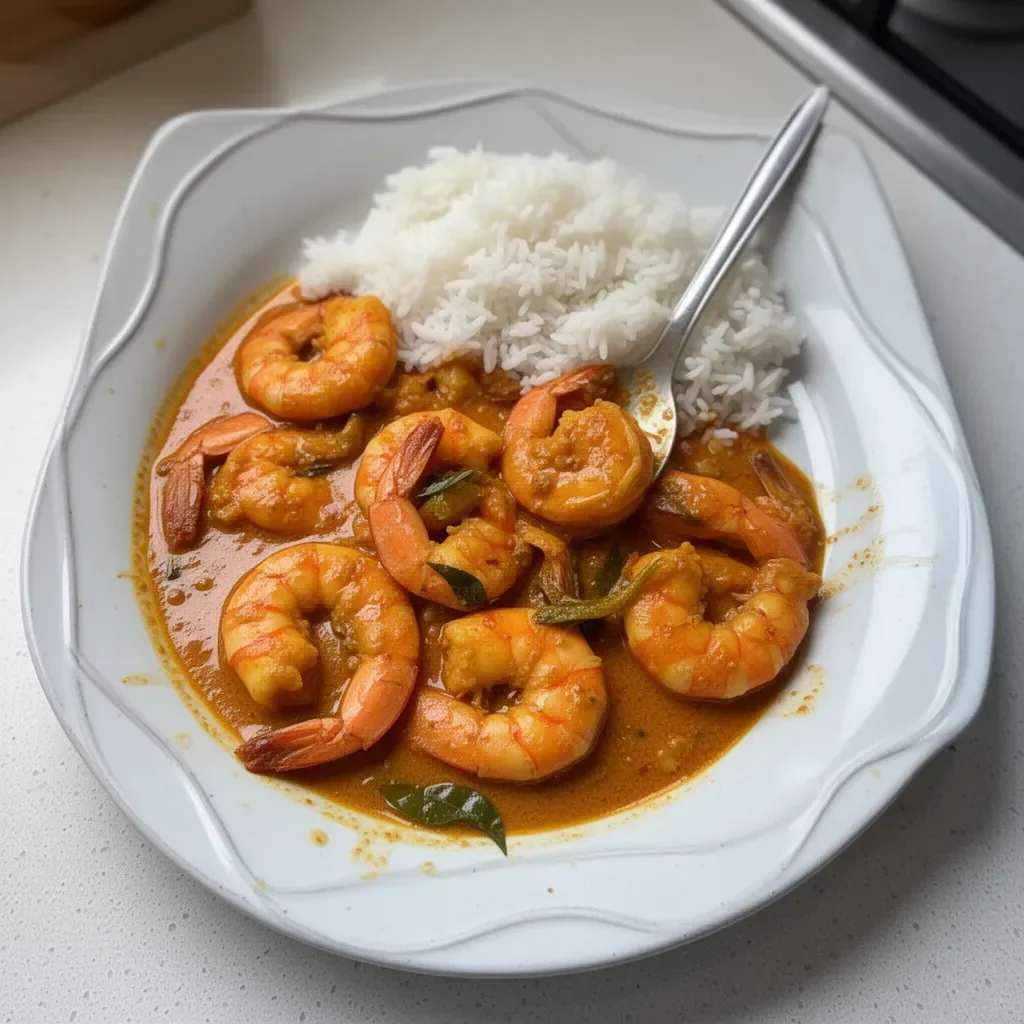
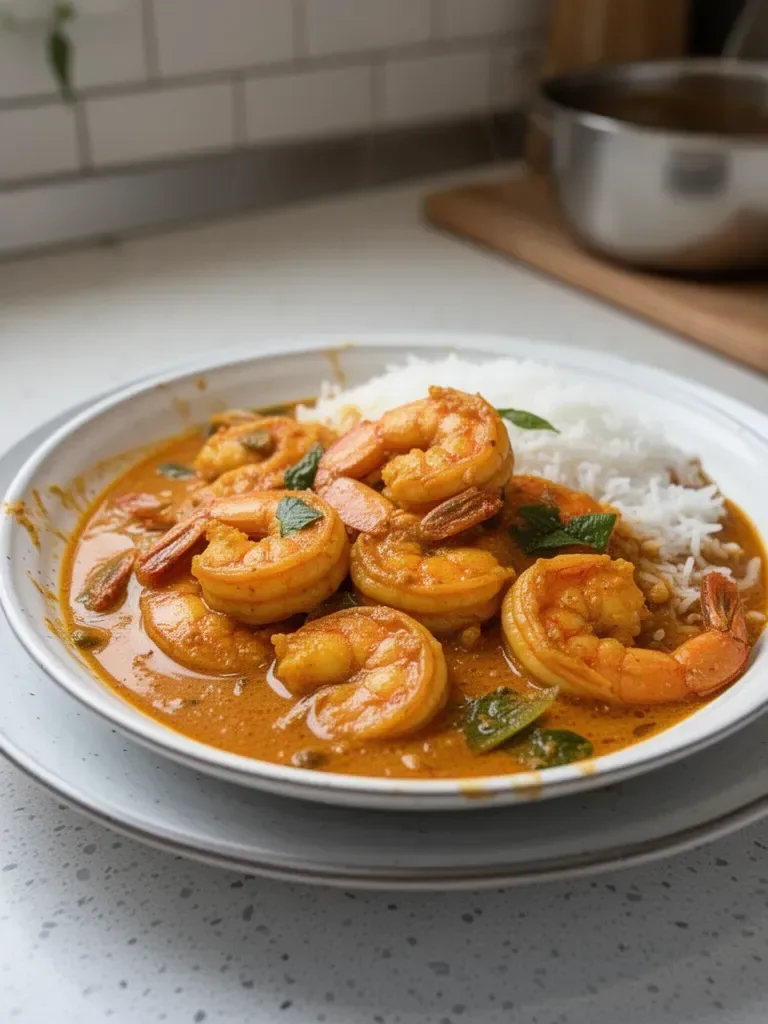
Proper presentation adds an inviting touch to your Kerala Prawn Curry. Serving the dish in a deep bowl allows the vibrant colors of the prawns and rich sauce to shine. Garnishing with fresh curry leaves or chopped coriander provides a visually appealing finish.
Consider serving the curry with a side of steamed rice or fluffy appams, which perfectly complement the creamy sauce. Presenting it this way pays homage to traditional Kerala dining, making it as delightful to the eyes as it is to the palate.
Pairings/Storage
Kerala Prawn Curry pairs well with a range of side dishes. Steamed basmati rice or flatbreads like naan invite diners to scoop up the flavorful curry. You can also serve it alongside refreshing cucumber raita or a simple green salad for a balanced meal.
For storage, keep any leftover curry in an airtight container in the fridge. It remains fresh for up to 2-3 days. Reheat gently on the stove, adding a splash of water to return some creaminess, as the sauce may thicken upon cooling. It often tastes even better the next day, as the flavors continue to meld.
The enchanting flavors of Kerala Prawn Curry celebrate the beauty of seafood and the vibrant heritage of coastal cuisine. With a few simple techniques and ingredients, this dish brings a taste of home and warmth to every meal.
Print
Kerala Prawn Curry
- Prep Time: 15 minutes
- Cook Time: 30 minutes
- Total Time: 45 minutes
- Yield: 4 servings
- Category: Main Course
- Method: Cooking
- Cuisine: Indian
- Diet: Seafood
Description
A flavorful and tangy Kerala Prawn Curry featuring Malabar tamarind, coconut milk, and a blend of spices that celebrates the essence of coastal cuisine.
Ingredients
- 1 piece Malabar tamarind (soaked in hot water)
- 2 tbsp coconut oil
- ¼ tsp fenugreek seeds
- 1 small onion (diced)
- 1 tsp minced garlic
- ¾ tsp minced ginger
- ½ tomato (cubed)
- 1 sprig fresh curry leaves
- ¾ tsp kashmiri chili powder
- ¼ tsp turmeric powder
- ¾ tsp fennel powder
- ½ tsp coriander powder
- ¼ tsp black pepper powder
- ½ tsp salt
- 250 g fresh large prawns (cleaned, shelled & deveined)
- 200 ml coconut milk
- 1 wedge lime
Instructions
- Soak a piece of Malabar tamarind in a small bowl of hot water for 10-15 minutes. Add enough water to submerge the fruit.
- Heat coconut oil in a pot or pan over low to medium heat. Add fenugreek seeds and let them sizzle, turning golden quickly.
- Add the diced onions, sautéing them until golden brown.
- Stir in the minced ginger and garlic, cooking for an additional 1-2 minutes until fragrant.
- Introduce the cubed tomato and fresh curry leaves to the pot, sautéing until the tomatoes soften significantly.
- Sprinkle in the spices: kashmiri chili powder, turmeric powder, fennel powder, coriander powder, black pepper powder, and salt. Stir well.
- Bring the soaked Malabar tamarind to the pot, along with the water it soaked in. Stir and cook for another 1-2 minutes.
- Add the prawns gently, mixing to coat them in the rich gravy. Cook for 3-5 minutes until the prawns turn pink and opaque.
- Pour in the coconut milk, stirring to combine all the ingredients. Let it simmer for an additional 2-3 minutes.
- Finish with a squeeze of lime juice to brighten the flavors, and garnish with more curry leaves or fresh coriander.
Notes
Ensure that all ingredients are fresh for the best flavors. Adjust spice levels according to personal preference.
