
📑 Table of Contents ▶
- Part 1 — Japanese Clear Soup Fundamentals
- Fundamentals
- Preparation/setup
- Directions
- Part 2 — Perfecting Japanese Clear Soup Technique
- Technique
- Tips/tricks
- Part 3 — Perfecting the Results of Japanese Clear Soup
- Perfecting results
- Troubleshooting/variations
- Part 4 — Serving and Storage of Japanese Clear Soup
- Serving/presentation
- Pairings/storage
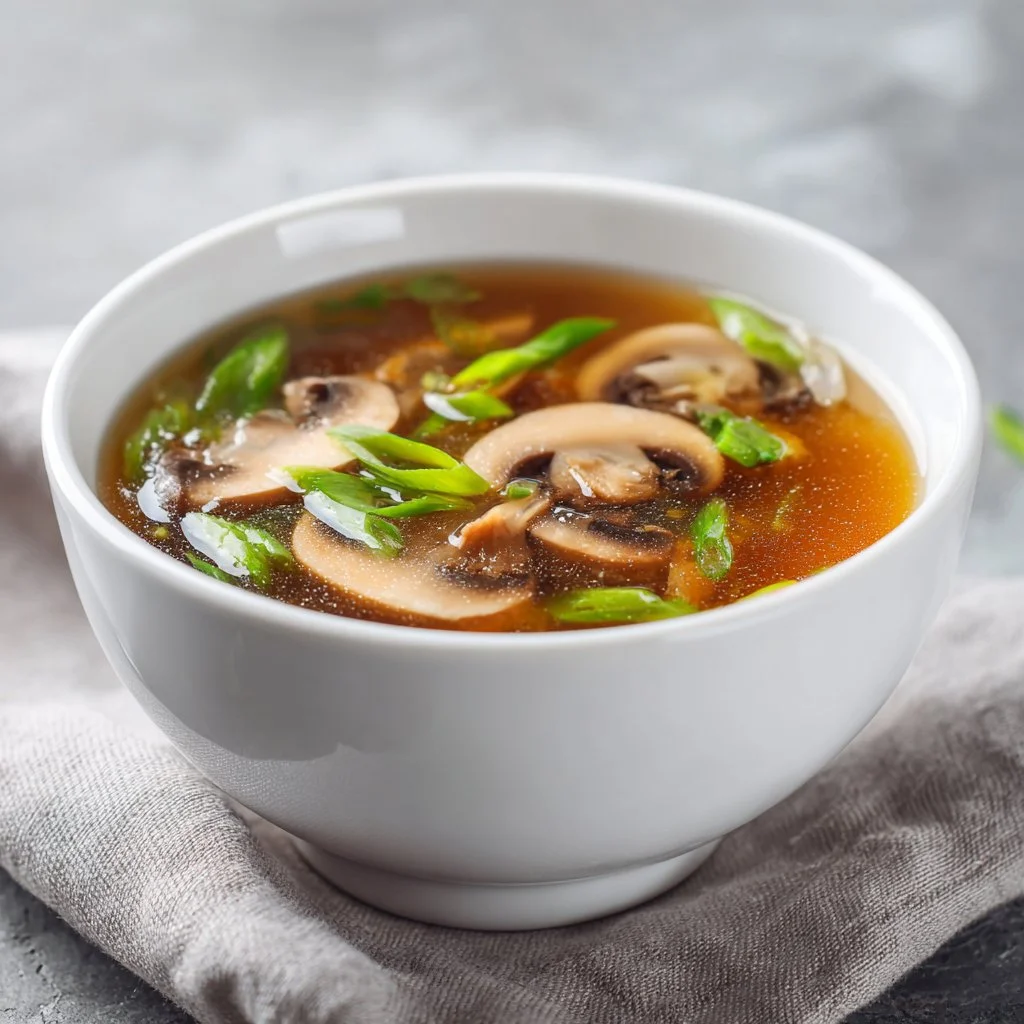
Japanese Clear Soup
In the chill of winter, few things soothe the soul like a steaming bowl of Japanese clear soup. The fragrant steam wafts through the kitchen, filling every nook and cranny with warmth and comfort. I recall preparing this dish during family gatherings, where everyone would share stories and laughter while savoring each sip of the savory broth.
Japanese clear soup embodies simplicity and depth, using just a handful of ingredients to create a luxurious experience. This recipe combines dashi broth with fresh vegetables, offering a clean taste that celebrates the natural ingredients. Each element plays a role, contributing to a delightful culinary journey that transports you straight to the heart of Japan’s comforting cuisine.
This clear soup recipe showcases how easy it is to bring a touch of Japanese tradition into your home. As the vegetables soften and release their flavors into the broth, you realize that great cooking doesn’t need a complicated recipe—it simply needs a focus on quality ingredients and a bit of care. Let’s embark on this culinary adventure and create a dish that nourishes both the body and spirit.
Part 1 — Japanese Clear Soup Fundamentals
Fundamentals
Japanese clear soup is a beautiful representation of how few ingredients can create a complex and satisfying dish. At its core, this soup combines dashi broth, water, and a selection of fresh vegetables. The dashi broth, with its umami essence, forms the flavor foundation for the entire dish, while the vegetables add texture and color.
The simplicity of Japanese clear soup makes it perfect for any occasion—be it a cozy family dinner or an elegant gathering. Understanding the key components will help you appreciate the precision and care that goes into crafting this remarkable dish.
Preparation/setup
Preparing Japanese clear soup requires minimal effort but yields maximum flavor. Gather your ingredients ahead of time to streamline the process. A sharp knife will help you thinly slice the onion and julienne the carrot, making your prep work efficient and enjoyable.
Set your pot on the stove and have your dashi broth and water ready to pour in. The beauty of this recipe lies in its straightforwardness, which encourages experimentation. Feel free to adjust your vegetable selection, keeping in mind the balance of flavors and textures you wish to achieve.
Ingredients
For the perfect Japanese clear soup, you will need the following ingredients:
- 2 cups dashi broth
- 1 cup water
- 1/2 onion, thinly sliced
- 1/2 carrot, julienned
- 1/2 cup mushrooms, sliced
- Green onions, for garnish
- Soy sauce, to taste
- Salt, to taste
Each ingredient contributes to the overall flavor profile of the soup, enhancing the experience with every spoonful.
Directions
- In a pot, combine dashi broth and water. Bring to a simmer.
- Add sliced onion, carrot, and mushrooms. Cook until vegetables are tender.
- Season with soy sauce and salt to taste.
- Serve hot, garnished with chopped green onions.
Martial your kitchen skills, focus on the sizzling sound of the vegetables as they cook, and revel in the aromatic experience that unfolds as you create your Japanese clear soup.
Part 2 — Perfecting Japanese Clear Soup Technique
Technique
Mastering Japanese clear soup involves understanding how to develop flavors while allowing each ingredient to shine. Start by simmering the dashi broth gently with water. This combination allows the broth’s flavors to bloom, forming a delicious base.
As you add vegetables, ensure you don’t overcrowd the pot. Each ingredient deserves space to release its flavors fully. The mushrooms, onions, and carrots each impart their unique essence to the broth, creating a harmonious blend perfect for serving.
Tips/tricks
Keep a few tips in mind to achieve the best results with your Japanese clear soup. First, use high-quality dashi broth for an authentic taste. Homemade dashi brings the most flavor, but good-quality store-bought versions work well too.
When seasoning, go easy on the soy sauce initially; you can always add more to taste later. This will prevent over-salting and allow you to adjust the flavors to suit your preference. Lastly, don’t rush the cooking process. Allow the vegetables to simmer until they’re just tender, preserving their vibrant colors and crunch.
Part 3 — Perfecting the Results of Japanese Clear Soup
Perfecting results
Achieving perfect Japanese clear soup involves attention to detail and a bit of practice. When your vegetables reach that ideal tenderness, they should still have a slight bite, avoiding mushiness. The broth should remain clear, showcasing the fresh colors of the ingredients.
Serve the soup immediately for the best experience. Allowing it to sit can dilute the freshness and vibrancy. Each bowl should be visually appetizing, drawing guests in with its delightful appearance.
Troubleshooting/variations
If your Japanese clear soup isn’t as flavorful as expected, consider adjusting your broth-to-water ratio. Sometimes, increasing the dashi broth can enhance the soup’s depth. If you want to explore variations, you can experiment with different vegetables like napa cabbage or spinach.
For a heartier version, you might add tofu or even some protein like chicken or seafood. These variations can bring new dimensions while still honoring the spirit of Japanese clear soup.
Part 4 — Serving and Storage of Japanese Clear Soup
Serving/presentation
Presentation plays an essential role in Japanese cuisine, and your clear soup deserves the same attention. Use a beautiful bowl to showcase the vibrant colors of the vegetables. A sprinkle of chopped green onions adds a touch of freshness and a pop of color, elevating the visual appeal.
Serve the soup hot and offer additional soy sauce on the side to allow guests to customize their flavor experience. Pair the soup with a simple side salad for a refreshing finish.
Pairings/storage
Japanese clear soup pairs beautifully with lighter meals. Serve it beside grilled fish or a crunchy salad, creating a balanced dining experience. The delicate flavors complement the simplicity of various dishes.
To store any leftovers, allow the soup to cool before transferring it to an airtight container. It can stay in the refrigerator for up to three days. When reheating, consider adding a splash of fresh broth or water to restore its initial vibrancy.
Japanese clear soup embodies the essence of culinary simplicity. With mindful preparation and attention to flavor balance, you can recreate this beloved dish in your own kitchen. Enjoy the comforting, delicious experience it offers with each steaming bowl.
