
📑 Table of Contents ▶
- Garlic Butter Shrimp Scampi — The Essentials
- Fundamentals
- Preparation/Setup
- Directions
- Perfecting Garlic Butter Shrimp Scampi Pasta
- Technique
- Tips/Tricks
- Elevating Garlic Butter Shrimp Scampi Pasta
- Perfecting Results
- Troubleshooting/Variations
- Serving and Enjoying Garlic Butter Shrimp Scampi Pasta
- Serving/Presentation
- Pairings/Storage
- Conclusion
Garlic Butter Shrimp Scampi Pasta
Sizzling garlic butter creates magic in the kitchen. One whiff of that rich, savory aroma takes me back to childhood summers spent by the coast, where seafood dishes reigned supreme. I remember my grandmother preparing shrimp scampi with love, filling the house with its delicious scent. This memory sparks my passion for creating simple yet indulgent seafood recipes.
Garlic butter shrimp scampi pasta easily captures that nostalgia. The delicate sweetness of shrimp pairs beautifully with the brightness of lemon, while spaghetti or linguine wraps around each piece, creating a comforting and satisfying dish. It became a family favorite, perfect for weeknight dinners or gatherings with friends.
In my kitchen, I love the simplicity of this dish. It showcases fresh ingredients while allowing you to feel like a gourmet chef. Every step in the process brings joy, from the moment the garlic hits the pan to when I serve the finished dish sprinkled with fresh parsley. When it comes to flavor and ease, garlic butter shrimp scampi pasta is hard to beat.
Garlic Butter Shrimp Scampi — The Essentials
Fundamentals
Crafting the perfect garlic butter shrimp scampi pasta requires understanding its core components. The interplay of flavors in this dish truly shines through the quality of the ingredients. Fresh shrimp, beautifully cooked, turn into the star of the plate, bringing flavor and protein.
The pasta serves as the comfortable backdrop, providing the right texture to complement the shrimp. Spaghetti or linguine creates a delightful experience as you twirl it around your fork. The garlic, butter, and lemon juice form a luxurious sauce that clings to every curve of the pasta and coats each shrimp in rich flavor.
Garlic butter shrimp scampi pasta thrives on balance. The sweetness of the shrimp plays alongside the savory depth of garlic and the tartness of lemon juice. A hint of heat from red pepper flakes adds excitement without overpowering, and fresh parsley lends a pop of color. Each component plays a vital role in elevating the dish.
Preparation/Setup
Setting up to make garlic butter shrimp scampi pasta involves some simple steps. Start by gathering everything you need. Measure out your shrimp, pasta, and the aromatics like garlic and fresh parsley. Ensuring you have everything at hand will streamline the cooking process.
Fill a large pot with water and add a generous pinch of salt. This important step enhances the flavor of the pasta. Once the water reaches a rolling boil, you can add the spaghetti or linguine and cook it according to package instructions. Keeping the pasta al dente is crucial, as it will continue to cook slightly when combined with the sauce.
As the pasta cooks, it’s time to focus on the shrimp. Heating olive oil and butter in a skillet will create the foundation for your sauce. Make sure to keep the heat at medium-high initially, allowing the butter to foam before adding the shrimp. This method guarantees they cook evenly and develop a beautiful color.
Ingredients
To create garlic butter shrimp scampi pasta, you’ll need just a few fresh ingredients. Here’s what you’ll gather:
- 1 pound (450 grams) shrimp, peeled and deveined
- 8 ounces (225 grams) spaghetti or linguine
- 4 tablespoons (56 grams) unsalted butter
- 2 tablespoons (30 ml) extra virgin olive oil
- 6 cloves garlic, minced (about 2 tablespoons)
- 2 tablespoons (30 ml) fresh squeezed lemon juice
- 1/4 teaspoon red pepper flakes (optional)
- 2 tablespoons (8 grams) fresh parsley, chopped
- Salt, to taste
- Black pepper, freshly cracked, to taste
Directions
Guided by the ingredients, the cooking process for garlic butter shrimp scampi pasta is straightforward.
-
Fill a large pot with water, add a generous pinch of salt, and bring to a rolling boil.
-
Add the spaghetti or linguine, cooking until just al dente, about 8 to 10 minutes. Remember to reserve 1/2 cup of the pasta water before draining.
-
While the pasta cooks, heat olive oil and 2 tablespoons of butter in a large skillet over medium-high heat.
-
Once the butter foams, add the shrimp in a single layer. Allow them to cook undisturbed for about 1.5 minutes until the undersides turn pink and slightly brown.
-
Flip the shrimp and cook for another 1 to 2 minutes until opaque and just cooked through. Remove the shrimp from the pan and set aside.
-
Lower the heat to medium and add the remaining 2 tablespoons of butter to the pan. After it melts, incorporate the minced garlic and red pepper flakes if desired. Stir constantly for about 1 minute until fragrant but not browned.
-
Pour in the fresh lemon juice and stir, scraping up any browned bits from the pan.
-
Add the drained pasta and cooked shrimp back into the skillet with the sauce. Toss gently, adding the reserved pasta water a splash at a time to loosen the sauce if necessary.
-
Season with salt and freshly cracked black pepper to taste.
-
Stir in the chopped fresh parsley. Serve immediately for the best flavors.
Perfecting Garlic Butter Shrimp Scampi Pasta
Technique
Mastering garlic butter shrimp scampi involves paying attention to cooking techniques. The key lies in the timing of each ingredient. Perfectly cooked shrimp will be tender and juicy, while overcooked shrimp can become rubbery. Flip them once during cooking to avoid overcooking.
When cooking the pasta, ensure you check it regularly as it nears the end of its cooking time. Perfectly al dente pasta holds its shape while absorbing the flavors of the sauce. Reserve the pasta water; it acts as a great tool to adjust the sauce’s consistency.
Moreover, enjoy the aroma as you cook. Allow the garlic to release its fragrance without browning. A minute of stirring on medium heat achieves this. Combine all elements before serving to integrate the flavors fully.
Tips/Tricks
A few quick tips can enhance your garlic butter shrimp scampi experience. Use fresh, high-quality shrimp for the best flavor. If using frozen shrimp, ensure they fully thaw before cooking. Working with fresh ingredients makes a substantial difference.
Adjust the red pepper flakes according to your heat preference. You can omit them altogether for a milder flavor. For a vibrant touch, fresh herbs like basil or dill can replace parsley, providing varied flavor profiles.
Serving the dish immediately is critical. If left sitting, the pasta may absorb too much sauce, losing its delightful texture. Garnishing with extra parsley adds visual appeal, while a sprinkle of lemon zest can create bright, fresh notes.
Elevating Garlic Butter Shrimp Scampi Pasta
Perfecting Results
Consistency in the preparation of garlic butter shrimp scampi pasta leads to consistently delicious results. Start with high-quality ingredients, as this directly impacts flavor. Fresh herbs and ripe, juicy lemons can elevate the dish significantly.
Pay attention to the texture of both shrimp and pasta. Strive for that perfect al dente texture in the pasta and tender, juicy shrimp. No need for shortcuts; patience while cooking yields better flavors.
An important detail is to gently toss the pasta with the sauce instead of stirring vigorously. This method preserves the integrity of the pasta while ensuring it is nicely coated.
Troubleshooting/Variations
Every home cook encounters moments when things might not go as planned. If your sauce looks too oily, you can add a bit of pasta water to balance it out. Additionally, if the sauce is too thick, gradual additions of more pasta water will improve consistency.
If you find yourself without fresh shrimp, consider substituting with other seafood options. Scallops or even fish can work well with the garlic-butter sauce. The same method applies, just keep an eye on cooking times, as they vary between seafood varieties.
Creative adaptations keep the dish fresh. Consider adding vegetables like asparagus or cherry tomatoes for color and extra nutrients. Toss them in briefly during the garlic cooking phase to infuse their flavors into the sauce.
Serving and Enjoying Garlic Butter Shrimp Scampi Pasta
Serving/Presentation
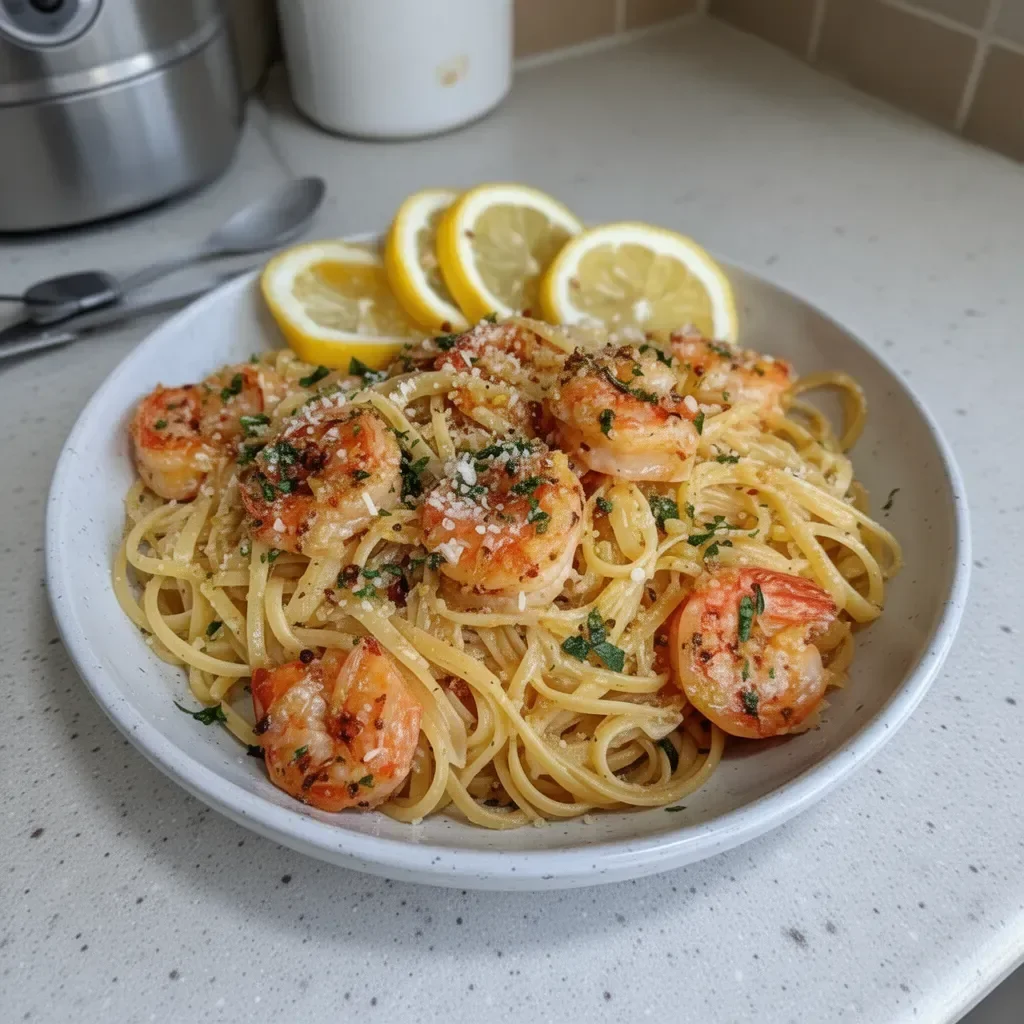
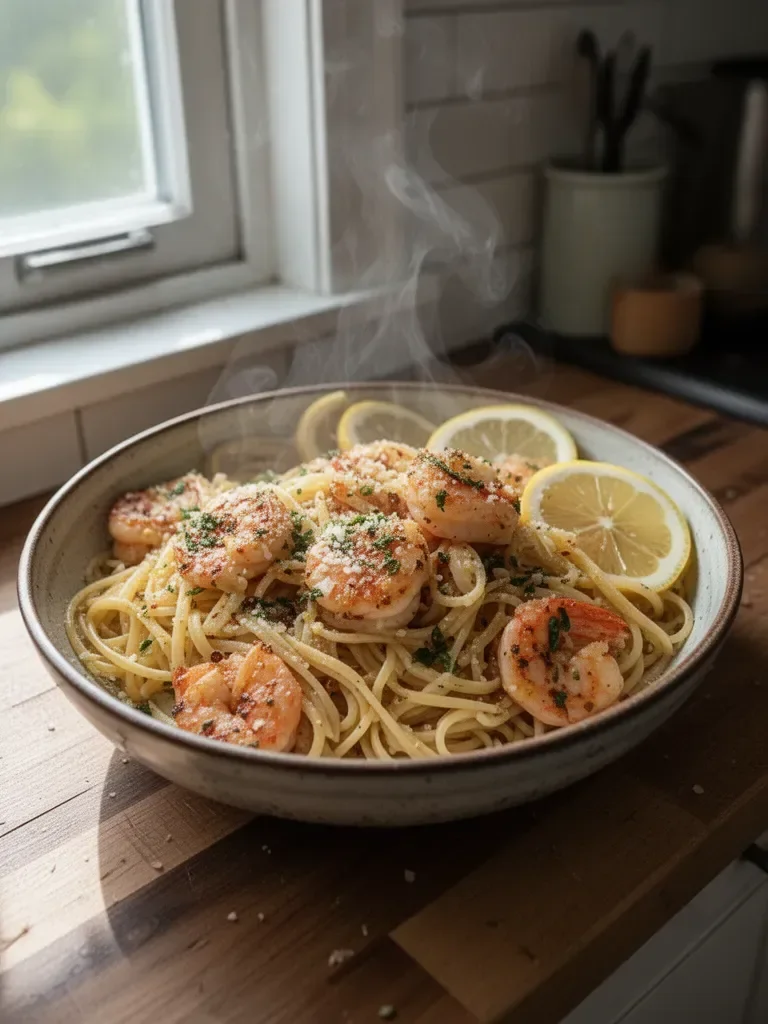
Serving garlic butter shrimp scampi pasta is a joyful experience. A large, shallow bowl showcases the elegant presentation. Make sure to neatly twirl the pasta for a beautiful plate.
For added pizzazz, garnish with chopped parsley and a wedge of lemon. The bright colors of these garnishes enhance the dish’s visual appeal. Serving with crusty bread on the side allows everyone to scoop up the delightful sauce.
Timing your serving is essential. Present the dish as soon as it comes off the heat to ensure the best flavor and texture. Guests will appreciate being served a hot, fresh dish.
Pairings/Storage
Garlic butter shrimp scampi pasta pairs well with various sides. A crisp green salad offers a refreshing counterpoint, while garlic bread can complement the buttery richness of the dish.
When it comes to storing leftovers, place any uneaten pasta in an airtight container in the refrigerator. Consuming leftovers within a couple of days is best for maximum flavor and texture. Reheat gently in a skillet with a splash of water or olive oil to revitalize the dish.
The flavors will always be delightful, whether fresh or saved for another day!
Conclusion
The allure of garlic butter shrimp scampi pasta originates from its simplicity and beloved flavors. This dish resonates with many, inviting memories of familial gatherings and home-cooked meals. By focusing on fresh ingredients and thoughtful preparation, you can create a seafood masterpiece that transforms any dinner into an occasion. Whether you’re treating yourself or impressing guests, garlic butter shrimp scampi pasta brings a bit of coastal charm to every table.
Print
Garlic Butter Shrimp Scampi Pasta
- Prep Time: 10 minutes
- Cook Time: 15 minutes
- Total Time: 25 minutes
- Yield: 4 servings
- Category: Main Course
- Method: Stovetop
- Cuisine: Italian
- Diet: Pescatarian
Description
A delightful blend of garlic, butter, lemon, and shrimp creates a comforting pasta dish that feels indulgent yet is simple to prepare.
Ingredients
- 1 pound (450 grams) shrimp, peeled and deveined
- 8 ounces (225 grams) spaghetti or linguine
- 4 tablespoons (56 grams) unsalted butter
- 2 tablespoons (30 ml) extra virgin olive oil
- 6 cloves garlic, minced (about 2 tablespoons)
- 2 tablespoons (30 ml) fresh squeezed lemon juice
- 1/4 teaspoon red pepper flakes (optional)
- 2 tablespoons (8 grams) fresh parsley, chopped
- Salt, to taste
- Black pepper, freshly cracked, to taste
Instructions
- Fill a large pot with water, add a generous pinch of salt, and bring to a rolling boil.
- Add the spaghetti or linguine, cooking until just al dente, about 8 to 10 minutes. Remember to reserve 1/2 cup of the pasta water before draining.
- While the pasta cooks, heat olive oil and 2 tablespoons of butter in a large skillet over medium-high heat.
- Once the butter foams, add the shrimp in a single layer. Allow them to cook undisturbed for about 1.5 minutes until the undersides turn pink and slightly brown.
- Flip the shrimp and cook for another 1 to 2 minutes until opaque and just cooked through. Remove the shrimp from the pan and set aside.
- Lower the heat to medium and add the remaining 2 tablespoons of butter to the pan. After it melts, incorporate the minced garlic and red pepper flakes if desired. Stir constantly for about 1 minute until fragrant but not browned.
- Pour in the fresh lemon juice and stir, scraping up any browned bits from the pan.
- Add the drained pasta and cooked shrimp back into the skillet with the sauce. Toss gently, adding the reserved pasta water a splash at a time to loosen the sauce if necessary.
- Season with salt and freshly cracked black pepper to taste.
- Stir in the chopped fresh parsley. Serve immediately for the best flavors.
Notes
Use fresh, high-quality shrimp for the best flavor. Consider substituting with scallops or fish if shrimp is unavailable.
