

📑 Table of Contents ▶
- Creamy Korean Gochujang Pasta
- Creamy Korean Gochujang Pasta: A Flavorful Fusion
- Fundamentals
- Preparation/Setup
- Creating the Perfect Pasta Dish
- Technique
- Tips/Tricks
- Perfecting the Creamy Korean Gochujang Pasta
- Perfecting Results
- Troubleshooting/Variations
- Bringing It All Together
- Serving/Presentation
- Pairings/Storage
- Conclusion
- FAQs – Creamy Korean Gochujang Pasta
Welcome to my seaside kitchen, where the magic of flavors comes alive! Growing up by the coast, my culinary adventures often centered around the fresh, vibrant tastes of the ocean. But today, I’m excited to share a dish that takes inspiration from the heart of Korean cuisine—Creamy Korean Gochujang Pasta. This recipe combines the savory, spicy notes of gochujang with the creamy texture of plant-based milk, creating a dish that’s both indulgent and wholesome.
Creamy Korean Gochujang Pasta has become a staple in my kitchen, especially when I crave something comforting yet exciting. One bite transports me to bustling Korean markets, where the air is filled with the tantalizing aroma of spices. The combination of gochujang, a fermented chili paste, with creamy pasta creates an unexpected harmony that’s both fiery and soothing.
This pasta dish not only satisfies the taste buds but also brings a sense of adventure to the table. It’s perfect for those evenings when you want to spice up your dinner routine without spending hours in the kitchen. With its bold flavors and rich textures, Creamy Korean Gochujang Pasta is a delightful twist on a classic comfort food.
Join me as we dive into the creation of this irresistible dish, exploring each step to ensure your pasta turns out perfectly every time. Whether you’re new to gochujang or a seasoned fan, this recipe is sure to become a favorite in your culinary repertoire.
Print
Creamy Korean Gochujang Pasta
- Prep Time: 15 minutes
- Cook Time: 15 minutes
- Total Time: 30 minutes
- Yield: 4 servings
- Category: Main Course
- Method: Cooking
- Cuisine: Korean
Description
Indulge in a delicious fusion with our Creamy Korean Gochujang Pasta recipe. Learn how to create a unique and flavorful dish that will impress your taste buds. Click here to get cooking!
Ingredients
- – 8 oz (227 g) dried pasta
- – 1 medium shallot, diced
- – 3 cloves garlic, minced
- – ½ cup (120 ml) almond milk or another plant-based milk
- – 2 tablespoons (30 ml) gochujang paste
- – 1 tablespoon (15 ml) maple syrup or agave nectar
- – 1 tablespoon (15 ml) soy sauce or tamari/shoyu
- – 1 tablespoon (15 ml) sesame oil
- – 1 tablespoon (15 ml) rice vinegar
- – 1 teaspoon (5 ml) cornstarch
Instructions
- Begin by filling a pot with water and bringing it to a rolling boil, adding a good amount of salt. Introduce the pasta and cook until it’s nearly firm to the bite. Drain and put it aside, remembering to keep aside half a cup of the pasta water before draining.
- As the pasta cooks, prepare the sauce. Use a bowl to combine all the sauce ingredients thoroughly by whisking them together. Put the mixture to the side once it’s well mixed.
- Warm up a tablespoon of oil in a pan over medium-high heat. When the pan is hot, add the diced shallot and cook for 2 to 3 minutes until it turns translucent.
- Next, incorporate the minced garlic, stirring it for an additional minute until it releases its aroma.
- Then, pour in the almond milk along with the prepared gochujang sauce. Allow the mixture to come to a simmer, and when the sauce begins to thicken, add the cooked pasta.
- Stir everything together to ensure the pasta is well-coated, cooking for another 1 to 2 minutes. If the sauce becomes too thick, add a bit of the reserved pasta water.
- Garnish with your favorite toppings, and enjoy the creamy gochujang pasta while it’s still warm!
Notes
Creamy Korean Gochujang Pasta: A Flavorful Fusion
Fundamentals
The foundation of Creamy Korean Gochujang Pasta lies in its unique blend of ingredients. At the heart of this dish is gochujang, a Korean chili paste that delivers a perfect balance of heat and umami. Combined with almond milk, it forms a creamy base that complements the spicy kick beautifully. The addition of soy sauce, sesame oil, and maple syrup rounds out the flavors, adding depth and sweetness.
To create this dish, you’ll need to gather a few essential ingredients: dried pasta, a medium shallot, garlic, and the star of the show—gochujang paste. The remaining ingredients, including almond milk and soy sauce, are pantry staples that enhance the overall flavor profile. Together, these components create a dish that’s both satisfying and nourishing.
Preparation/Setup
Begin by preparing your workspace. Set out all the ingredients within easy reach, ensuring a smooth cooking process. Fill a pot with water and bring it to a rolling boil, adding a generous pinch of salt. This step is crucial as it seasons the pasta from within, enhancing its flavor.
While the water heats, dice the shallot and mince the garlic. These aromatics form the base of the sauce, infusing it with a rich, savory flavor. Whisk together the sauce ingredients in a bowl, ensuring the gochujang, almond milk, soy sauce, sesame oil, rice vinegar, and maple syrup are well combined. This mixture will serve as the creamy sauce that coats the pasta.
Creating the Perfect Pasta Dish
Technique
Mastering the technique of cooking pasta is key to achieving the perfect texture. Add the pasta to the boiling water and cook until it’s nearly al dente. This ensures the pasta will absorb the sauce flavors without becoming mushy. Remember to reserve half a cup of pasta water before draining, as it helps adjust the sauce consistency later.
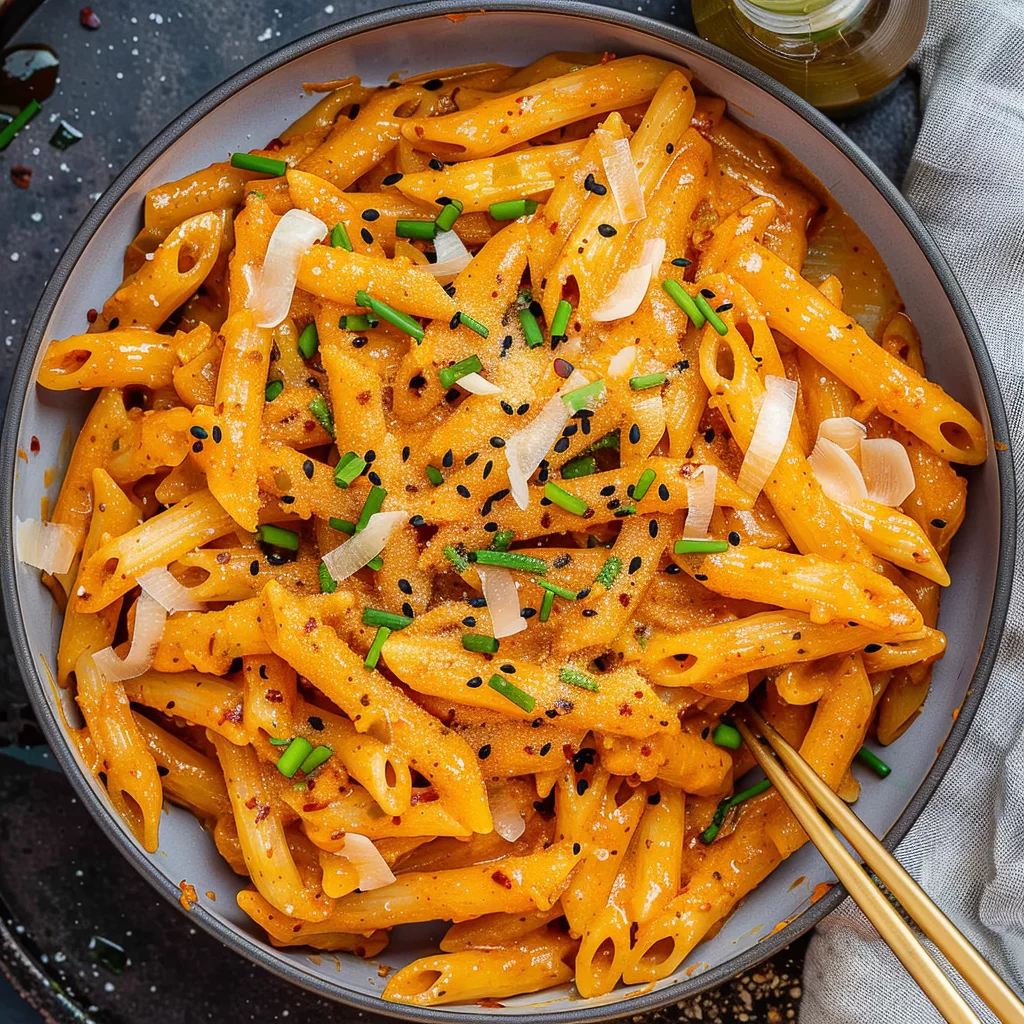
Creamy Korean Gochujang Pasta
In a pan, heat a tablespoon of oil over medium-high heat. Sauté the diced shallot until translucent, releasing its natural sweetness. Add the minced garlic, stirring for an additional minute to enhance its aroma. This step forms the aromatic base of the dish, laying the groundwork for the sauce.
Tips/Tricks
To elevate your Creamy Korean Gochujang Pasta, consider experimenting with different textures and toppings. Adding a sprinkle of toasted sesame seeds or chopped scallions can provide a delightful crunch and visual appeal. If you enjoy a bit of heat, a dash of chili flakes can intensify the spiciness of the dish.
Balancing the sauce is crucial for achieving the right flavor profile. If the sauce feels too thick, gradually incorporate the reserved pasta water until you reach the desired consistency. This not only thins the sauce but also helps it adhere better to the pasta, ensuring each bite is packed with flavor.
Perfecting the Creamy Korean Gochujang Pasta
Perfecting Results
Once the sauce reaches your preferred thickness, add the cooked pasta to the pan, tossing it gently to coat every strand. The heat will meld the flavors together, creating a harmonious balance between the spicy gochujang and the creamy sauce. Allow the pasta to cook for an additional 1 to 2 minutes, letting the flavors infuse thoroughly.
As you perfect this dish, remember that the quality of ingredients plays a significant role. Opt for high-quality gochujang paste and fresh aromatics to ensure the best possible outcome. Each component contributes to the overall taste, making it essential to use the finest ingredients available.
Troubleshooting/Variations
If the sauce tastes too spicy, adjust the sweetness by adding a bit more maple syrup. This balances the heat, creating a more rounded flavor. For a gluten-free option, substitute the pasta with your favorite gluten-free variety, ensuring everyone can enjoy this delightful dish.
For a protein boost, consider adding grilled chicken or tofu to the pasta. These additions not only enhance the nutritional value but also complement the flavors beautifully. If you’re a fan of seafood, you might be interested in trying this Korean Spicy Gochujang Shrimp for a seafood twist.
Bringing It All Together
Serving/Presentation
Presentation plays a crucial role in enhancing the dining experience. Serve the Creamy Korean Gochujang Pasta in shallow bowls, allowing the vibrant colors to shine. Garnish with your choice of toppings, such as fresh herbs or a squeeze of lime, for a burst of freshness that contrasts beautifully with the rich flavors.
Consider pairing this dish with a simple side salad to balance the richness. A crisp green salad with a light vinaigrette provides a refreshing contrast, cleansing the palate with each bite. For more creative pasta ideas, explore this Creamy Avocado Cilantro Pasta with Ground Beef for another delicious option.
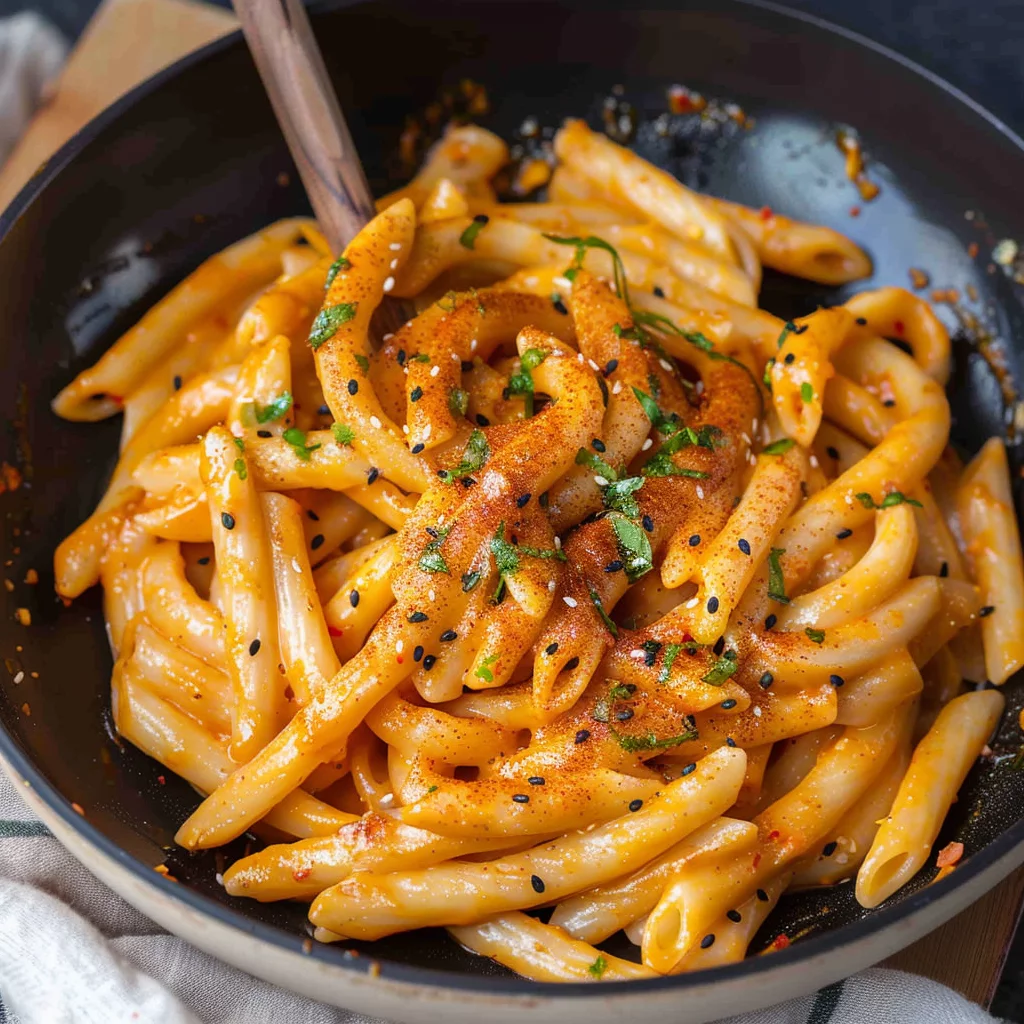
Creamy Korean Gochujang Pasta
Pairings/Storage
While this dish is best enjoyed fresh, you can store any leftovers in an airtight container in the refrigerator for up to three days. Reheat gently on the stovetop, adding a splash of almond milk or reserved pasta water to revive the creamy consistency. This ensures the pasta remains as delicious as when first prepared.
For those who enjoy exploring different flavor profiles, this Sous Vide Korean BBQ Chicken pairs well with the pasta, offering a delightful fusion of tastes. The tender chicken complements the spicy pasta, creating a memorable dining experience.
Conclusion
Creamy Korean Gochujang Pasta brings a unique twist to traditional pasta dishes, combining the bold flavors of Korean cuisine with a comforting creamy texture. This recipe highlights the versatility of gochujang, making it a delightful addition to your culinary repertoire. The balance of heat, sweetness, and umami creates a dish that’s both satisfying and exciting.
Whether you’re cooking for yourself or sharing with loved ones, this pasta offers a perfect blend of indulgence and flavor. It’s a testament to the magic that happens when diverse culinary worlds collide, resulting in a dish that’s both familiar and novel. Embrace the adventure of Creamy Korean Gochujang Pasta, and let it become a cherished part of your kitchen traditions.
