
📑 Table of Contents ▶
- Flaky, Buttery Salmon That Melts in Your Mouth
- Flaky, Buttery Salmon That Melts in Your Mouth
- Fundamentals
- Preparation/setup
- Directions
- The Art of Cooking Salmon
- Technique
- Tips/tricks
- Perfecting Your Salmon Dish
- Perfecting results
- Troubleshooting/variations
- Serving and Storage Suggestions
- Serving/presentation
- Pairings/storage
- Conclusion
- Flaky, Buttery Salmon That Melts in Your Mouth
Flaky, Buttery Salmon That Melts in Your Mouth
Cooking salmon always brings back memories of family gatherings by the sea. The enticing aroma fills the air, stirring up waves of excitement at the dinner table. Flaky, buttery salmon has a special place in every seafood lover’s heart, and it’s not just about the taste—it’s the experience that unfolds while preparing this delightful dish.
Crafting a simple yet delicious salmon recipe unlocks so many flavors. The textures combine in perfect harmony, making every bite a breath of coastal freshness. You can enjoy a quality meal without spending hours in the kitchen. With just a handful of ingredients, salmon transforms into a rich and satisfying dish that easily impresses guests or enhances a cozy family dinner.
Imagine sitting down with your loved ones, sharing stories while enjoying flaky salmon that melts in your mouth. This recipe captures the essence of seafood simplicity, proving that cooking doesn’t have to be complicated to be special.
Flaky, Buttery Salmon That Melts in Your Mouth
Fundamentals
At the core of perfect salmon is understanding its characteristics. You want wild-caught salmon if you can find it. Freshness ensures a succulent texture and vibrant flavor, creating a wonderful dining experience. While the cooking method plays a crucial role, the quality of the salmon significantly enhances the final dish.
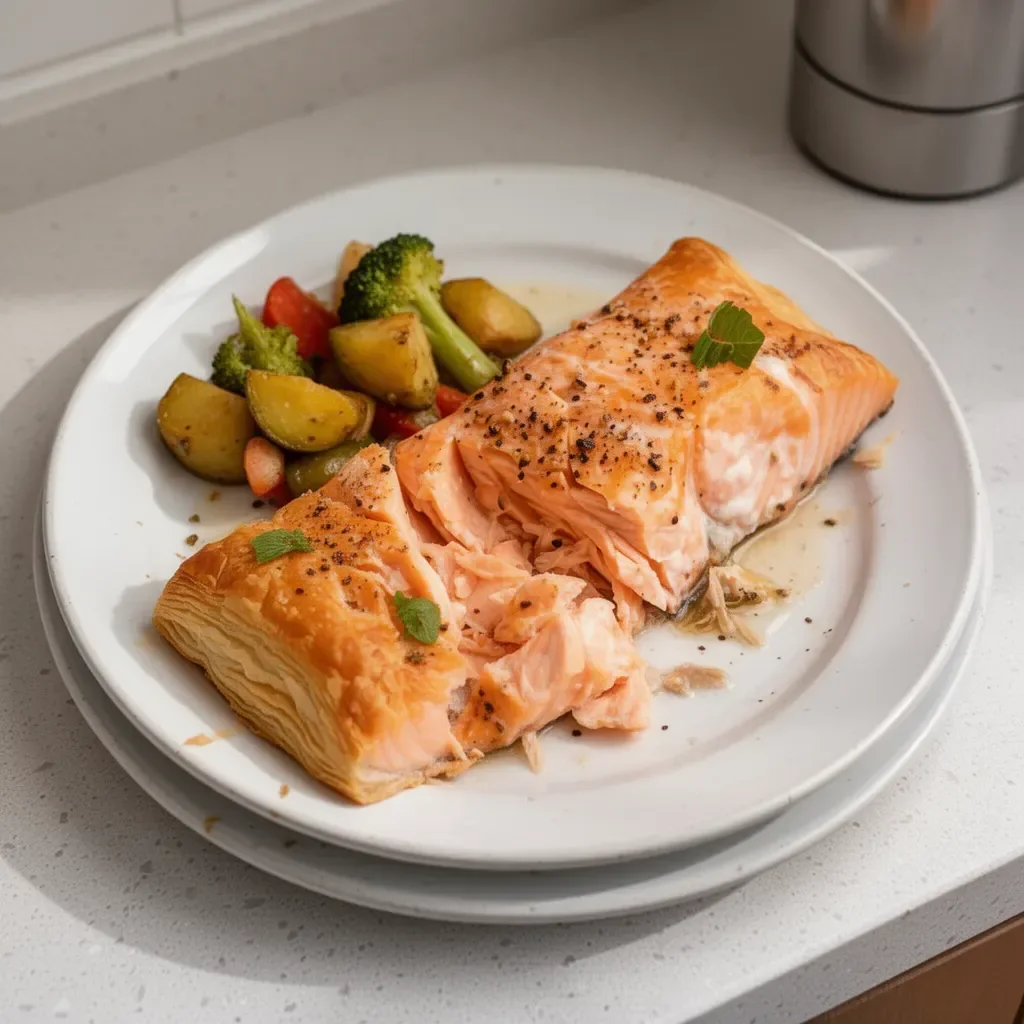
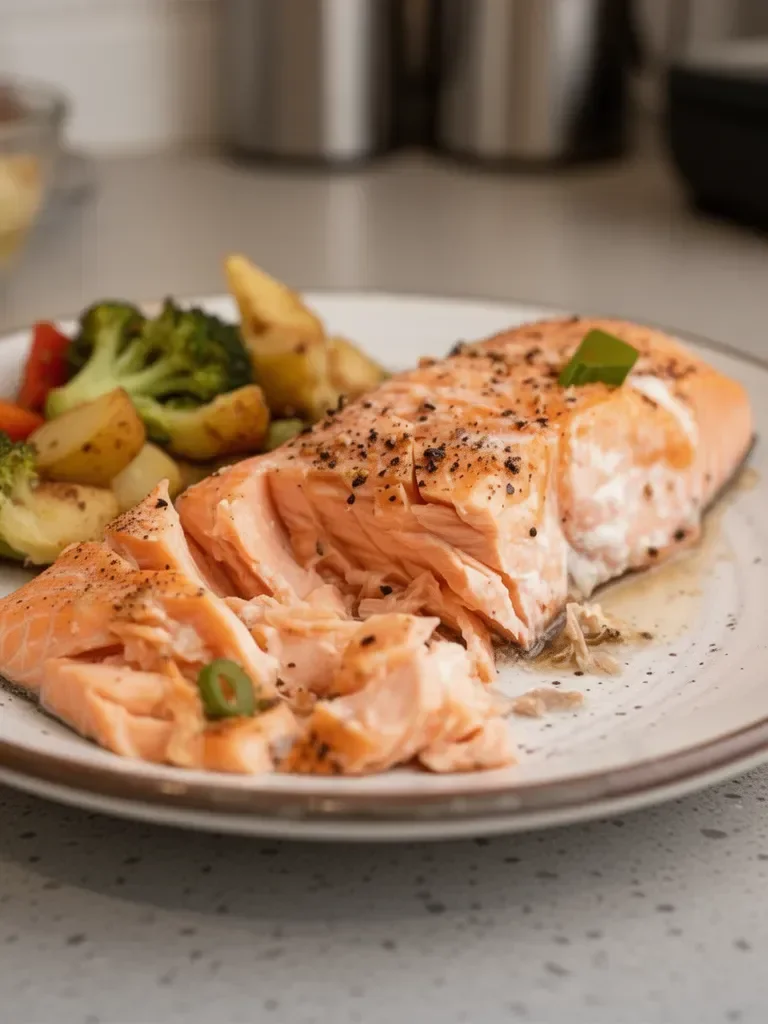
Selecting filets of 6oz to 8oz makes portion control easy. These sizes cook evenly, ensuring that every bite embodies that signature flakiness. Achieving that melt-in-your-mouth quality hinges on careful attention to cooking time. When salmon reaches an internal temperature of 145F/63C, its flesh becomes lighter and flakes effortlessly with a fork.
Preparation/setup
Preheating your oven to 415F/213C creates the right environment for baking the salmon properly. While the oven heats, gather your ingredients and set an area for preparation. This step keeps you organized and ready to whip up your meal.
Using a very lightly oiled baking tray sets the stage for deliciously crisp skin. The minimal amount of oil prevents sticking while contributing to the overall flavor. Placing the salmon skin-side down enhances the cooking experience, allowing the skin to crisp up nicely, while seasoning the fish elevates its flavor to another level.
Ingredients
To achieve that perfect flaky, buttery salmon, you need:
- 2 Salmon Filets (6oz-8oz)
- 1/4-1/2 Teaspoon Salt
- 1/4-1/2 Teaspoon Pepper
- 1/2 Teaspoon Avocado Oil or Olive Oil
Directions
- Preheat the oven to 415F/213C.
- Place salmon skin-side down on a very lightly oiled baking tray.
- Very lightly spray a tiny bit of oil on top of the salmon.
- Sprinkle salt and pepper all over the filet.
- Bake for 15-22 minutes depending on the size of your filet, as salmon needs to be baked to a minimum internal temperature of 145F/63C.
- The salmon will be lighter in color and flake easily when using a fork.
- Take out of the oven and cover with a piece of foil for 5-10 minutes to rest.
- Serve with desired side dishes. Store leftovers in the fridge for up to 3 days.
The Art of Cooking Salmon
Technique
Cooking salmon effectively requires mastering a few essential techniques. Keeping a close eye on the internal temperature ensures the salmon doesn’t overcook. Using a food thermometer can help achieve perfect results every time.
Choosing the right oil for the salmon can make all the difference. Both avocado oil and olive oil offer unique flavors and health benefits. Avocado oil stands up to high temperatures well, while olive oil imparts a delightful richness.
Tips/tricks
To enhance flavor, incorporate fresh herbs like dill or parsley. These can add freshness and depth, making each bite more vibrant. Experiment with different seasoning blends that suit your palate, allowing you to personalize the dish further.
If you enjoy a crispier finish, consider broiling the salmon for the last few minutes of cooking. Watch closely, as broiling can quickly elevate your salmon’s texture, creating that sought-after buttery crunch on top.
Perfecting Your Salmon Dish
Perfecting results
Achieving perfect salmon comes down to monitoring cooking time and temperature. Start checking for doneness at 15 minutes, especially for smaller filets. If the salmon is still opaque in the center, return it to the oven until it reaches that ideal internal temperature.
Resting the salmon before serving is vital. Allowing it to sit under foil for 5-10 minutes lets the juices redistribute, resulting in a beautifully tender fillet.
Troubleshooting/variations
Perhaps you find your salmon slightly overcooked. Don’t worry—there are ways to salvage it. Pairing it with creamy sauces or refreshing salads can mask any dryness. Additionally, serving salmon with a lemon or herb dressing can enhance the overall dish.
For those who like to experiment, try adding a quick marinade before baking. A mix of soy sauce, garlic, and ginger introduces an exciting new flavor profile that makes the salmon sing even more vibrantly.
Serving and Storage Suggestions
Serving/presentation
Presentation elevates any dish, and salmon is no exception. Arrange the salmon filets on a beautiful platter with lemon wedges and fresh herbs. A side of vibrant vegetables, like roasted asparagus or bright green beans, creates an inviting look, making dinner feel festive.
Consider serving the salmon with a grain side, such as quinoa or brown rice, which pairs beautifully and adds a healthy element to the meal.
Pairings/storage
For pairing, consider fresh salads or steamed vegetables that complement salmon’s buttery notes. You have endless options such as Mediterranean quinoa salad or a crisp cucumber salad, which balances the richness of the fish.
To store leftovers, seal them in an airtight container. Enjoy them within three days for the best taste and quality. Reheating gently in the oven or microwave helps maintain moisture while keeping the texture appealing.
Conclusion
Flaky, buttery salmon that melts in your mouth is a culinary delight that invites creativity. This simple recipe allows anyone to enjoy the best of seafood without any fuss. With just a few ingredients and a bit of technique, you’ll create a meal that feels like a treat without the complexity. Embrace the joy of cooking and savor every moment with this versatile dish that brings families and friends together.
Print
Flaky, Buttery Salmon That Melts in Your Mouth
- Prep Time: 10 minutes
- Cook Time: 20 minutes
- Total Time: 30 minutes
- Yield: 2 servings
- Category: Main Course
- Method: Baking
- Cuisine: Seafood
- Diet: Pescatarian
Description
A simple and delicious salmon recipe that transforms wild-caught fish into a flaky, buttery delight.
Ingredients
- 2 Salmon Filets (6oz-8oz)
- 1/4-1/2 Teaspoon Salt
- 1/4-1/2 Teaspoon Pepper
- 1/2 Teaspoon Avocado Oil or Olive Oil
Instructions
- Preheat the oven to 415F/213C.
- Place salmon skin-side down on a very lightly oiled baking tray.
- Very lightly spray a tiny bit of oil on top of the salmon.
- Sprinkle salt and pepper all over the filet.
- Bake for 15-22 minutes depending on the size of your filet, as salmon needs to be baked to a minimum internal temperature of 145F/63C.
- The salmon will be lighter in color and flake easily when using a fork.
- Take out of the oven and cover with a piece of foil for 5-10 minutes to rest.
- Serve with desired side dishes. Store leftovers in the fridge for up to 3 days.
Notes
Enhance flavor with fresh herbs like dill or parsley and consider broiling for a crispier finish.
