
📑 Table of Contents ▶
- Blackened Salmon: The Art of Flavor
- Fundamentals
- Preparation/setup
- Directions
- Mastering the Blackening Technique
- Technique
- Tips and Tricks
- Fine-tuning Your Blackened Salmon
- Perfecting Results
- Troubleshooting and Variations
- Presenting Your Blackened Salmon
- Serving and Presentation
- Pairings and Storage
- Blackened Salmon
Blackened Salmon – Cooking Classy
The first time I tasted blackened salmon, I sat on a deck overlooking the ocean. The sun dipped low, painting the sky with hues of orange and pink. A local chef prepared the salmon, seasoning it perfectly and searing it over a high flame. The aroma filled the air, mingling with the salty breeze. That moment solidified my love for this dish and provided me with inspiration.
Blackened salmon stands out with its robust flavors and satisfying texture. Each bite bursts with zest, delivering a combination of spice and smoky goodness that captures the spirit of coastal cooking. As I began to recreate this dish in my kitchen, I aimed to match that unforgettable experience. With just a few ingredients, you, too, can prepare this masterpiece that transports you to those sunset-drenched moments.
From my coastal kitchen, I have crafted this recipe to make blackened salmon approachable for everyone. The simplicity of cooking salmon showcases the beauty of fresh seafood. Whether you’re looking for a quick lunch or an elegant dinner to impress, this dish perfectly balances ease and sophistication. Dive in and let your taste buds celebrate the wonders of blackened salmon!
Blackened Salmon: The Art of Flavor
Fundamentals
Blackened salmon relies primarily on the technique of seasoning and searing. The spices create a zesty crust when cooked at high heat, sealing in the fish’s natural moisture. You’ll find that the core elements in this dish include blackening spice, high-quality salmon fillets, and a suitable cooking fat. These components work together to elevate a simple fish into a flavorful sensation.
Choosing the right salmon is crucial. Fresh, wild-caught salmon generally holds a more robust flavor compared to farmed varieties. Additionally, the skin-on fillets remain moist during cooking, which contributes to the overall dish’s success.
Preparation/setup
Start by gathering your ingredients and tools. A cast-iron skillet is ideal for achieving a perfect sear, but a heavy-duty nonstick skillet will work as well. Preheat the skillet before placing the salmon in the hot cooking fat; this prevents sticking and creates a beautiful crust.
Prepare your blackening spice by combining common pantry staples like paprika, cayenne pepper, garlic powder, onion powder, dried thyme, and oregano. Mixing these spices creates a balanced heat with depth, enhancing the inherent flavors of the salmon.
Ingredients
- 4 salmon fillets
- 2 tablespoons melted butter
- 1 tablespoon paprika
- 1 teaspoon cayenne pepper
- 1 teaspoon garlic powder
- 1 teaspoon onion powder
- 1 teaspoon dried thyme
- 1 teaspoon dried oregano
- Salt and black pepper to taste
Directions
- In a small bowl, mix the spices: paprika, cayenne pepper, garlic powder, onion powder, thyme, and oregano. Add salt and black pepper to taste.
- Preheat your cast-iron skillet over medium-high heat. Once hot, add the melted butter, ensuring it coats the skillet evenly.
- Pat the salmon fillets dry with paper towels to remove excess moisture. Sprinkle the spice mixture generously on both sides of each fillet, pressing gently for better adhesion.
- Place the salmon skin-side down in the hot skillet. Cook for about 4-5 minutes, allowing the spices to develop a dark, crispy coating.
- Carefully flip the salmon using a spatula and cook the other side for another 3-4 minutes, or until the fish flakes easily with a fork.
Mastering the Blackening Technique
Technique
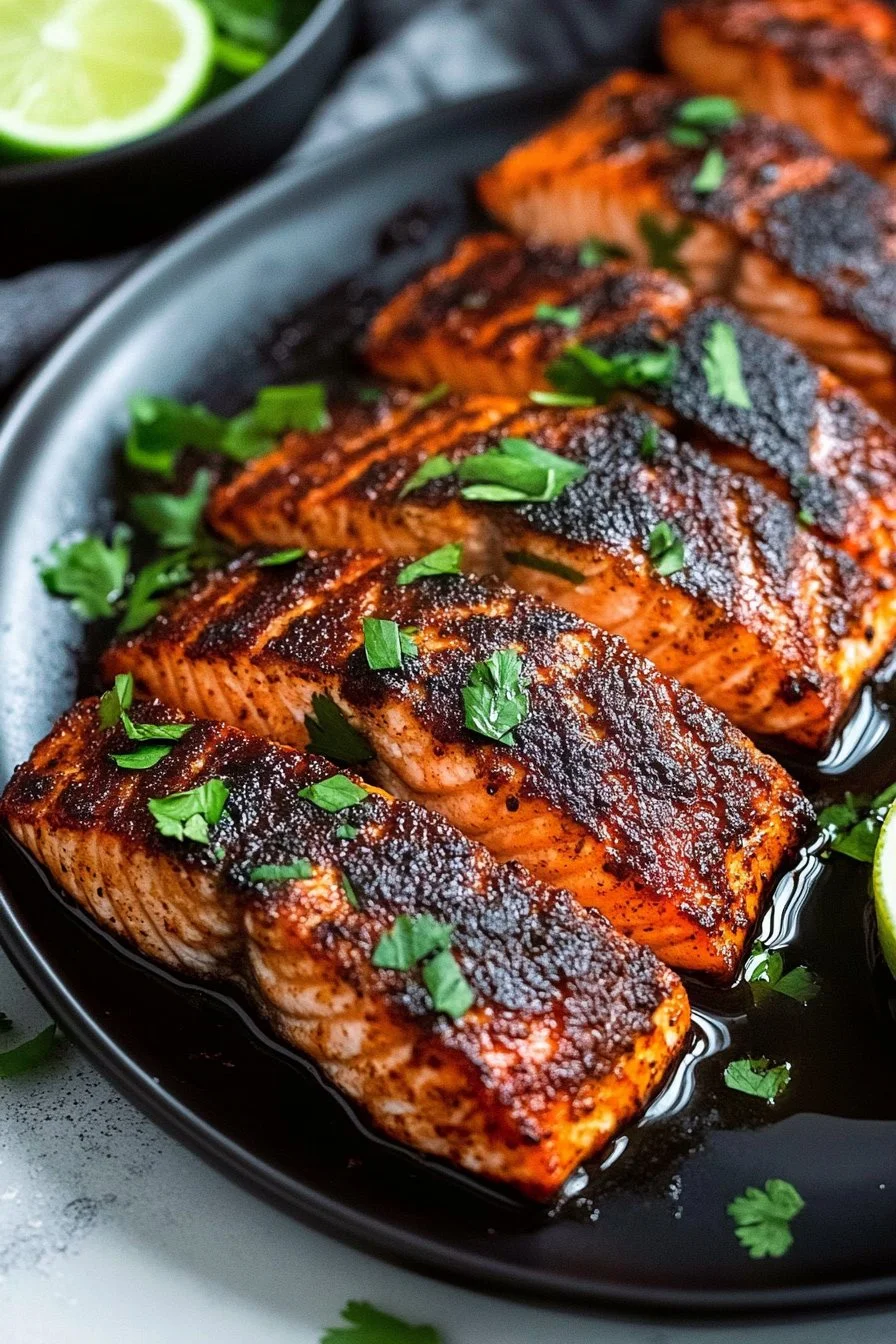
Blackening salmon involves precise cooking techniques, and mastering them will take your dish to the next level. Start over high heat to ensure that the outside forms an excellent crust while the inside retains tenderness.
Monitor the cooking time, keeping in mind that residual heat will continue cooking the salmon once off the stove. If you’re worried about overcooking, use a food thermometer to check for an internal temperature of 145°F.
Tips and Tricks
Don’t rush the seasoning. Allow the spice mixture to linger on the fish for a few minutes before cooking for maximum flavor infusion. Additionally, if you prefer a milder taste, reduce the amount of cayenne pepper or omit it altogether.
Experiment with different herbs and spices in your blackening blend. Dill, cumin, or smoked paprika can provide unique profiles. Toasting the spices for a few minutes before applying boosts their flavors even more.
Fine-tuning Your Blackened Salmon
Perfecting Results
The secret to perfect blackened salmon lies in practice. Over time, your cooking skills and instincts will develop. Monitor cooking times carefully; salmon can go from perfectly cooked to dry quickly. Adjust your heat settings if necessary to maintain a steady sizzle without burning the spices.
Want to add a twist? Consider marinating your salmon in olive oil and lemon juice for a brief period before blackening. This technique can enhance the fish flavor, particularly during grilling.
Troubleshooting and Variations
If your salmon ends up burnt or too spicy, simply adjust your cooking temperature or scale back on the spices. A touch of honey drizzled over the fillet can balance out slight bitterness from overly burnt spices.
If you’re feeling adventurous, try blackening other fish varieties, such as trout or snapper, using the same technique. Each type will yield a unique and delicious result.
Presenting Your Blackened Salmon
Serving and Presentation
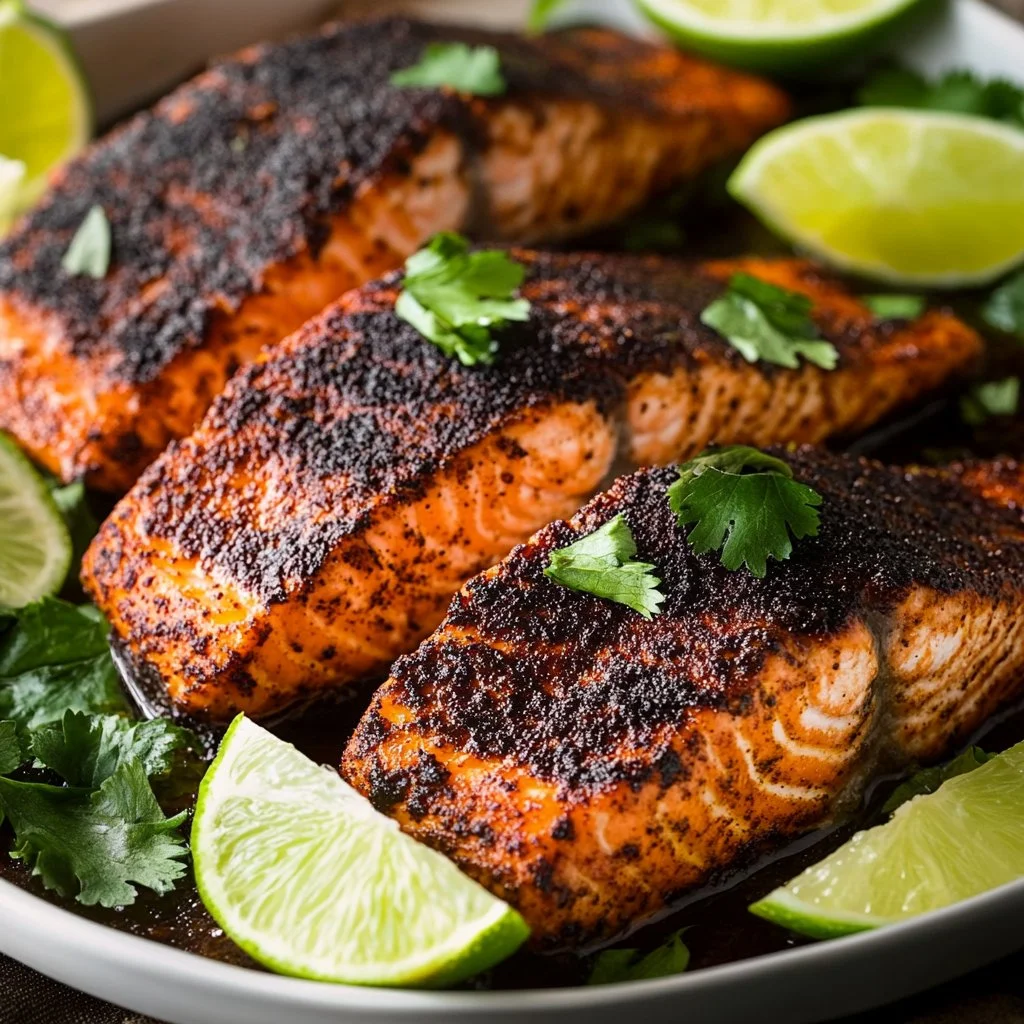
Presentation matters just as much as flavor. Serve your blackened salmon on a vibrant plate, garnished with fresh herbs or lemon wedges. A sprinkle of chopped parsley adds a refreshing touch that contrasts the rich flavors of the salmon.
Pair your dish with colorful sides like grilled asparagus, roasted sweet potatoes, or a crisp green salad to create an appealing plate. Vibrant colors enhance the dining experience, inviting guests to enjoy not only the taste but also the visual presentation.
Pairings and Storage
Pair your blackened salmon with refreshing accompaniments. A citrus-based relish or a cool yogurt sauce balances the dish beautifully. Consider serving alongside roasted or grilled veggies, quinoa, or a tangy slaw for a delightful mix of textures and flavors.
Store any leftovers in an airtight container for up to three days in the refrigerator. Reheat gently in a skillet to maintain the fish’s moisture, avoiding overcooking.
The art of blackened salmon delivers a flavorful punch that captures the essence of coastal cuisine. With practice and a bit of creativity, you’ll soon develop your signature style, creating unforgettable meals for yourself and loved ones.
Print
Blackened Salmon
- Prep Time: 15 minutes
- Cook Time: 10 minutes
- Total Time: 25 minutes
- Yield: 4 servings
- Category: Main Course
- Method: Pan-searing
- Cuisine: American
- Diet: Paleo
Description
A flavorful blackened salmon recipe that brings the essence of coastal cuisine to your kitchen with robust spices and a perfect sear.
Ingredients
- 4 salmon fillets
- 2 tablespoons melted butter
- 1 tablespoon paprika
- 1 teaspoon cayenne pepper
- 1 teaspoon garlic powder
- 1 teaspoon onion powder
- 1 teaspoon dried thyme
- 1 teaspoon dried oregano
- Salt and black pepper to taste
Instructions
- In a small bowl, mix the spices: paprika, cayenne pepper, garlic powder, onion powder, thyme, and oregano. Add salt and black pepper to taste.
- Preheat your cast-iron skillet over medium-high heat. Once hot, add the melted butter, ensuring it coats the skillet evenly.
- Pat the salmon fillets dry with paper towels to remove excess moisture. Sprinkle the spice mixture generously on both sides of each fillet, pressing gently for better adhesion.
- Place the salmon skin-side down in the hot skillet. Cook for about 4-5 minutes, allowing the spices to develop a dark, crispy coating.
- Carefully flip the salmon using a spatula and cook the other side for another 3-4 minutes, or until the fish flakes easily with a fork.
Notes
For maximum flavor, let the spice mixture sit on the fish for a few minutes before cooking. Adjust cayenne pepper amount for less heat.
