
📑 Table of Contents ▶
- Shrimp Curry With Coconut Milk
- Shrimp Curry with Coconut Milk
- Fundamentals
- Preparation/setup
- Mastering the Art of Shrimp Curry
- Technique
- Tips and Tricks
- Perfecting Your Shrimp Curry
- Perfecting Results
- Troubleshooting and Variations
- Serving and Enjoying Shrimp Curry
- Serving and Presentation
- Storage and Leftovers
- Conclusion
- FAQs – Shrimp Curry With Coconut Milk
Growing up by the sea, the aroma of fresh seafood often wafted through our home, with the sound of waves crashing in the background. One of my fondest memories is of my grandmother preparing her signature shrimp curry with coconut milk. The rich, creamy sauce paired with the succulence of shrimp captured the essence of coastal living in every bite.
My love for seafood was cemented during those family gatherings, where the kitchen was a lively hub of laughter and mouthwatering scents. Each dish was a celebration of simple ingredients transformed into something extraordinary. Among these, shrimp curry with coconut milk stood out, its vibrant flavors a testament to the art of balancing spices.
Now, I find joy in sharing this recipe with others, hoping to bring a taste of the sea to your table. The magic lies in the combination of freshly ground spices and the creamy richness of coconut milk, enveloping the shrimp in a flavorful embrace. It’s a dish that invites you to savor each moment, just as I did years ago in my grandmother’s kitchen.
So, let’s embark on this culinary journey together, discovering the secrets of a perfect shrimp curry with coconut milk, and creating new memories with each delicious bite.
Print
Shrimp Curry With Coconut Milk
- Prep Time: 15 minutes
- Cook Time: 15 minutes
- Total Time: 30 minutes
- Yield: 4 servings
- Category: Main Course
- Method: Sautéing
- Cuisine: Indian
Description
Learn how to make a delicious Shrimp Curry with Coconut Milk that’s creamy, flavorful, and perfect for your next meal. Dive into this easy recipe now!
Ingredients
- 1 pound (454 g) extra-large shrimp (peeled and deveined)
- 1/4 teaspoon (1.25 ml) salt
- 1/4 teaspoon (1.25 ml) black pepper (freshly ground)
- 1/4 teaspoon (1.25 ml) cayenne pepper
- 2 tablespoons (30 ml) lemon juice
- 1 tablespoon (15 ml) vegetable oil
- 1 medium onion (chopped)
- 3 cloves garlic (minced)
- 1 tablespoon (15 ml) fresh ginger (minced)
- 1/2 teaspoon (2.5 ml) black pepper (freshly ground)
- 1/2 teaspoon (2.5 ml) salt (or to taste)
- 1/2 teaspoon (2.5 ml) turmeric
- 2 teaspoons (10 ml) ground coriander
- 1 teaspoon (5 ml) curry powder
- 14 1/2 ounces (411 g) diced tomatoes
- 13 1/2 ounces (383 g) coconut milk
- 2 tablespoons (30 ml) cilantro (for garnish or parsley)
- cooked rice for serving
Instructions
- Place the shrimp in a small mixing bowl and combine with the marinade components. Seal with plastic wrap and chill for 10 minutes.
- As the shrimp marinates, warm the oil in a medium-sized pan. Introduce the onion and sauté for 2 to 3 minutes until it becomes soft and transparent.
- Mix in the garlic, ginger, pepper, salt, coriander, turmeric, and curry powder, and continue cooking for one more minute.
- Pour in the diced tomatoes along with their liquid and the coconut milk, then stir and bring the mixture to a simmer. Allow it to cook for around 5 minutes, stirring occasionally.
- Incorporate the shrimp along with any juices from the marinade, and cook for an additional 2 minutes, or until the shrimp is cooked and pink.
- Present the dish over steaming rice and embellish with cilantro or parsley.
Notes
- For a spicier flavor, increase the cayenne pepper in the marinade.
- Adjust salt to taste at the end due to varying saltiness of diced tomatoes and coconut milk.
- Enhance the taste by using fresh tomatoes instead of canned in this recipe.
Shrimp Curry with Coconut Milk
Fundamentals
At the heart of shrimp curry with coconut milk is its delicate balance of flavors. The key lies in the use of fresh, high-quality ingredients. Start with extra-large shrimp, peeled and deveined, ensuring a clean and tender texture. The combination of spices—cayenne pepper, turmeric, and curry powder—adds depth and warmth to the dish, while ground coriander lends a citrusy note.
Coconut milk is the star, providing a creamy base that mellows the spices and enhances the sweetness of the shrimp. When choosing coconut milk, aim for a full-fat version to achieve the richest flavor and texture. Diced tomatoes add a hint of acidity, balancing the creaminess with their tangy notes. Finally, fresh ginger and garlic infuse the dish with their aromatic essence, elevating the overall taste profile.
Preparation/setup
Begin by marinating the shrimp. Combine them with salt, black pepper, cayenne pepper, and lemon juice in a small mixing bowl. Cover with plastic wrap and chill for 10 minutes. This step infuses the shrimp with flavor and tenderizes them, making them succulent and juicy when cooked.
As the shrimp marinate, prepare your cooking area. Chop a medium onion and mince three cloves of garlic along with a tablespoon of fresh ginger. These aromatics form the foundation of your curry, releasing their flavors as they sauté. Ensure all your spices are measured and ready, so the cooking process flows smoothly.
Mastering the Art of Shrimp Curry
Technique
To begin, heat vegetable oil in a medium-sized pan over medium heat. Add the chopped onion and sauté for 2 to 3 minutes until it becomes soft and translucent. This step is crucial as it builds the flavor base for your curry. Once the onions are ready, introduce the minced garlic and ginger, cooking for another minute. The aroma that fills the kitchen will be an early reward for your efforts.
Shrimp Curry With Coconut Milk
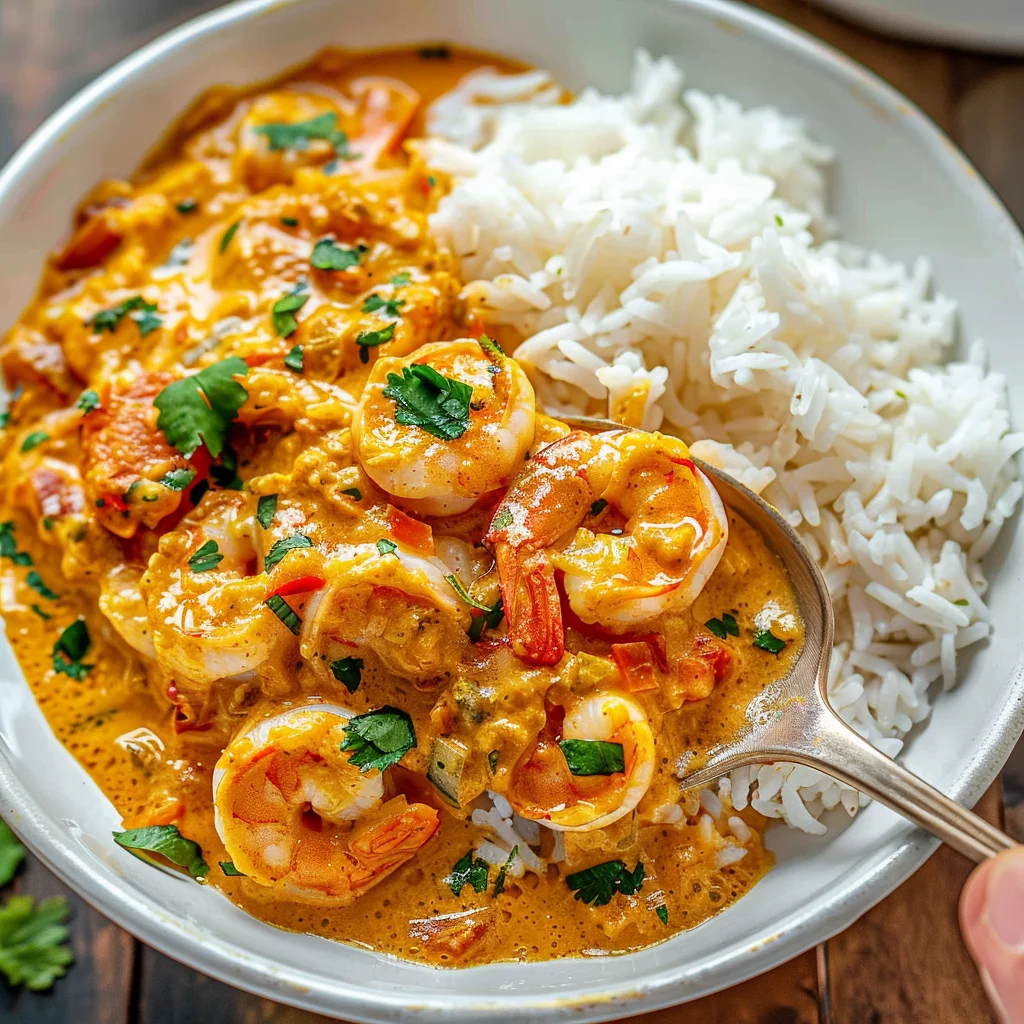
Next, incorporate the spices—black pepper, salt, coriander, turmeric, and curry powder. Stirring constantly, cook them for a minute to release their flavors. This step is key in ensuring that each spice fully integrates into the dish, creating a harmonious blend. Pour in the diced tomatoes with their juices and coconut milk. Stir well, bringing the mixture to a gentle simmer, allowing the flavors to meld for about 5 minutes. This melding process is where the magic happens, as the curry develops its signature depth and richness.
Tips and Tricks
Consistency is key in making a perfect shrimp curry with coconut milk. Adjust the heat to maintain a gentle simmer, preventing the coconut milk from curdling. Stir occasionally to keep the spices evenly distributed. If your curry appears too thick, add a splash of water or more coconut milk to achieve your desired consistency.
For an extra burst of flavor, try adding a teaspoon of sugar or a squeeze of lime juice towards the end of cooking. This subtle acidity can elevate the dish, balancing the richness of the coconut milk. If you’re interested in exploring other coconut curry variations, consider trying our Thai Coconut Curry Salmon for a delightful twist.
Perfecting Your Shrimp Curry
Perfecting Results
Once the curry base is ready, it’s time to add the shrimp. Introduce the marinated shrimp along with any juices from the marinade into the simmering curry. Cook for an additional 2 minutes or until the shrimp turn pink and opaque. Overcooking shrimp can lead to a rubbery texture, so keep a close eye on them as they cook.
To ensure consistency, taste and adjust the seasoning if necessary. A pinch more salt or a dash of pepper can make a significant difference in enhancing the overall flavor. If you’re seeking inspiration for other seafood dishes, our Shrimp Stuffed Avocados offer a refreshing and satisfying alternative.
Troubleshooting and Variations
If your curry becomes too spicy, add a bit more coconut milk to mellow the heat. Conversely, if you crave more spice, a pinch of cayenne pepper can elevate the kick. For a thicker curry, let it simmer uncovered for a few additional minutes, allowing excess liquid to evaporate.
Experimenting with variations can be rewarding. Substitute shrimp with another protein like chicken or tofu for a different take, or explore our Creamy Coconut Salmon Curry for another delightful seafood option. Each variant offers a unique experience, broadening your culinary repertoire.
Serving and Enjoying Shrimp Curry
Serving and Presentation
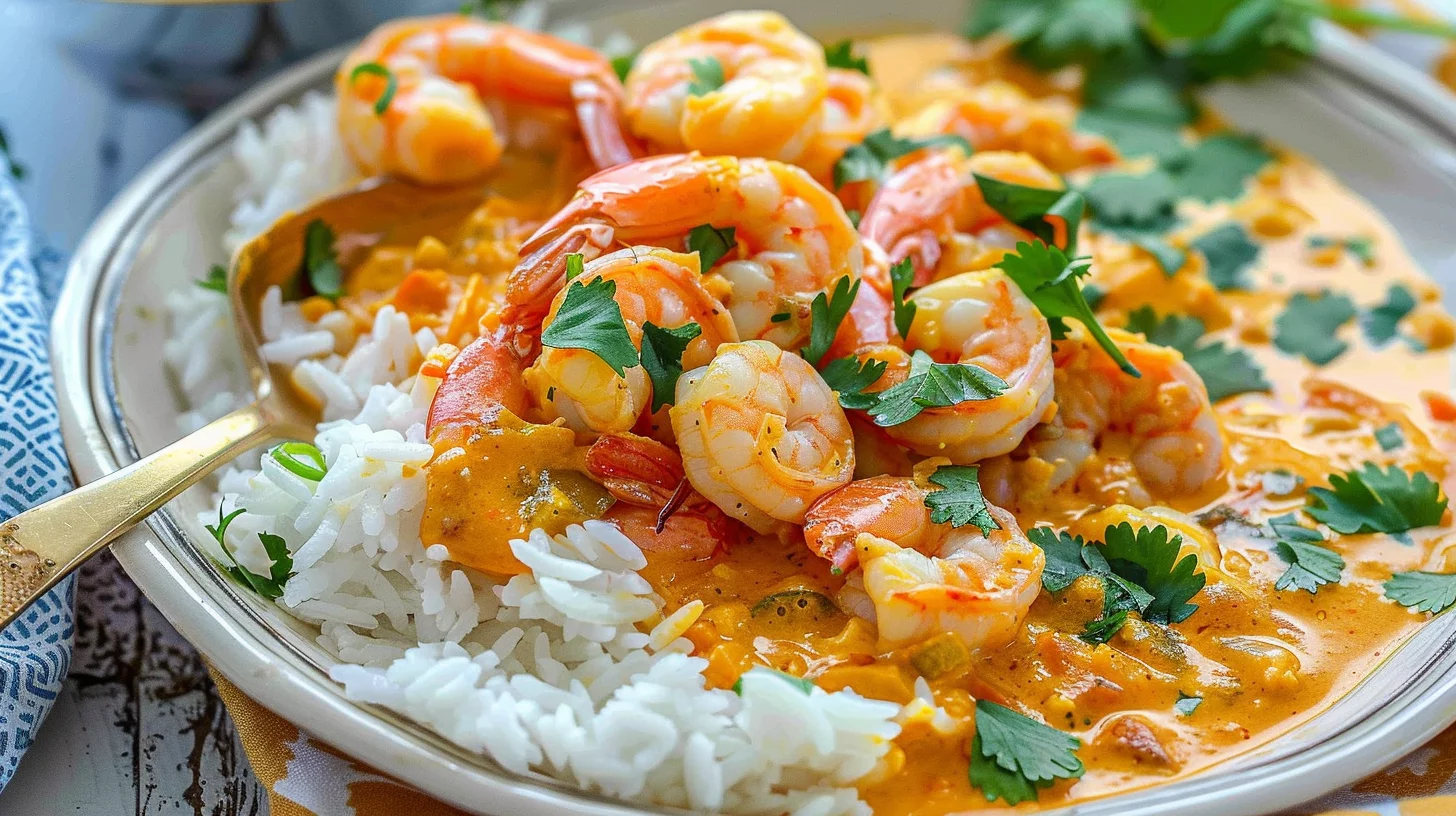
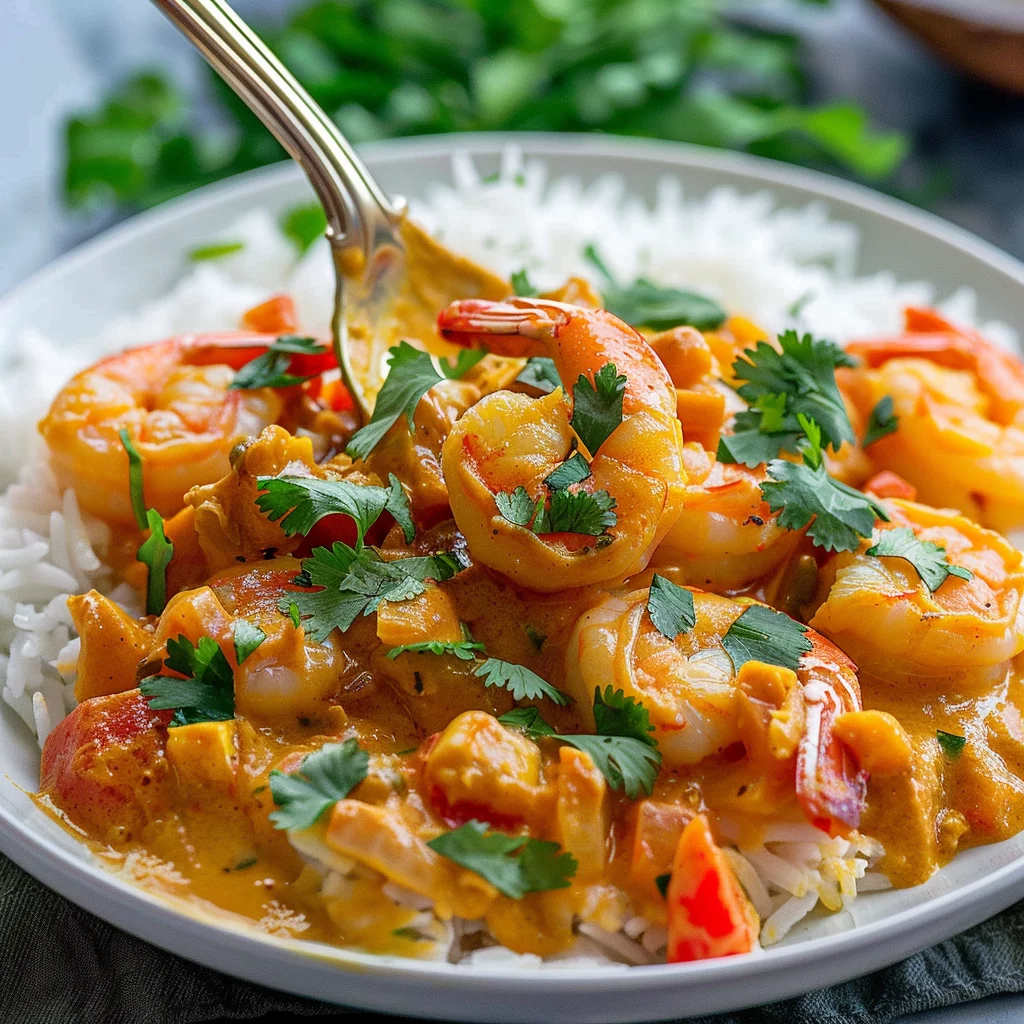
Serve your shrimp curry with coconut milk over a bed of steaming rice. The fluffy grains soak up the rich sauce, creating a satisfying meal. Garnish with freshly chopped cilantro or parsley, adding a pop of color and a hint of freshness to the dish. Presentation plays a role in the dining experience, so take a moment to artfully arrange the curry and rice.
For an elegant touch, serve alongside a side of Jasmine Rice with Coconut Lime Fish Curry. This pairing complements the flavors of the shrimp curry, creating a cohesive seafood feast. The combination of dishes offers a balance of textures and flavors, perfect for impressing guests or indulging in a special meal at home.
Shrimp Curry With Coconut Milk
Storage and Leftovers
Store any leftovers in an airtight container in the refrigerator for up to three days. When reheating, do so gently on the stovetop over low heat, adding a splash of water or coconut milk to loosen the sauce. This method preserves the shrimp’s tenderness and keeps the flavors intact.
If you’re looking to diversify your meal prep, consider pairing the curry with other dishes like Baked Cod in Coconut Curry or enjoy a comforting bowl of Sweet Potato and Coconut Curry Soup. These options ensure your meals remain exciting and varied throughout the week.
Conclusion
Shrimp curry with coconut milk is a celebration of flavors and textures, a dish that brings the essence of the sea to your table. Mastering this dish involves understanding the balance of spices, the richness of coconut milk, and the perfect cooking time for shrimp. With each step, you build layers of flavor, creating a meal that is both comforting and indulgent.
Whether you’re preparing a quick weeknight dinner or a special occasion feast, shrimp curry with coconut milk offers versatility and satisfaction. Its creamy sauce and vibrant spices make it a standout dish that’s sure to impress. Embrace the joy of cooking seafood, and let this recipe become a cherished part of your culinary repertoire.
