
📑 Table of Contents ▶
- Lobster Bisque Restaurant Style
- Mastering Lobster Bisque Restaurant Style
- Fundamentals
- Preparation/Setup
- Elevating Your Lobster Bisque Experience
- Technique
- Tips/Tricks
- Perfecting Lobster Bisque Restaurant Style
- Perfecting Results
- Troubleshooting/Variations
- Presenting Your Lobster Bisque Restaurant Style
- Serving/Presentation
- Pairings/Storage
- Conclusion
- FAQs – Lobster Bisque Restaurant Style
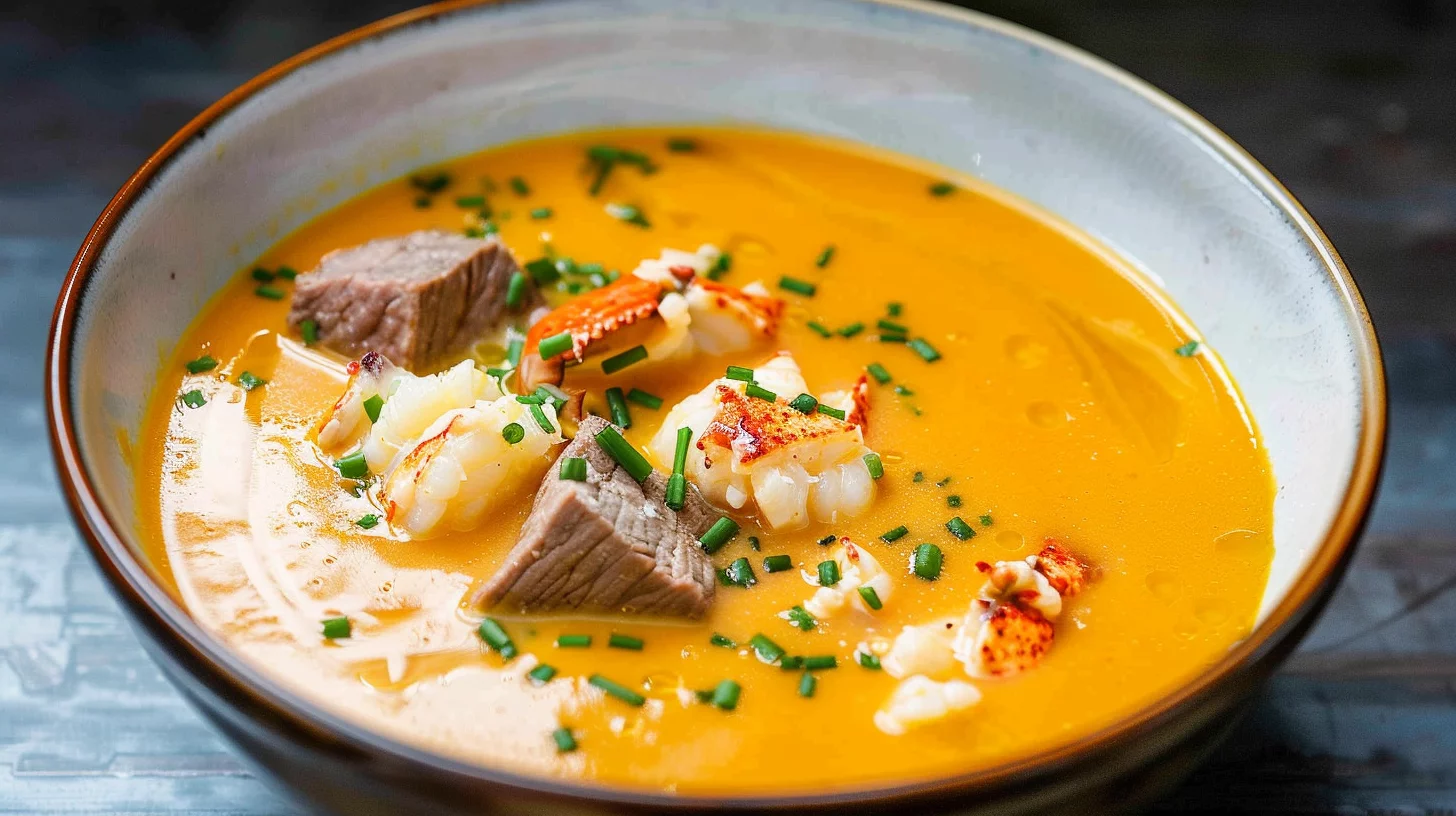
The aroma of a perfectly prepared lobster bisque restaurant style can instantly transport you to an ocean-side eatery, where the sound of waves and the scent of saltwater mingle in the air. Growing up by the sea, I was always drawn to the flavors of rich, creamy lobster bisque. My family often gathered around a large pot, savoring each spoonful as we shared tales of our day. This dish, with its luxurious texture and savory depth, has always been a staple in our household, bringing comfort and a touch of elegance to our table.
My fascination with lobster bisque restaurant style began on a chilly autumn evening when I first attempted to make it from scratch. I remember the excitement of blending the ingredients, eager to recreate the creamy delight I had tasted in upscale restaurants. The process felt like a culinary adventure, each step bringing me closer to that perfect balance of flavors. As the bisque simmered, its inviting aroma filled the kitchen, and I knew I was crafting something special.
Over the years, my passion for lobster bisque restaurant style has only grown stronger. I’ve experimented with different techniques and ingredients, always striving to capture the essence of the sea in every bowl. This journey has not only deepened my appreciation for seafood but also connected me with fellow seafood enthusiasts. Together, we’ve shared tips and tricks, making this dish a beloved part of our culinary traditions.
Print
Lobster Bisque Restaurant Style
- Prep Time: 20 minutes
- Cook Time: 50 minutes
- Total Time: 1 hour 10 minutes
- Yield: 4 servings
- Category: Main Course
- Method: Boiling, Blending
- Cuisine: International
Description
Learn how to make delicious restaurant-style lobster bisque at home with this easy recipe. Impress your guests with this flavorful and creamy dish!
Ingredients
- 4 tablespoons (60 ml) vegetable oil
- 1 large yellow onion diced
- 5 stalks celery diced
- 3 medium carrots diced
- 1 garlic clove minced
- salt and white pepper to taste
- 1 sprig fresh tarragon (or 3/4 teaspoon (4 ml) dried tarragon)
- 3 tablespoons (45 ml) tomato paste
- 1 teaspoon (5 ml) paprika
- 1/8 teaspoon (1 ml) cayenne pepper
- ¼ cup (30 g) all-purpose flour
- 1 cup (240 ml) apple juice
- ⅓ cup (80 ml) grape juice (or white grape juice)
- 6 cups (1440 ml) (1.5 liters) vegetable or seafood stock *see note
- 1 sprig fresh thyme (or 1/4 teaspoon (1 ml) dried thyme)
- 1 bay leaf
- 1 cup (240 ml) coconut cream
- 1 teaspoon (5 ml) apple cider vinegar (or rice vinegar)
- 10 ounces (280 g) beef meat cut into meaty chunks **(see note)
- chopped chives optional, for garnish
- 1 large onion halved
- 2 stalks celery halved
- 1 carrot halved
- 3 cloves garlic smashed
- 5 peppercorns
- 4 sprigs thyme
- 2 bay leaves
- lobster, shrimp or crab shells As many as you can fit – the more, the better, but even just a few will work.
- water to cover
Instructions
- Warm up vegetable oil in a large, sturdy pot or Dutch oven on medium heat.
- Introduce the diced onion, celery, carrots, and minced garlic. Sprinkle with salt and white pepper, and cook while stirring often until they become soft but not browned, roughly 8 minutes.
- Incorporate tarragon, tomato paste, cayenne, and paprika, and mix until the tomato paste is evenly distributed.
- Blend in the flour until it is fully mixed in.
- Pour in the apple juice and grape juice, then raise the heat to medium-high and stir until the liquid is absorbed.
- Add the vegetable or seafood stock, thyme, and bay leaf. Season with salt and white pepper. Cover and allow to simmer until the vegetables are very soft, approximately 20 minutes.
- Remove the thyme sprig and bay leaf, then blend the soup until it reaches a completely smooth consistency. Use an immersion blender or a regular blender in portions if needed.
- Ensure the soup is entirely smooth with no lumps or grainy texture. If necessary, strain the soup through a fine mesh sieve.
- Return the soup to the stove on medium-low heat. Stir in the coconut cream and apple cider vinegar to combine.
- Taste and adjust the seasoning as necessary.
- To serve, distribute the beef chunks among bowls, reserving some for garnish if wanted. Pour hot soup over them, sprinkle with the remaining beef pieces and chives. Serve immediately.
- Place the halved onion, celery, carrot, smashed garlic, peppercorns, thyme, bay leaves, and seafood shells into a large stockpot. Press down to reduce any gaps between the ingredients.
- Pour in enough water to cover them, then bring it to a boil. Lower the heat to maintain a gentle simmer and cook for 20-30 minutes.
- Strain the liquid and store the stock in mason jars or plastic containers. The yield will vary. Stock can be frozen for up to 6 months.
Notes
- For a plant-based option, omit beef and use vegetable stock instead of seafood stock.
- Enhance the seafood flavor by adding more lobster, shrimp, or crab shells to the stock mixture.
- Blend the soup until smooth for a silky texture, and strain for a velvety finish.
Mastering Lobster Bisque Restaurant Style
Fundamentals
Creating a lobster bisque restaurant style requires understanding its foundational elements. Start by warming vegetable oil in a sturdy pot. This simple step is crucial for developing the base flavors. Dice a large yellow onion, celery, and carrots, then mince a garlic clove. Sauté these vegetables with salt and white pepper until they soften.
Next, incorporate tarragon, tomato paste, cayenne, and paprika into the mix. These ingredients add depth and complexity, transforming the bisque from ordinary to extraordinary. Stir in all-purpose flour to thicken the mixture, ensuring the bisque achieves its signature creamy texture.
Preparation/Setup
Prepare your liquids by adding apple juice and grape juice to the pot, raising the heat to medium-high. This combination infuses the bisque with a subtle sweetness, complementing the savory notes. As the liquid absorbs, pour in your choice of vegetable or seafood stock, along with thyme and a bay leaf. Cover and let simmer until the vegetables are tender.
Once the soup is ready, remove the thyme and bay leaf, then blend until smooth. This step is vital for achieving the velvety consistency that defines a true lobster bisque restaurant style. Strain through a fine mesh sieve if needed, ensuring a flawless texture.
Elevating Your Lobster Bisque Experience
Technique
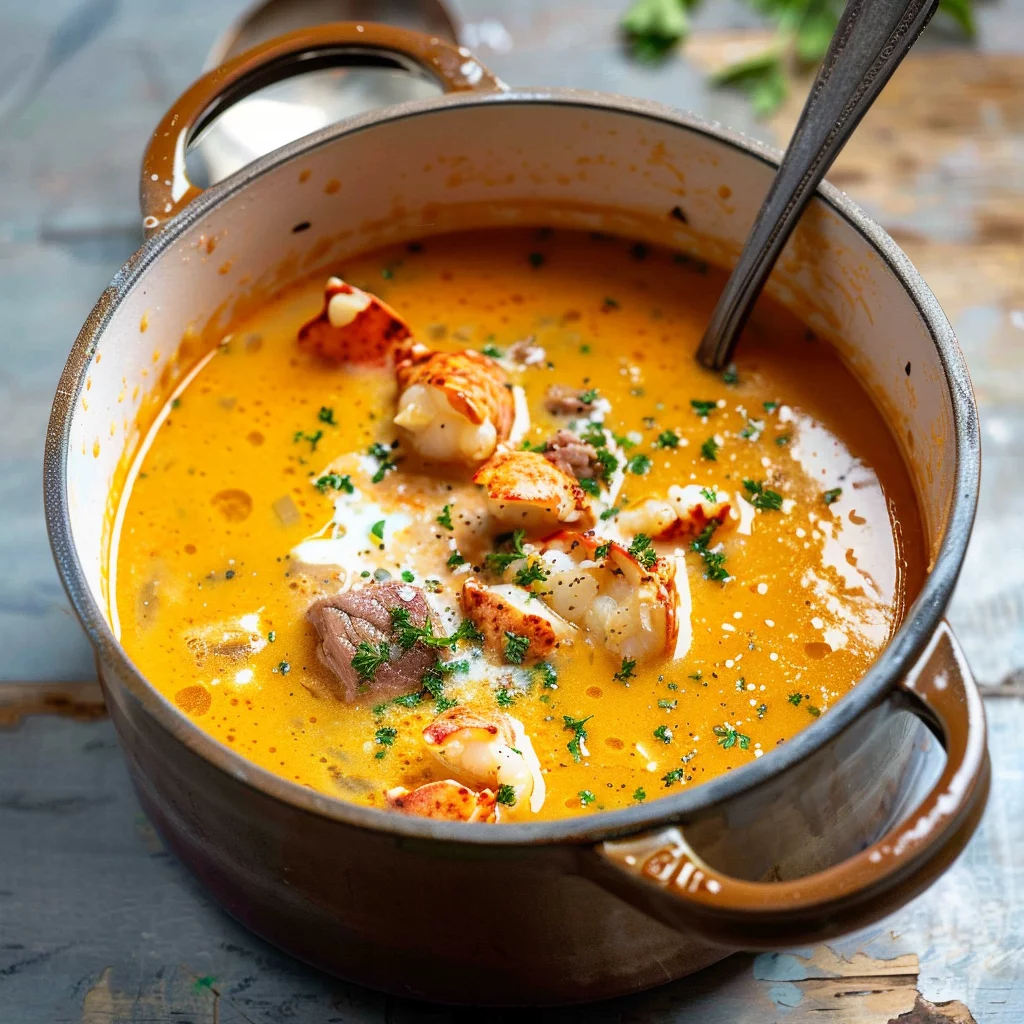
Perfecting the lobster bisque restaurant style involves mastering the art of blending flavors. After achieving a smooth base, return the soup to medium-low heat. Stir in coconut cream for richness and apple cider vinegar for a hint of acidity. These elements work together to enhance the bisque’s complexity, making each spoonful a delight.
When serving, distribute beef chunks among bowls, covering them with hot bisque. This step not only adds a unique twist but also ensures the beef absorbs the bisque’s flavors. Garnish with chives for a touch of freshness, inviting your guests to indulge in a restaurant-quality experience at home.
Lobster Bisque Restaurant Style
Tips/Tricks
For an authentic lobster bisque restaurant style, use homemade seafood stock. Combine onion, celery, carrot, garlic, peppercorns, thyme, bay leaves, and seafood shells in a stockpot. Cover with water and simmer to extract every ounce of flavor. Strain and store for future bisque adventures.
To add an extra layer of flavor, consider this creamy lobster bisque recipe for inspiration. It offers a delightful twist on the classic bisque, ensuring your dish stands out.
Perfecting Lobster Bisque Restaurant Style
Perfecting Results
Achieving the perfect lobster bisque restaurant style requires attention to detail. Ensure your vegetables are diced uniformly for even cooking. When blending, check for any lumps and strain if necessary. These small steps make a significant difference in the final texture.
Experiment with ingredient proportions to suit your taste. Adjust the seasoning of salt and white pepper, keeping in mind that the flavors will intensify as the bisque simmers. A well-balanced bisque is both savory and slightly sweet, with a hint of aromatic herbs.
Troubleshooting/Variations
If your bisque turns out too thick, simply add more stock or a splash of juice to thin it to your desired consistency. For a spicier kick, increase the cayenne pepper, but do so sparingly to avoid overpowering the bisque’s delicate flavors.
For those who prefer a seafood-forward dish, explore this seafood bisque with crab, shrimp, and lobster. It offers a diverse flavor profile that complements the traditional bisque, making it a versatile choice for seafood lovers.
Presenting Your Lobster Bisque Restaurant Style
Serving/Presentation
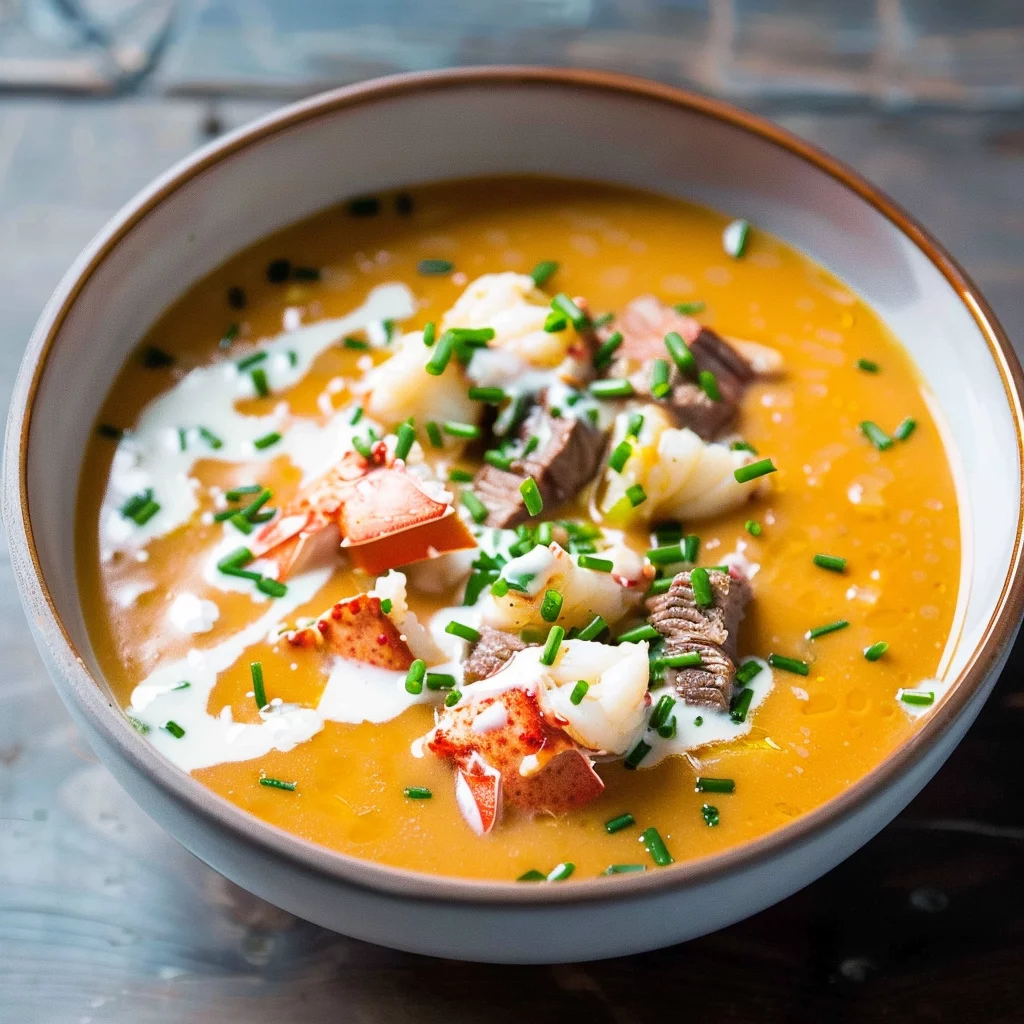
Presentation plays a key role in creating a memorable lobster bisque restaurant style experience. Serve the bisque in elegant bowls, garnished with fresh chives or a sprinkle of paprika for color. This attention to detail elevates the dining experience, making it feel like a special occasion.
For a full indulgence, pair the bisque with crusty bread or a light salad. These accompaniments provide a balance of textures and flavors, enhancing the enjoyment of the bisque. Consider exploring this easy lobster bisque in 30 minutes for a quick yet satisfying meal.
Lobster Bisque Restaurant Style
Pairings/Storage
Store any leftover bisque in airtight containers and refrigerate for up to 3 days. Reheat gently on the stove, avoiding boiling to preserve the bisque’s creamy texture. If you’re planning to freeze, do so without the coconut cream, adding it only after reheating for the best results.
For more ideas on seafood pairings, check out this homemade crab and shrimp seafood bisque. It offers a complementary dish that can round out your seafood-themed meal.
Conclusion
Crafting a lobster bisque restaurant style at home is a rewarding endeavor, offering a taste of luxury with every spoonful. By mastering the fundamentals and experimenting with techniques, you can create a bisque that rivals any upscale restaurant offering. The key lies in balancing flavors, achieving the perfect texture, and presenting it with flair.
This bisque not only highlights the beauty of seafood but also showcases your culinary skills. Whether enjoyed as a comforting meal or an elegant appetizer, it promises to impress and delight. Embrace the art of bisque-making, and let each bowl transport you to the seaside, where flavors of the ocean come alive.
