
📑 Table of Contents ▶
- Shrimp Pad Thai
- Mastering Shrimp Pad Thai
- Fundamentals
- Preparation/Setup
- The Art of Cooking Shrimp Pad Thai
- Technique
- Tips/Tricks
- Perfecting Your Shrimp Pad Thai
- Perfecting Results
- Troubleshooting/Variations
- Serving and Enjoying Shrimp Pad Thai
- Serving/Presentation
- Pairings/Storage
- Conclusion
- FAQs – Shrimp Pad Thai
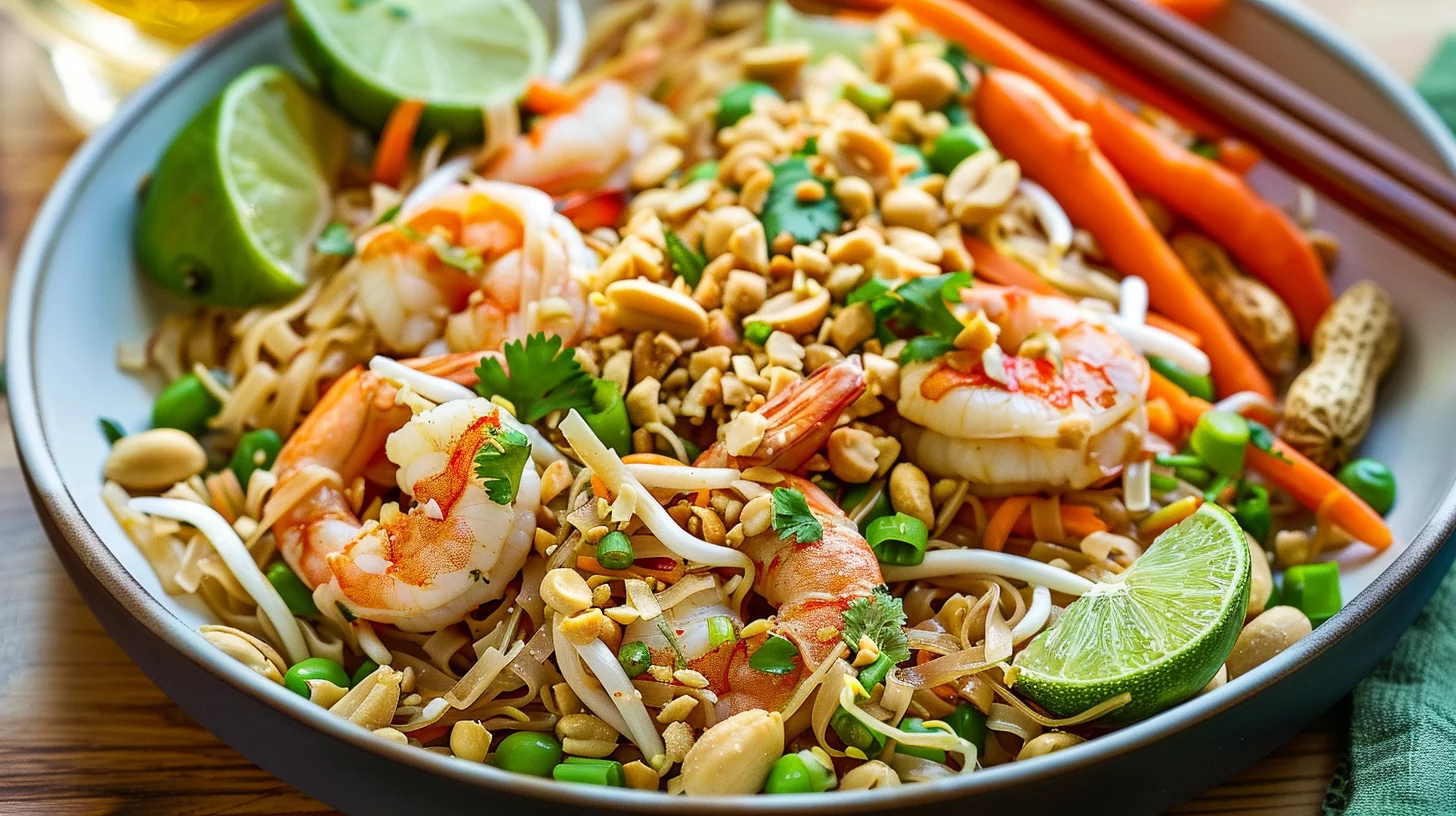
Growing up by the sea, Shrimp Pad Thai was a staple in my culinary repertoire. The tantalizing aroma of sizzling shrimp and garlic wafting through the kitchen always transported me back to sun-soaked beach days. The irresistible blend of spicy, sweet, and savory flavors in Shrimp Pad Thai never failed to captivate my senses.
As a child, I loved watching my grandmother expertly toss the ingredients in her well-seasoned wok, transforming simple components into a masterpiece. The shrimp would dance in the pan, turning a delightful pink as the garlic released its intoxicating scent. This dish was more than just a meal; it was an experience, a celebration of flavors that brought our family together.
Now, as I stand in my own kitchen by the sea, I continue this tradition, sharing my love for Shrimp Pad Thai with family and friends. Each time I prepare it, I’m reminded of the joy and warmth this dish brings. It’s a testament to the culinary magic that happens when fresh shrimp meets bold flavors.
Join me as we dive into the world of Shrimp Pad Thai, exploring its fundamentals, techniques, and tips to perfect this beloved dish.
Print
Shrimp Pad Thai
- Prep Time: 15 minutes
- Cook Time: 15 minutes
- Total Time: 30 minutes
- Yield: 4 servings
- Category: Main Course
- Method: Stir-Frying
- Cuisine: Asian
Description
Discover how to create a delicious Shrimp Pad Thai at home with our easy-to-follow recipe. Learn the secrets to perfecting this classic Thai dish!
Ingredients
- 4 ounces (113 g) dry rice noodles
- 2 teaspoons (10 ml) vegetable oil
- 8 ounces (227 g) medium or large shrimp, peeled and deveined (fresh or thawed frozen shrimp, pat dry if thawed)
- 2 cloves garlic, minced
- 3 large eggs
- 1/2 cup (120 ml) bean sprouts* (see note)
- 1/2 cup (75 g) freshly grated carrots
- 2 large green onions (or 3 small), finely chopped
- 1/4 cup (30 g) peanuts, finely chopped
- 1/4 cup (15 g) fresh cilantro, chopped
- Lime wedges for serving
- 2 tablespoons (30 ml) soy sauce, gluten free if needed
- 1 1/2 tablespoons (22.5 ml) rice vinegar, seasoned
- 1 tablespoon (15 ml) soy sauce or tamari
- 2 tablespoons (30 ml) water
- 1 tablespoon (15 ml) honey, plus additional 1-2 teaspoons to taste
- 1–3 teaspoons (10 ml) ground chili sauce or chili garlic sauce
Instructions
- Prepare the rice noodles as directed on the package until they are tender but not overly soft. Once done, drain them and rinse with cold water.
- Combine the sauce components in a small bowl: soy sauce, rice vinegar, water, honey, and chili garlic sauce. Adjust sweetness with more honey if desired, or increase spiciness with more chili sauce.
- Warm the oil in a large non-stick pan or wok over medium-high heat. Sauté the shrimp until they start to turn pink, about 2 minutes. Add the garlic and noodles, stirring constantly to mix them with the shrimp. Then, move everything to one side of the pan.
- On the empty side of the pan, crack the eggs and break the yolks with a spatula. Allow them to cook for 30 seconds until they just start to set, then mix them with the noodles. Pour in the sauce and mix well.
- Toss in the bean sprouts, carrots, and chopped green onions, cooking until the bean sprouts are just tender but still crisp, about 1 minute. Sprinkle with peanuts and cilantro. Serve promptly with lime wedges.
Notes
Mastering Shrimp Pad Thai
Fundamentals
Shrimp Pad Thai is known for its vibrant and harmonious blend of flavors. The dish combines the subtle sweetness of honey with the tangy kick of rice vinegar, balanced by the salty depth of soy sauce. Freshly grated carrots and crunchy peanuts add texture, while lime wedges provide a refreshing acidity. This combination creates a dish that is both satisfying and exciting to the palate.
At its core, Shrimp Pad Thai features rice noodles, shrimp, and a medley of vegetables. The key to its success lies in using fresh, high-quality ingredients. The shrimp should be peeled and deveined to ensure a tender bite, and the vegetables should be crisp and vibrant. The sauce, a crucial element, ties everything together, delivering the signature taste that makes Shrimp Pad Thai so beloved.
Preparation/Setup
Start by preparing the rice noodles according to the package instructions, ensuring they are tender but not overly soft. Drain and rinse them with cold water to stop the cooking process. Meanwhile, mix the sauce components—soy sauce, rice vinegar, water, honey, and chili garlic sauce—in a small bowl. Adjust sweetness and spiciness to your preference.
Once the noodles and sauce are ready, prep the remaining ingredients. Mince the garlic, grate the carrots, and chop the green onions and cilantro. Pat the shrimp dry to ensure they cook evenly and quickly. With everything prepped, you’re ready to bring it all together in the pan.
The Art of Cooking Shrimp Pad Thai
Technique
To achieve the perfect Shrimp Pad Thai, you must master the art of timing and heat control. Begin by heating vegetable oil in a large non-stick pan or wok over medium-high heat. Sauté the shrimp until they start to turn pink, about 2 minutes. Then, add the minced garlic and noodles, mixing well with the shrimp. Push everything to one side of the pan to make room for the eggs.
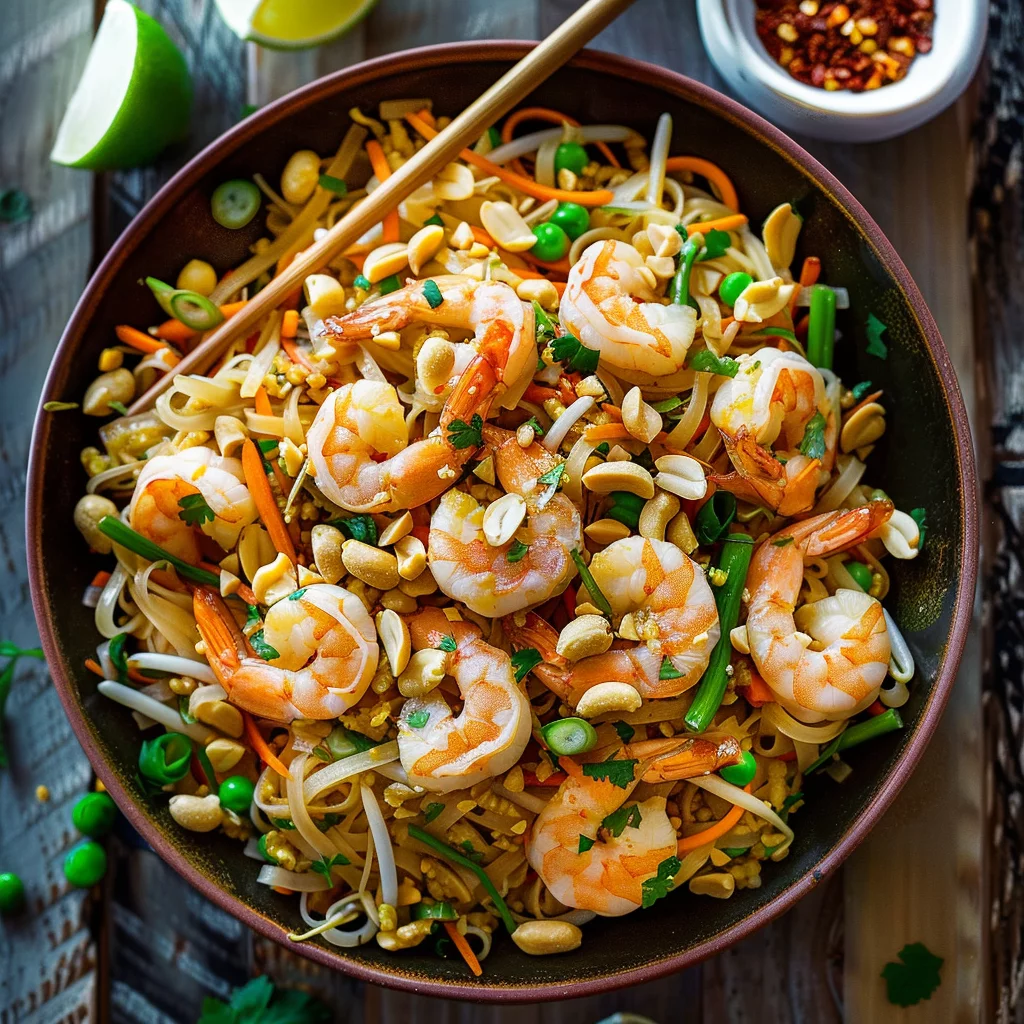
Shrimp Pad Thai
Crack the eggs onto the empty side of the pan, breaking the yolks with a spatula. Allow them to cook for about 30 seconds until they begin to set, then incorporate them into the noodles. This technique ensures the eggs are evenly distributed, adding richness to the dish. Finally, pour in the sauce, tossing everything together to coat the ingredients thoroughly.
Tips/Tricks
For the best results, ensure your pan is hot enough to quickly sear the shrimp without overcooking them. This not only locks in their natural sweetness but also enhances their texture. Additionally, keep the ingredients moving in the pan to prevent sticking and to ensure even cooking.
Adjust the sauce to your taste by adding more honey for sweetness or more chili garlic sauce for heat. If you love seafood, consider exploring other shrimp dishes like Thai Coconut Shrimp Curry or Sweet and Sour Glazed Shrimp for more inspiration.
Perfecting Your Shrimp Pad Thai
Perfecting Results
To perfect your Shrimp Pad Thai, focus on balancing the flavors and textures. The dish should have a harmonious blend of sweet, sour, and spicy notes, with a hint of umami from the soy sauce. Ensure the noodles are not overcooked; they should be soft yet firm enough to hold their shape.
For a well-rounded dish, the shrimp should be plump and juicy, while the vegetables should retain a slight crunch. The peanuts and cilantro add a finishing touch, enhancing the overall flavor profile. Serve immediately to enjoy the vibrant colors and textures at their best.
Troubleshooting/Variations
If your Shrimp Pad Thai turns out too salty, try adding a splash of lime juice or a pinch of sugar to balance the flavors. If the dish lacks heat, increase the amount of chili garlic sauce. For those with dietary restrictions, substitute soy sauce with tamari for a gluten-free version.
Don’t be afraid to experiment with different vegetables or proteins. You can try adding bell peppers or snap peas for a colorful twist. For more shrimp recipe ideas, check out Shrimp and Asparagus Stir Fry or Sous Vide Shrimp for an innovative approach.
Serving and Enjoying Shrimp Pad Thai
Serving/Presentation
Present your Shrimp Pad Thai with a sprinkle of finely chopped peanuts and fresh cilantro. Arrange lime wedges around the plate for an added burst of flavor. The vibrant colors and enticing aromas will make a stunning impression on your guests.
Consider serving Shrimp Pad Thai alongside a light salad or fresh spring rolls to complement the rich flavors of the dish. This combination makes for a balanced meal that is both filling and refreshing.
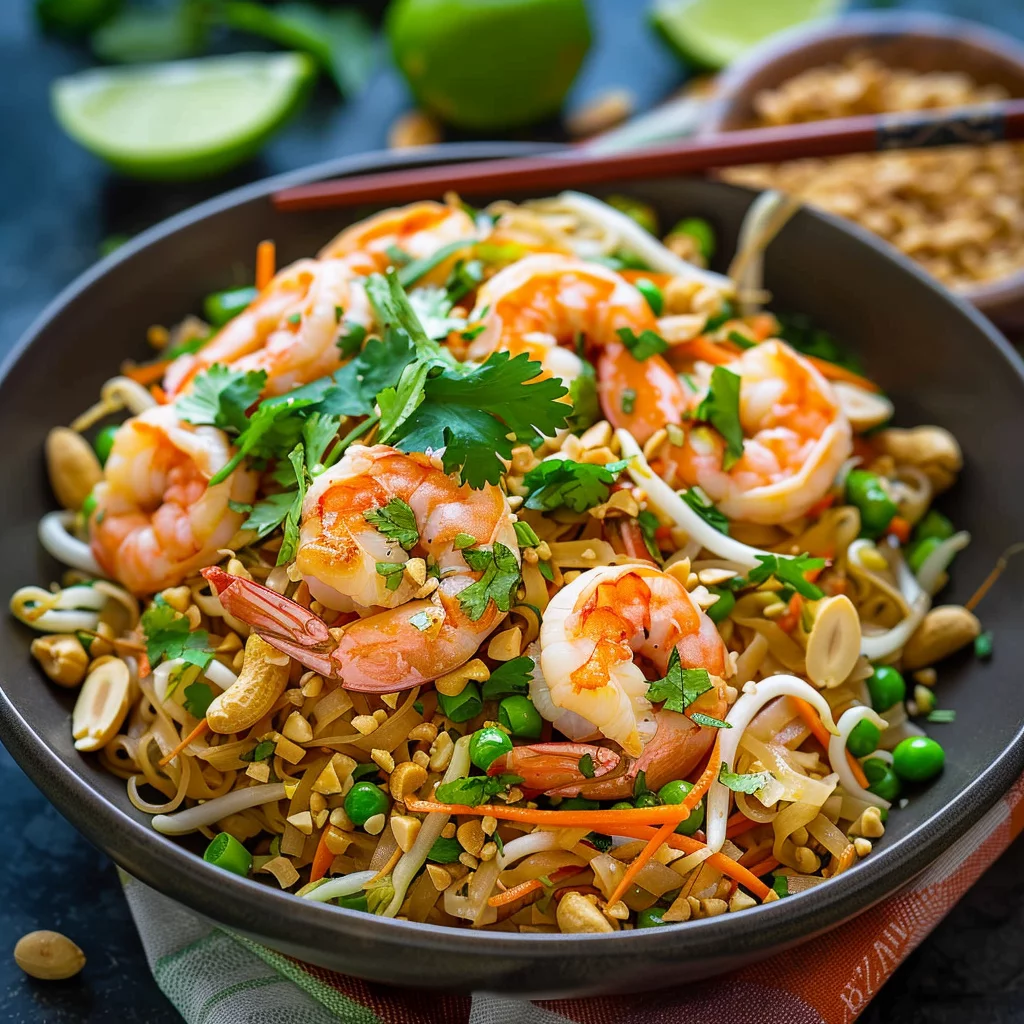
Shrimp Pad Thai
Pairings/Storage
Shrimp Pad Thai pairs beautifully with a chilled drink, enhancing the overall dining experience. For storage, keep leftovers in an airtight container in the refrigerator for up to two days. Reheat gently to preserve the texture of the noodles and shrimp.
If you’re interested in other seafood pairings, explore Bucatini with Rose Red Pepper Sauce and Shrimp for a delightful contrast in flavors. Alternatively, Shrimp Dirty Rice offers a spicy, comforting option.
Conclusion
Shrimp Pad Thai embodies the essence of vibrant and satisfying coastal cuisine. By mastering the techniques and balancing the flavors, you can create a dish that delights the senses and brings people together. Its versatility allows for endless experimentation, making it a staple in any seafood lover’s repertoire.
The combination of fresh ingredients and a well-crafted sauce results in a harmonious dish that is both comforting and exciting. Whether you’re a seasoned cook or a beginner, Shrimp Pad Thai is accessible and rewarding, offering a taste of the sea in every bite. Dive into the world of Shrimp Pad Thai and let it become a cherished part of your culinary journey.
