
📑 Table of Contents ▶
- Thai Coconut Shrimp Curry
- Mastering Thai Coconut Shrimp Curry
- Fundamentals
- Preparation/setup
- Crafting the Perfect Curry
- Technique
- Tips/tricks
- Elevating Your Thai Coconut Shrimp Curry Experience
- Perfecting results
- Troubleshooting/variations
- Serving and Storing Your Thai Coconut Shrimp Curry
- Serving/presentation
- Pairings/storage
- Conclusion
- FAQs – Thai Coconut Shrimp Curry
There’s something magical about the aroma of Thai Coconut Shrimp Curry wafting through my kitchen. It brings back memories of seaside dinners, where the sound of waves accompanied every bite. The rich, creamy texture combined with the subtle heat of spices creates an irresistible symphony of flavors.
My love for Thai Coconut Shrimp Curry began on a trip to Thailand, where street vendors expertly cooked fresh seafood right in front of me. Watching them inspired me to recreate this dish at home. The vibrant colors, the fragrant basil, and the juicy shrimp all come together in a way that feels like a celebration on a plate.
Having grown up by the sea, seafood has always been a staple in my diet. The combination of coconut milk and shrimp just feels like a natural fit, reminiscent of family gatherings and shared meals. Now, I’m excited to share this recipe with you, hoping it becomes a cherished addition to your culinary repertoire.
With a few simple ingredients, you can create a dish that not only satisfies your taste buds but also transports you to a coastal paradise. Let’s dive into the details of making this delightful Thai Coconut Shrimp Curry that’s sure to impress.
Print
Thai Coconut Shrimp Curry
- Prep Time: 20 minutes
- Cook Time: 20 minutes
- Total Time: 40 minutes
- Yield: 4 servings
- Category: Main Course
- Method: Sautéing
- Cuisine: Thai
Description
Discover how to make a delicious Thai Coconut Shrimp Curry at home with our easy-to-follow recipe. Perfect for a flavorful and comforting meal!
Ingredients
- – 1 pound (450g) raw shrimp, cleaned and prepped (thaw if frozen)
- – 1-2 TBSP (15-30ml) avocado oil or olive oil
- – 1 white onion
- – 1 red bell pepper
- – 1-2 large jalapeño
- – 3 TBSP (45ml) red curry paste
- – 1.5 TBSP (22.5ml) soy sauce
- – 2 TBSP (30ml) brown sugar
- – 14 oz (400g) canned unsweetened coconut milk
- – 1.5 TBSP (22.5ml) cornstarch dissolved in 1.5 TBSP (22.5ml) cold water
- – 2-3 TBSP (30-45ml) fresh chopped Thai basil for topping
- – lime wedges for serving
- – crushed red pepper flakes (optional extra for a spicier curry) season to taste
Instructions
- Prepare the shrimp by ensuring they are peeled, cleaned, and thawed if needed. You can use extra-large, medium, or large shrimp for this dish.
- Chop the onion into small pieces, slice the bell pepper into thin strips, and either mince or slice the jalapeño. For a hotter curry, keep the seeds and use two jalapeños; for a milder taste, remove the seeds, use just one, or omit it entirely.
- Warm the oil in a big skillet over medium-high heat. Add the onion, jalapeño, and bell pepper, and sauté until they become soft, about 4-5 minutes. Remove the vegetables with a slotted spoon and set them aside in a bowl.
- Lower the heat to medium and pour in the coconut milk. Add the red curry paste, soy sauce, and brown sugar. Stir these ingredients together and bring to a gentle boil. In a small bowl, combine cornstarch with cold water and mix until fully dissolved. Pour this mixture into the sauce and let it simmer, stirring occasionally, until it thickens, around 5 minutes.
- Dry the shrimp with a paper towel and add them to the sauce along with the sautéed vegetables. If you prefer crisper veggies, you can add them later. Allow the curry to gently simmer, stirring now and then, until the shrimp are fully cooked and opaque.
- Taste the curry to adjust the seasoning. If desired, increase the heat level with crushed red pepper flakes or additional ingredients. Occasionally, I mix in more red curry paste or a small pinch of salt to suit my taste.
- Sprinkle with fresh Thai basil before serving. Pair the curry with jasmine or basmati rice, or explore other serving suggestions.
Notes
- For a more decadent taste, opt for full-fat coconut milk over light.
- Enhance the dish by incorporating diced vegetables like zucchini or snow peas.
- Try varying the protein source with options such as chicken or tofu for a diverse meal.
Mastering Thai Coconut Shrimp Curry
Fundamentals
The foundation of any great Thai Coconut Shrimp Curry lies in its ingredients. Fresh shrimp, aromatic spices, and creamy coconut milk are essential to creating an authentic taste. Ensuring the shrimp are peeled and cleaned properly is crucial to maintaining the dish’s delicate flavors. The balance between the heat of the jalapeños and the sweetness of the brown sugar is what sets this curry apart.
Understanding the role of each ingredient is key. The red curry paste provides a rich, spicy base, while the coconut milk adds a luscious, creamy texture. Soy sauce introduces a hint of umami, and Thai basil adds a fresh, aromatic touch that elevates the entire dish. For more on using coconut milk in seafood dishes, check out this Garlic Shrimp in Coconut Milk.
Preparation/setup
Begin by gathering all your ingredients and prepping your vegetables. Chop the onion finely, slice the red bell pepper into thin strips, and decide how much heat you want by adjusting the jalapeños. Keeping the seeds will increase the spice level, so choose according to your preference.
Heat the avocado oil in a large skillet over medium-high heat, ensuring it’s hot enough to sauté the vegetables without burning. The goal is to soften the onions, bell pepper, and jalapeños, enhancing their natural flavors. Remove them from the skillet once they’re tender, setting them aside for later.
Now, it’s time to focus on the shrimp. Pat them dry with a paper towel to remove any excess moisture. This step is crucial for achieving a perfect texture when they cook. You might also want to explore how shrimp can be prepared differently, as seen in Sous Vide Shrimp with Lemon.
Crafting the Perfect Curry
Technique
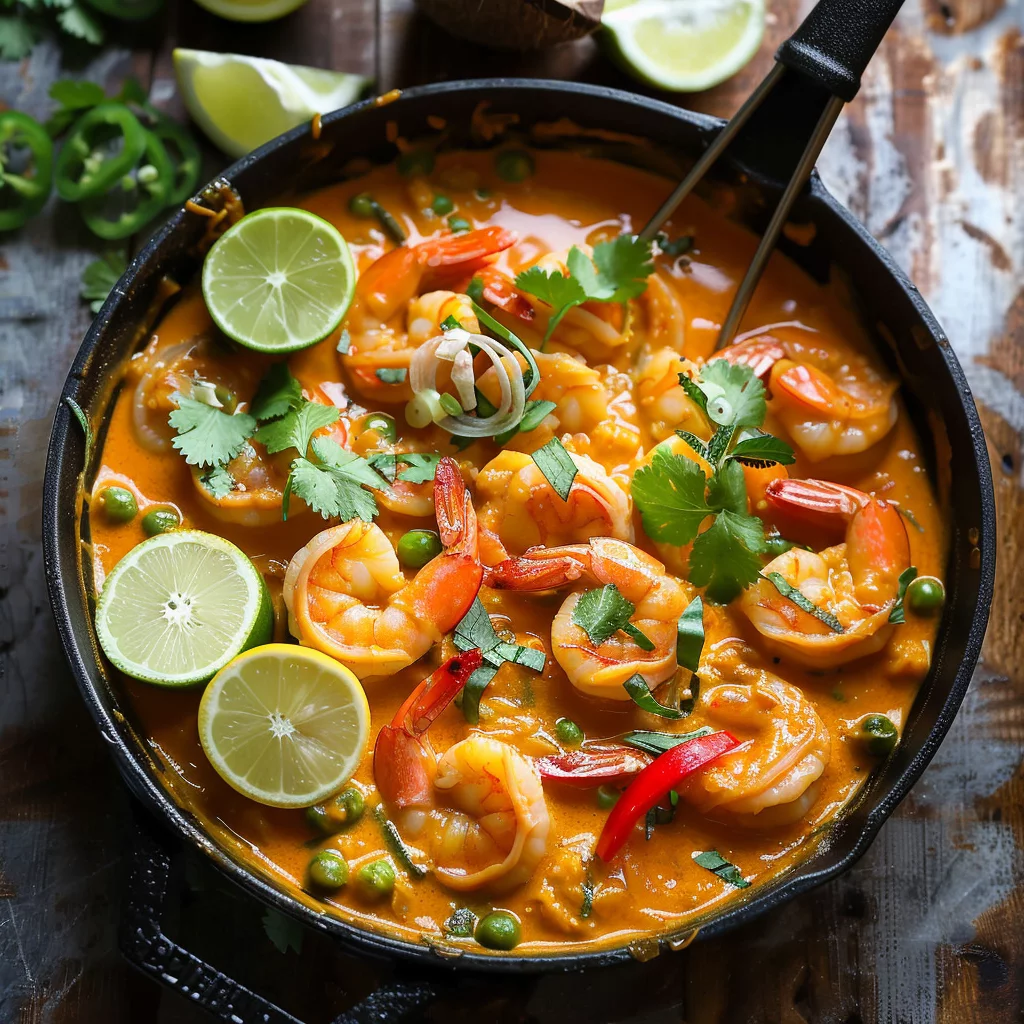
Once your vegetables are set aside, reduce the skillet’s heat to medium and pour in the coconut milk. As it gently heats, stir in the red curry paste, soy sauce, and brown sugar. This combination creates a savory, sweet, and spicy base that defines the dish.
Thai Coconut Shrimp Curry
Ensuring the coconut milk and curry paste are well mixed is crucial for a smooth, consistent sauce. Bring the mixture to a gentle boil before adding the cornstarch slurry. This will thicken the sauce, giving it the perfect consistency to coat the shrimp and vegetables.
Tips/tricks
To enhance the flavors of your Thai Coconut Shrimp Curry, consider experimenting with the heat levels. Adding crushed red pepper flakes or extra jalapeños can increase the spice, while more brown sugar can sweeten the dish. Remember, the goal is to find a balance that suits your taste.
If you’re new to cooking Thai cuisine, practice patience as you stir the sauce. Letting it simmer slowly allows the flavors to meld together beautifully. For those looking to explore more spicy coconut-based dishes, you might enjoy this Sweet Potato and Coconut Curry Soup.
Elevating Your Thai Coconut Shrimp Curry Experience
Perfecting results
To achieve the best results with your Thai Coconut Shrimp Curry, focus on timing. Add the shrimp and previously sautéed vegetables to the thickened sauce, allowing them to simmer until the shrimp are opaque and fully cooked. This ensures the shrimp remain juicy and the vegetables retain their vibrant color.
Be mindful of overcooking. Shrimp can quickly become rubbery if left in the heat for too long. Keep a close eye, stirring occasionally to distribute the heat evenly. If you’re interested in more shrimp recipes, consider trying this Creamy Garlic Shrimp for a different twist.
Troubleshooting/variations
If your curry turns out too thin, consider adding a bit more cornstarch slurry to thicken it. Conversely, if it’s too thick, a splash of coconut milk can loosen it up. Adjusting the seasoning is also key—taste as you go to ensure the flavors are balanced.
For those who prefer a milder curry, reduce the amount of red curry paste or omit the jalapeños entirely. Alternatively, add more Thai basil for a fresher taste. Exploring variations can lead to delightful discoveries, as seen in this Creamy Coconut Curry Salmon.
Serving and Storing Your Thai Coconut Shrimp Curry
Serving/presentation
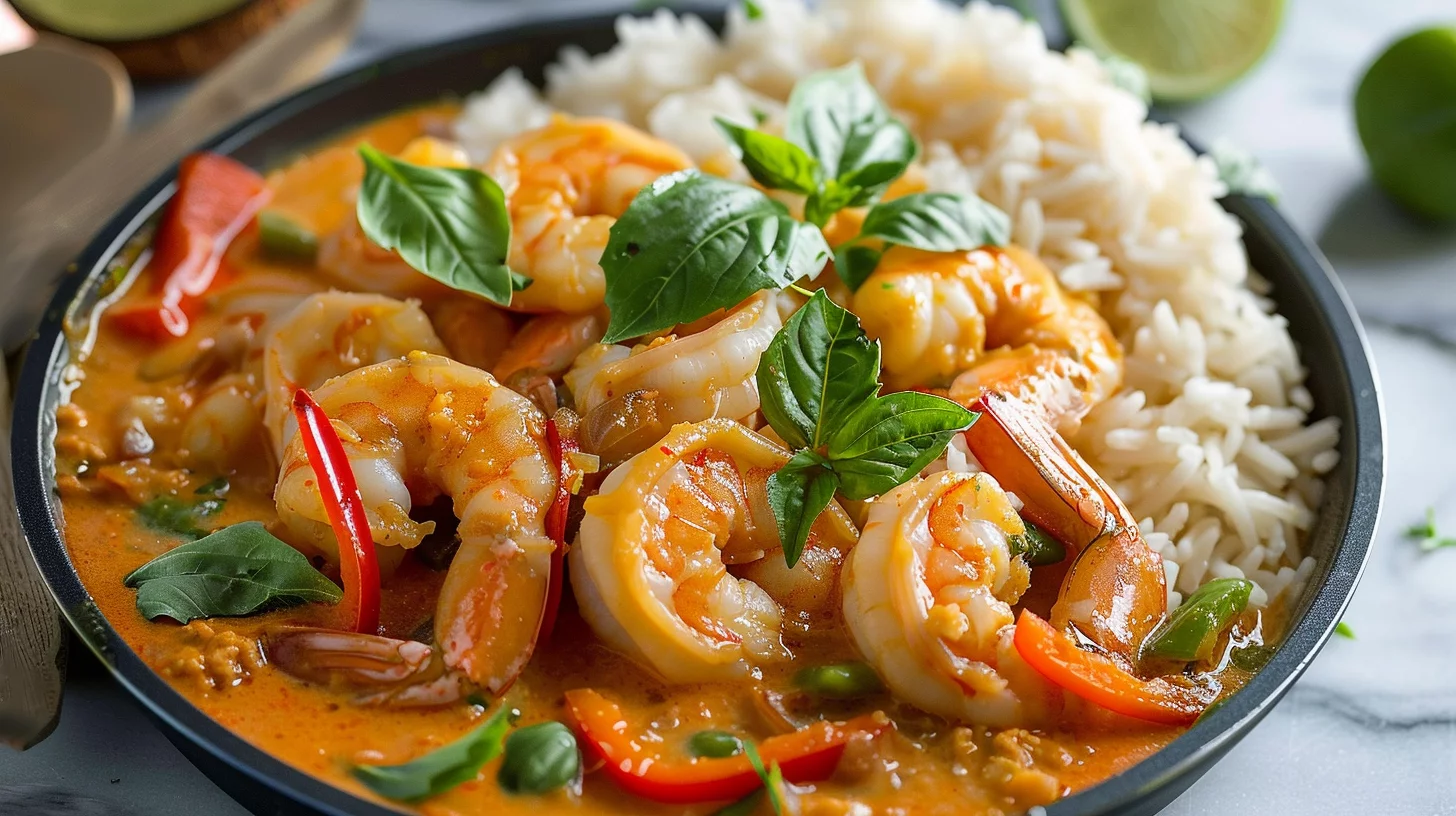
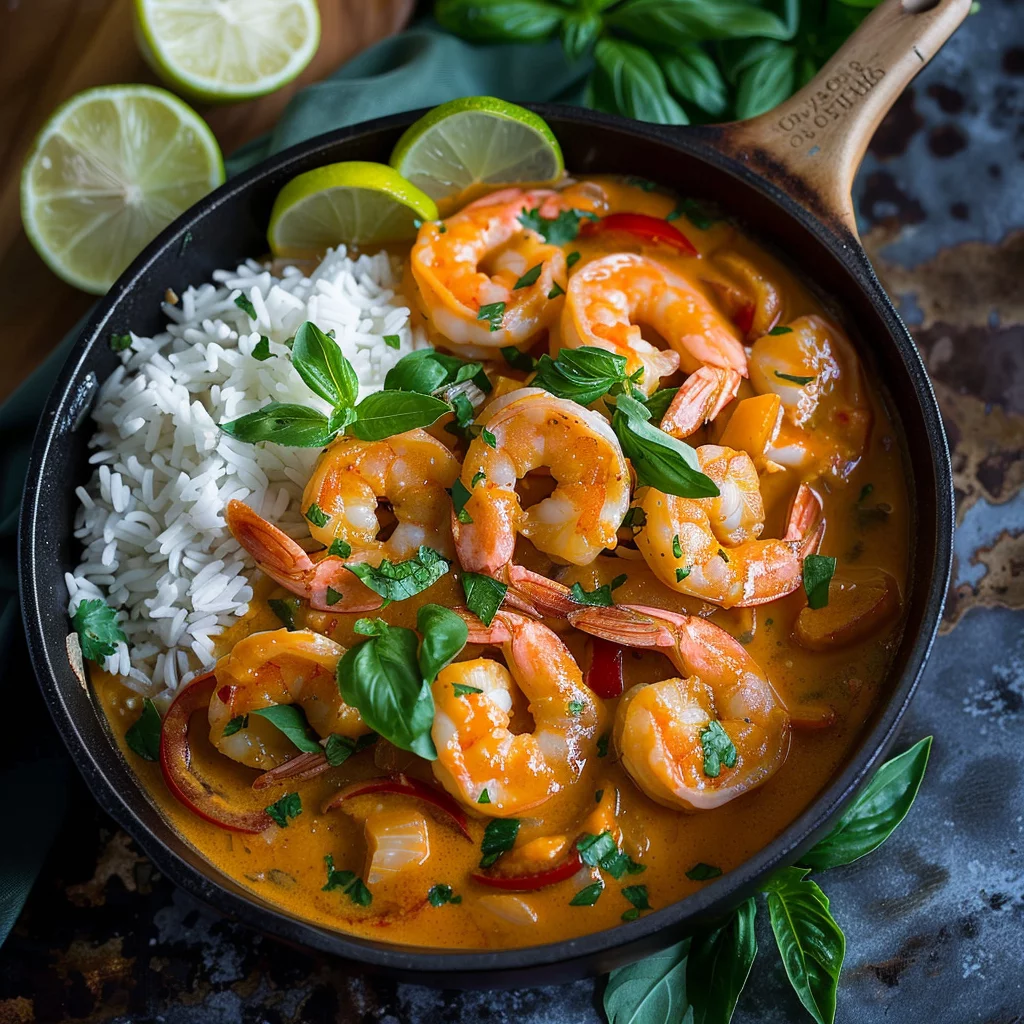
Presentation enhances the dining experience. Serve the Thai Coconut Shrimp Curry in a wide, shallow bowl to showcase the vibrant colors and textures. Garnish with freshly chopped Thai basil and lime wedges for an added zing.
Pair this dish with jasmine or basmati rice to soak up the flavorful sauce. For a complete meal, consider adding a side of steamed vegetables or a light salad. If you’re curious about other complementary dishes, the Grilled Shrimp Bowl with Asparagus offers another delightful option.
Thai Coconut Shrimp Curry
Pairings/storage
While Thai Coconut Shrimp Curry pairs beautifully with rice, consider trying it with quinoa or cauliflower rice for a low-carb alternative. The dish can be stored in an airtight container in the refrigerator for up to three days, allowing the flavors to deepen over time.
When reheating, add a splash of coconut milk to revive its creamy consistency. If you’re looking to explore more shrimp-based meals, this Creamy Garlic Shrimp Recipe offers another delightful creation to try.
Conclusion
Thai Coconut Shrimp Curry is a versatile dish that brings a touch of exotic flavor to everyday cooking. Its unique blend of spices and creamy coconut milk creates a rich, satisfying experience. By mastering the fundamentals, you can adapt the recipe to suit your preferences, making it a staple in your home.
The simplicity of the ingredients paired with the depth of flavor demonstrates the strength of this dish. It’s a culinary journey that invites you to explore and experiment, ensuring every meal is a delightful adventure. Whether you serve it for a family dinner or a special occasion, this Thai Coconut Shrimp Curry is bound to impress.
