
➤ Table of Contents
Imagine a sunlit afternoon by the sea, the air filled with the salty tang of the ocean. That’s where my passion for fish charcuterie began. Growing up, my family always had a knack for turning everyday seafood into a delightful experience. Fish charcuterie became an art form in our home, a way to celebrate the abundance of the sea.
Fish charcuterie is not just about smoked salmon or cured fish; it’s an exciting medley of flavors and textures that make for an unforgettable culinary experience. I recall my mother crafting the most exquisite boards, brimming with fresh catches and vibrant accompaniments. The variety and creativity in each arrangement made every gathering special.
Now, I carry forward this tradition, sharing the joy of fish charcuterie with you. Whether you’re preparing for a casual get-together or a special occasion, a well-prepared fish charcuterie board is a showstopper. With the right ingredients and a bit of creativity, you can craft a masterpiece that delights both the eyes and the palate.
Let’s explore how to create an enticing fish charcuterie board that captures the essence of the sea. Dive into the world of fish charcuterie and discover how to elevate your seafood spread with easy steps and delightful ingredients.
Print
Fish Charcuterie
- Prep Time: 20 minutes
- Cook Time: P0Y0M0DT0H45M0.000S
- Total Time: P0Y0M0DT0H45M0.000S
- Yield: 8 to 10 servings
- Category: Side Dish
- Method: Stovetop
- Cuisine: Française
Description
Discover the art of Fish Charcuterie with our expert guide. Learn techniques for preparing exquisite seafood platters that will impress at your next gathering.
Ingredients
- 4 ounce (113 g) s cream cheese, at room temperature
- 1/4 cup (60 ml) sour cream
- 1 teaspoon (5 ml) lemon zest
- 1 tablespoon (15 ml) lemon juice
- 2 teaspoon (10 ml) s drained prepared horseradish
- Kosher salt and freshly ground black pepper
- One 4-ounce tin smoked trout, drained
- 2 tablespoon (30 ml) s chopped fresh chives, plus more for garnish
- 2 tablespoon (30 ml) s chopped fresh Italian parsley, plus more for garnish
- 1 tablespoon (15 ml) chopped fresh dill, plus more for garnish
- One 4-ounce tin octopus (12 to 14 pieces)
- 12 to 14 good-quality pitted green olives
- 12 to 14 small strips jarred piquillo peppers
- 12 to 14 small cocktail onions
- 1 tablespoon (15 ml) sherry vinegar
- 1 tin smoked mussels in oil
- 1 tin ventresca (tuna belly) in oil
- 1 tin cockles in brine
- 1 tin anchovies in oil
- 1 tin sardines in spiced tomato sauce
- Assorted crudité: sliced fennel, radishes, endive spears, sliced cucumber, bell pepper strips, celery sticks, cherry tomatoes
- Assorted breads and nibbles: sliced baguette, cocktail pumpernickel bread, rice crackers, olive oil potato chips, salted roasted chickpeas, salted Marcona almonds
- Assorted pickled items: olives, giardiniera, pickled mushrooms, Spanish pickled peppers, caperberries
- Assorted condiments: aïoli (garlic mayonnaise), good-quality unsalted butter, chili crisp
- Flaky salt
Instructions
- For the smoked trout spread: Blend together the cream cheese, sour cream, lemon zest, lemon juice, and horseradish in a food processor. Add a touch of salt and plenty of freshly ground pepper. Blend until silky smooth, occasionally scraping the sides of the processor. Break the trout into pieces, incorporate it into the mix, and pulse briefly to mix everything. Move to a serving dish and mix in the chives, parsley, and dill. Sprinkle additional chopped herbs on top and chill until serving time.
- For the octopus skewers: Remove and save 2 tablespoons of the oil from the octopus, placing it in a medium-sized bowl. Add the octopus, olives, piquillos, and onions (if used) to the bowl. Pour the sherry vinegar and sherry over the mixture. Allow to marinate while you prepare the board, or refrigerate for one to two hours for a stronger taste.
- When assembling the skewers, fold the pepper strips into squares and thread them onto a small (5-inch) wooden skewer. Add a piece of octopus and an olive. Optionally, include a cocktail onion or a folded piece of ham like the pepper. Continue with the rest of the ingredients, creating 12 to 14 skewers. Place them on a serving plate and pour the marinade over them.
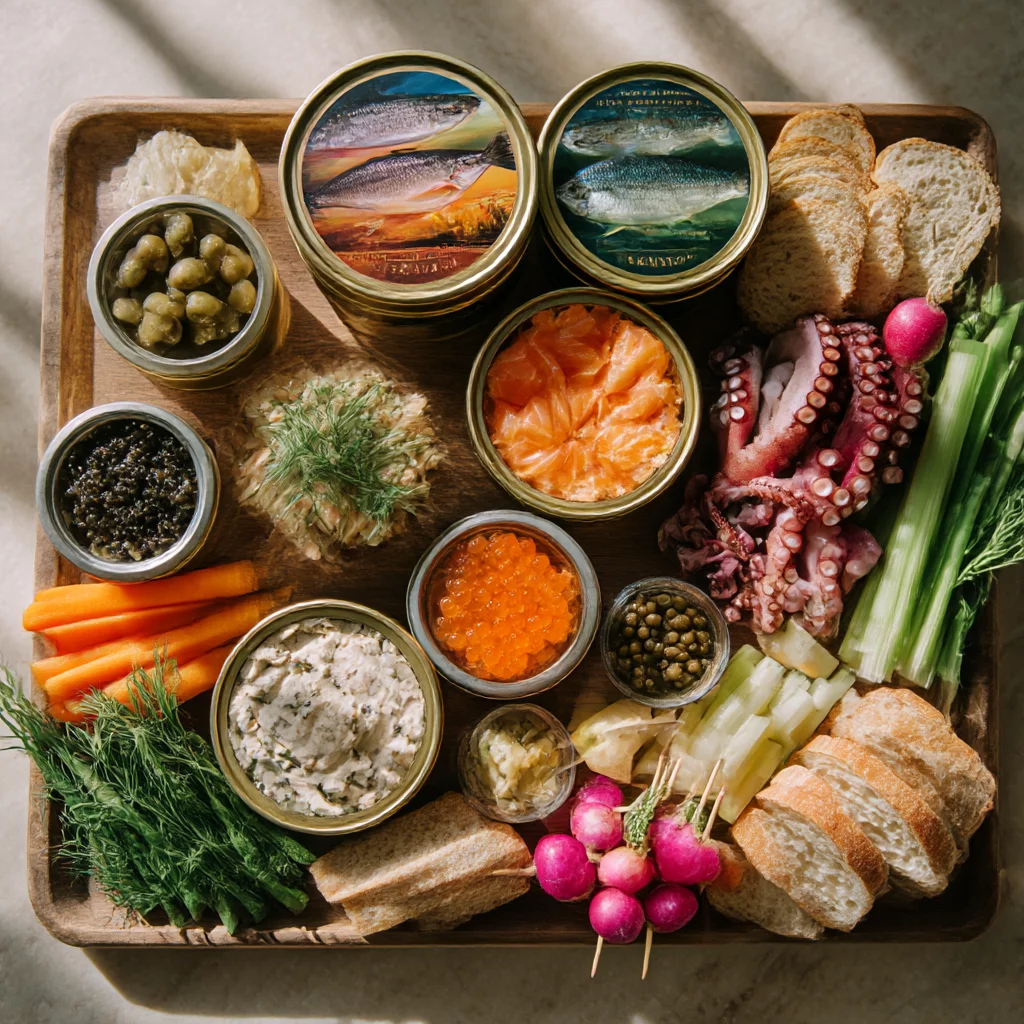
- For the board: When it’s time to put together the board, position 4 tins of seafood in the corners of a large serving board and the fifth tin in the center. Add the smoked trout spread and skewers to the arrangement. Place your selected crudités, breads, snacks, pickles, and condiments around the board, using bowls as needed. Set a small bowl with salt on the board. Generally, arrange complementary items near each seafood tin, but there are no strict rules on placement. Ensure each tin, spread, and condiment has its own small utensil for serving to prevent flavor mixing.
Notes
- Ensure cream cheese reaches room temperature for smooth blending with sour cream and seasonings.
- Marinate octopus in the fridge for an hour to enhance flavors from the vinegar and oil.
- Generously use freshly ground black pepper in both the trout spread and octopus skewers.
Creating a Stunning Fish Charcuterie Board
Fundamentals
Fish charcuterie combines various seafood elements into a cohesive and visually appealing presentation. Start with high-quality ingredients to ensure the best flavors. Smoked trout, octopus, mussels, and other canned seafood provide a delightful base, while fresh herbs like dill, chives, and parsley add vibrant color and fresh taste.
Balance is key in fish charcuterie. The rich creaminess of a stuffed catfish with cheese might inspire the way you pair flavors here. The tangy sour cream and zesty lemon will cut through the richness of creamy spreads, while pickled items add a sharp contrast. Marinated skewers, loaded with octopus and olives, offer a savory, briny bite.
Preparation/Setup
Begin with the smoked trout spread. Blend cream cheese, sour cream, lemon zest, lemon juice, and horseradish until smooth. Break the smoked trout into this mixture and pulse briefly. Incorporate fresh herbs for an aromatic touch. Chill the spread as you prepare the rest of your board.
For the octopus skewers, marinate octopus, olives, and piquillo peppers with sherry vinegar. Let them absorb flavors while you arrange other components. Use wooden skewers to thread the marinated items, creating an appealing appetizer.
Mastering the Art of Fish Charcuterie
Technique
Focus on combining textures and flavors. Creamy spreads contrast beautifully with crunchy crudités and crispy rice crackers. The salty tang of ventresca and anchovies pairs well with the sweet and smoky depth of sardines in tomato sauce. Let each bite offer a new experience.
Fish Charcuterie
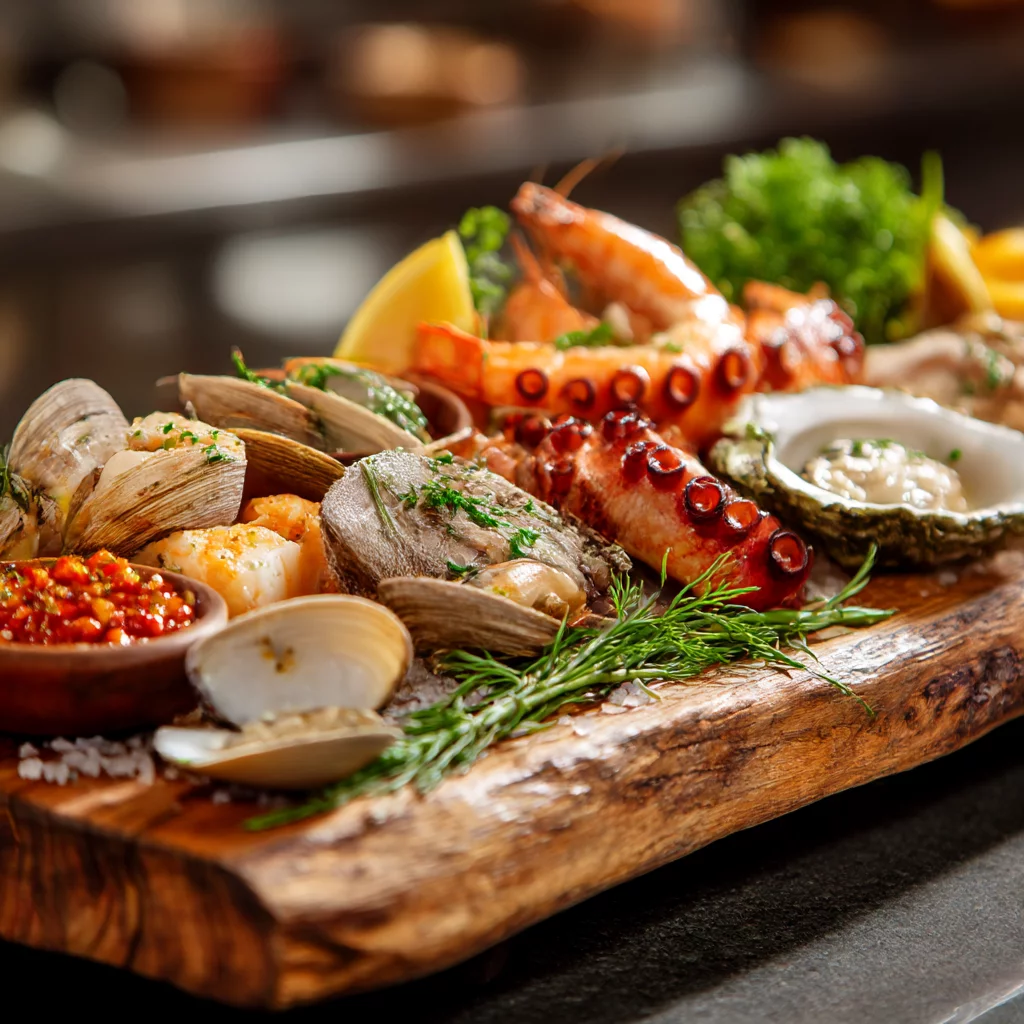
Arrange your seafood and accompaniments carefully. Position the tins of seafood at the board’s corners and center, creating focal points. Surround these with colorful vegetables, crunchy almonds, and savory spreads. Ensure each item is easily accessible with a dedicated serving utensil.
Tips/Tricks
Consider the flow of flavors across the board. Group ingredients that complement each other, but don’t hesitate to experiment with unconventional pairings. A hint of chili crisp can add a surprising kick to mild seafood, while a spoonful of Cajun crawfish cream sauce can elevate the richness of your spread.
Keep your presentation neat and enticing. Use small bowls for olives and pickles, and scatter herbs for a fresh, lush look. The arrangement should invite guests to explore and taste.
Perfecting Your Fish Charcuterie Board
Perfecting Results
Perfecting a fish charcuterie board means achieving harmony in taste and appearance. Each ingredient should shine without overpowering others. Adjust seasoning as needed, adding flaky salt or freshly ground pepper to enhance flavors.
Pay attention to the board’s visual appeal. Use a mix of shapes and colors to make it eye-catching. Arrange items in clusters or lines to guide the eye naturally across the board.
Troubleshooting/Variations
If a component doesn’t taste quite right, adjust on the fly. Too salty? Add a squeeze of lemon or a dollop of sour cream to balance. Want more texture? Sprinkle roasted chickpeas across the board for a crunchy boost.
Explore variations like introducing different pickled items or swapping out smoked trout for another fish. Experiment until you find combinations that resonate with your taste and your guests’ preferences.
Presenting and Enjoying Your Fish Charcuterie Board
Serving/Presentation
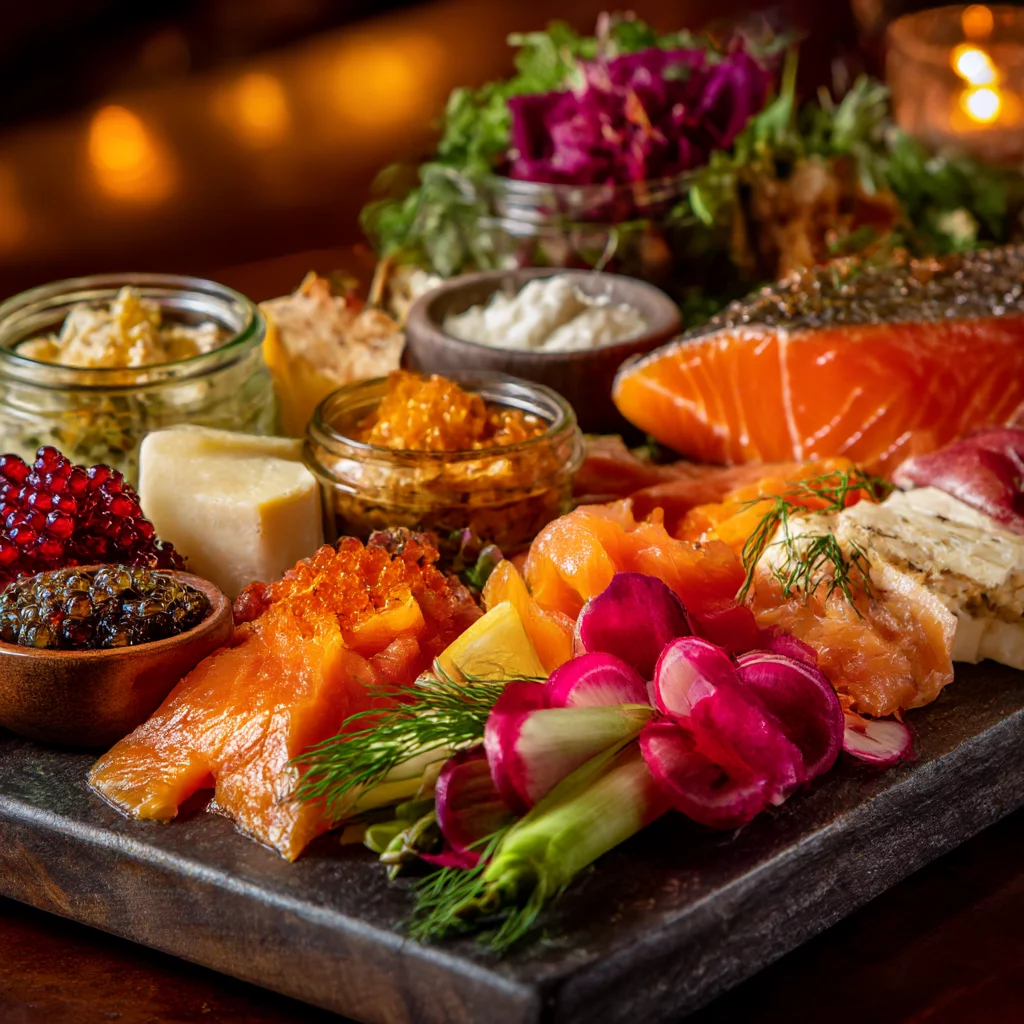
Presentation is crucial in fish charcuterie. Arrange your board just before serving to maintain freshness. Garnish with herbs for a fragrant touch. Provide small plates and napkins for easy dining.
Encourage guests to explore and mix flavors. The board should be an invitation to taste and enjoy, sparking conversation and delight around the table.
Fish Charcuterie
Pairings/Storage
Pair your fish charcuterie with a selection of chilled drinks that complement the seafood’s fresh flavors. Consider light, refreshing options that enhance the meal without overshadowing the seafood.
For storage, keep any leftovers in airtight containers. Refrigerate promptly to maintain freshness, especially for spreads and seafood items.
Conclusion
Creating a fish charcuterie board is an art that combines creativity with culinary skill. The key is to balance flavors and textures, making sure each component complements the others. Whether you’re hosting a gathering or enjoying a cozy evening at home, a thoughtfully prepared fish charcuterie board is sure to impress.
The utility of a fish charcuterie board lies in its versatility and appeal. It’s an excellent way to showcase a variety of seafood and accompaniments, offering a range of tastes and experiences in one presentation. Embrace the art of fish charcuterie, and let it become a cherished part of your culinary repertoire.
