
📑 Table of Contents ▶
- Embracing the Essence of Japanese Cucumber and Seaweed Salad
- Fundamentals
- Preparation/Setup
- Directions
- Mastering the Art of Japanese Cucumber and Seaweed Salad
- Technique
- Tips/Tricks
- Taking Your Japanese Cucumber and Seaweed Salad to New Heights
- Perfecting Results
- Troubleshooting/Variations
- Presenting Japanese Cucumber and Seaweed Salad
- Serving/Presentation
- Pairings/Storage
Japanese Cucumber and Seaweed Salad (Sunomono)
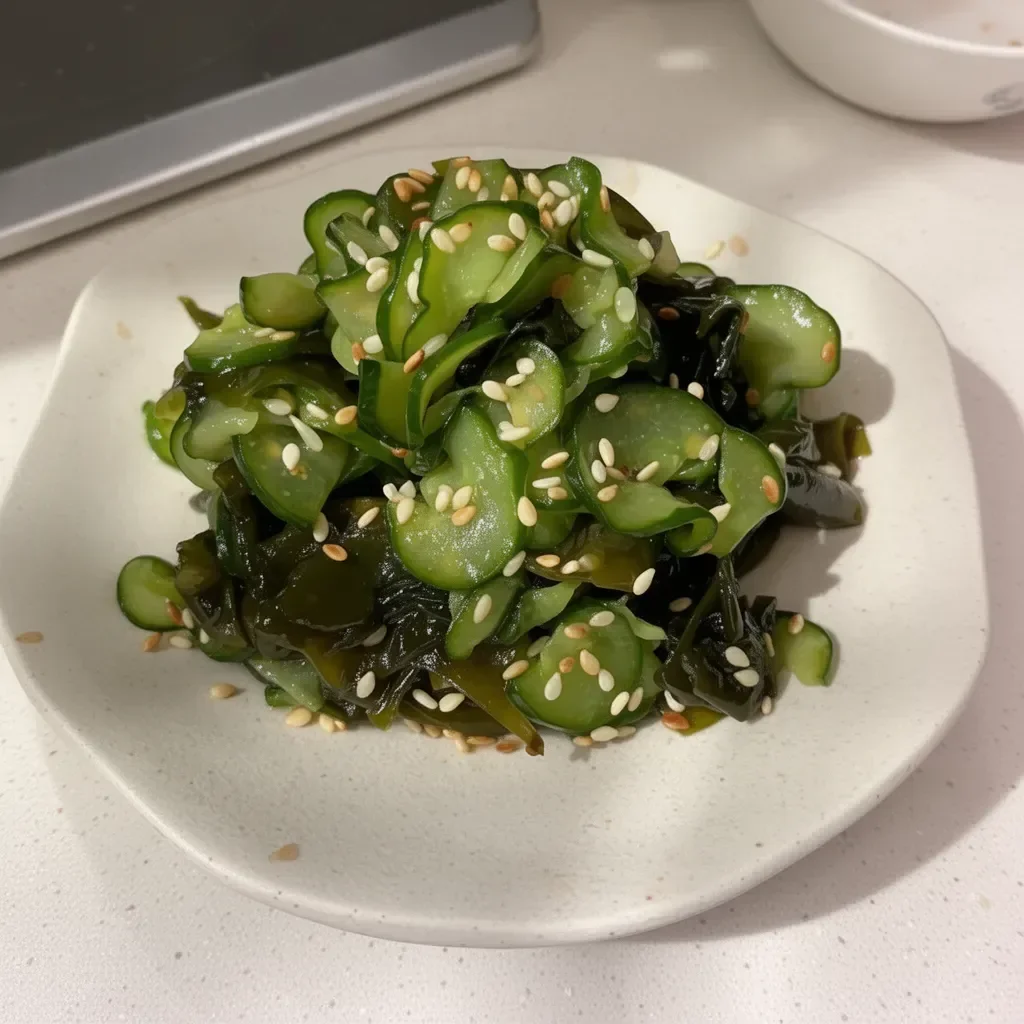
Japanese cucumber and seaweed salad, or sunomono, evokes fond memories of summer barbecues and colorful bento boxes. This refreshing dish has a light and tangy dressing that perfectly complements the crispness of cucumbers.
The first time I tasted sunomono, I marveled at the way the simple ingredients transformed into something so delightful. I had always enjoyed sushi, but the crunchiness of the cucumbers against the chewy wakame seaweed brought a whole new layer of flavor. My family’s gatherings often featured this salad as a palate cleanser between flavorful dishes.
Creating this salad in my kitchen feels like bringing a piece of that beachside dining experience home. The blend of rice vinegar, a hint of sweetness from sugar, and nutty sesame oil creates a unique flavor profile that catches the attention of everyone around the table. In just a few simple steps, you can also experience the refreshing joy of Japanese cucumber salad with your loved ones.
Embracing the Essence of Japanese Cucumber and Seaweed Salad
Fundamentals
Japanese cucumber and seaweed salad, widely recognized as sunomono, stands out as an ideal dish that encapsulates the essence of Japanese cuisine. This salad showcases brilliant flavors and a delightful texture.
The key to mastering sunomono lies in using the right ingredients. Japanese cucumbers, or other types of pickling cucumbers like Persian, add a refreshing crunch. The seaweed brings a subtle umami flavor, enhancing the salad’s overall taste without being overpowering. Rice vinegar serves as the acid that brightens the dish, while sugar balances the flavors perfectly.
The combination of these components creates a light yet satisfying salad. Enjoy it as a side dish or as part of a larger meal. Each bite of sunomono transports you to a warm day by the sea, making it a wonderful choice for any occasion.
Preparation/Setup
Before diving into the recipe, gathering all necessary ingredients ensures a smooth cooking process. Start by collecting three small Japanese cucumbers or suitable alternatives, such as Persian cucumbers, for a refreshing crunch. Don’t forget the dried wakame seaweed, which provides a chewy texture that pairs beautifully with the cucumbers.
Once all your ingredients are on hand, it’s time to prepare. Begin by chopping the ends off the cucumbers, ensuring they’re ready for slicing. Thinly slice the cucumbers using a mandolin slicer or a sharp knife.
This precise slicing makes them easier to soak up the dressing’s flavors. Prepare a strainer with a catch basin beneath it to allow the cucumbers to release excess moisture. Sprinkle ½ teaspoon of salt over the cucumbers and massage the slices gently to extract water.
Ingredients
Here’s a closer look at the essential ingredients needed for your Japanese cucumber and seaweed salad:
- 3 small Japanese cucumbers (or other pickling cucumbers like Persian, about 300g/10.5oz)
- ½ tsp salt
- 3 tbsp dried wakame seaweed (makes about 100g/3.5oz when rehydrated)
- ¼ cup rice vinegar (unseasoned works best)
- 2 tbsp sugar (adjust to taste)
- 2 tsp roasted sesame seeds
- 1 tsp soy sauce
- ¼ – ½ tsp salt (for seasoning, adjust to taste)
- ½ tbsp sesame oil
Directions
- Chop off the ends of the cucumbers.
- Thinly slice the cucumbers using a mandolin or a knife.
- Place the cucumber slices in a strainer with a basin underneath. Add ½ teaspoon of salt and mix well, gently massaging the slices.
- Allow the cucumbers to sit for 10-15 minutes to draw out the water.
- Meanwhile, rehydrate the wakame seaweed in a bowl with warm or room temperature water for 8-10 minutes until soft, then drain.
- Prepare the dressing by combining rice vinegar, sugar, soy sauce, sesame oil, and ¼ – ½ teaspoon salt in a bowl. Mix until the sugar dissolves completely.
- After the cucumbers have released excess water, squeeze out remaining liquid by hand.
- Combine the cucumber slices with the rehydrated wakame and the prepared dressing.
- Serve in small plates and top with roasted sesame seeds if desired.
Mastering the Art of Japanese Cucumber and Seaweed Salad
Technique
Making Japanese cucumber and seaweed salad is all about technique. Start with the cucumbers. Thin, even slices are vital for ensuring that they marinate properly. Using a mandolin slicer provides consistent thickness, allowing the flavors to meld beautifully.
Pay close attention to the salting process. The gentle massage ensures the cucumbers release their moisture, which enhances the dressing. If you skip this step, excess water from the cucumbers can dilute the dressing, resulting in a less flavorful salad.
Rehydrating the wakame seaweed also requires some attention. Use room temperature or warm water for effective rehydration. This method allows the seaweed to become pliable without compromising its texture.
Tips/Tricks
Adjust the sugar level in the dressing to suit your taste. Start with two tablespoons, then add more sugar if you prefer a sweeter flavor. The balance between sweet and tart distinguishes a great sunomono from a average one.
Ready to experiment? Try adding grated ginger or a splash of citrus juice like lemon or lime to enhance the complexity of the dressing. Each twist brings new life to the traditional recipe, inviting creativity into your kitchen.
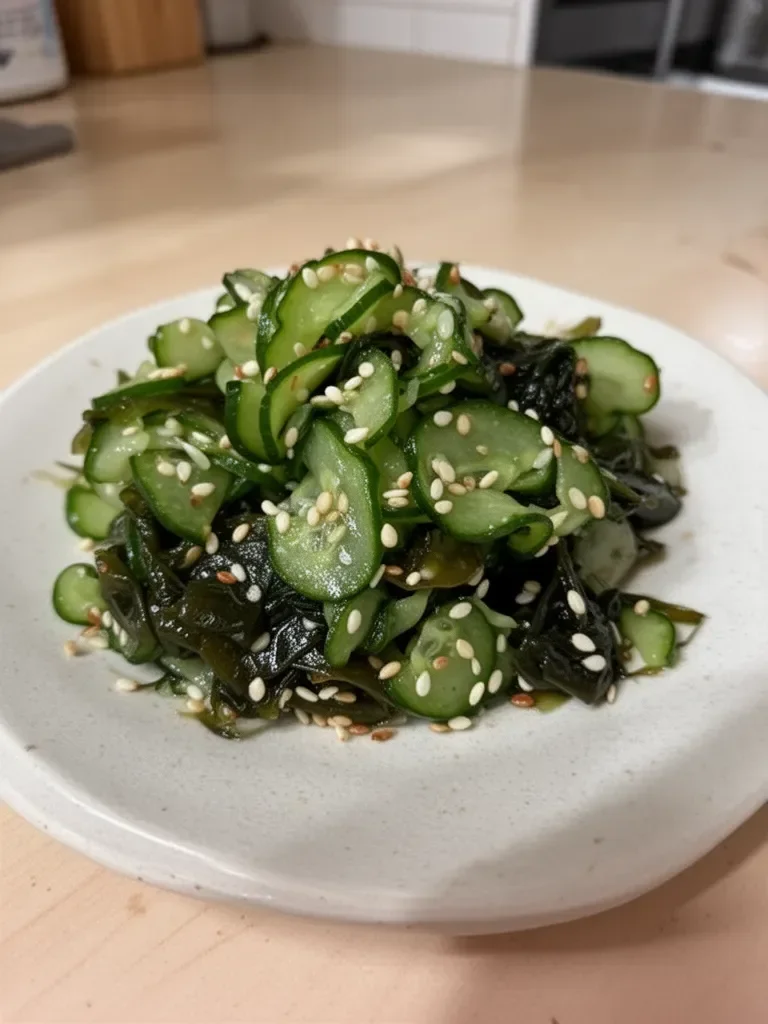
Don’t forget to sprinkle extra sesame seeds on top! This garnishing step not only adds texture but also elevates the visual appeal of your dish, making it a feast for the eyes and the palate.
Taking Your Japanese Cucumber and Seaweed Salad to New Heights
Perfecting Results
Achieving the perfect sunomono comes down to technique and timing. For maximum flavor, let the salad sit for a few hours in the refrigerator before serving. This allows the ingredients to mingle and intensify the taste.
Make sure to serve cold. The chilled cucumbers and softened wakame deliver an enjoyable crunch that’s hard to resist. The refreshing nature of this salad complements heavier dishes perfectly, providing a delightful contrast at the dinner table.
Troubleshooting/Variations
If your cucumbers turn out too watery, it may be due to insufficient salting or not squeezing out enough liquid. Don’t hesitate to adjust the steps next time and ensure you remove as much water as possible.
Got leftover salad? Don’t worry! Store it in an airtight container in the fridge for up to 4-5 days. However, be mindful that the salad may release more water over time. Consider enjoying it within the first few days for the best texture and flavor.
If you want to add more ingredients, consider including carrots or radishes for a pop of color and variety. These additions can enhance both the crunch and flavor profile of your sunomono.
Presenting Japanese Cucumber and Seaweed Salad
Serving/Presentation
Serve Japanese cucumber and seaweed salad in small, individual bowls for a beautiful presentation. Drizzle some of the leftover dressing over the top for an eye-catching touch. Garnish with a sprinkle of roasted sesame seeds, which add delightful crunch as well as visual appeal.
Pair this salad with grilled fish or a hearty noodle dish to make a complete meal. The flavors work harmoniously, enhancing the overall dining experience.
Pairings/Storage
While this salad shines on its own, it also pairs wonderfully with various Asian-inspired dishes. Serve it alongside grilled vegetables or seafood for a balanced meal. The refreshing nature of sunomono provides a palate-cleansing effect between bites of rich flavors.
Store any leftover salad in an airtight container in the refrigerator. Enjoy it within 4-5 days to maintain optimal quality. Keep in mind that the cucumbers may continue to release moisture, so consider enjoying it fresh for the best experience.
The Japanese cucumber and seaweed salad invites everyone to savor every refreshing bite. Each ingredient works harmoniously to deliver a delicious, vibrant experience. This dish is an exciting addition to any meal, offering a taste of Japan right at your table.
Print
Japanese Cucumber and Seaweed Salad (Sunomono)
- Prep Time: 15 minutes
- Cook Time: 15 minutes
- Total Time: 30 minutes
- Yield: 4 servings
- Category: Salad
- Method: No Cooking
- Cuisine: Japanese
- Diet: Vegan
Description
A refreshing Japanese salad featuring crisp cucumbers and chewy seaweed, dressed in a tangy rice vinegar dressing.
Ingredients
- 3 small Japanese cucumbers (or other pickling cucumbers like Persian, about 300g/10.5oz)
- ½ tsp salt
- 3 tbsp dried wakame seaweed (makes about 100g/3.5oz when rehydrated)
- ¼ cup rice vinegar (unseasoned)
- 2 tbsp sugar
- 2 tsp roasted sesame seeds
- 1 tsp soy sauce
- ¼ – ½ tsp salt (for seasoning)
- ½ tbsp sesame oil
Instructions
- Chop off the ends of the cucumbers.
- Thinly slice the cucumbers using a mandolin or a knife.
- Place the cucumber slices in a strainer with a basin underneath. Add ½ teaspoon of salt and mix well, gently massaging the slices.
- Allow the cucumbers to sit for 10-15 minutes to draw out the water.
- Rehydrate the wakame seaweed in a bowl with warm or room temperature water for 8-10 minutes until soft, then drain.
- Prepare the dressing by combining rice vinegar, sugar, soy sauce, sesame oil, and ¼ – ½ teaspoon salt in a bowl. Mix until the sugar dissolves completely.
- After the cucumbers have released excess water, squeeze out remaining liquid by hand.
- Combine the cucumber slices with the rehydrated wakame and the prepared dressing.
- Serve in small plates and top with roasted sesame seeds if desired.
Notes
Adjust the sugar level in the dressing to suit your taste. Experiment with additional ingredients like grated ginger or citrus juice for enhanced flavor.
