
📑 Table of Contents ▶
Deep Fried Oysters
The first time I tasted deep-fried oysters, I felt like I was transported to a sunny seaside shack, waves crashing, and the comforting aroma of fried food wafting through the air. Growing up near the coast, fresh seafood was always a staple in our home, especially during family gatherings. Everyone knew that if oysters were on the menu, it would be a special occasion.
Deep-fried oysters hold a unique place in my heart, reminding me of summer adventures and lazy beach days shared with loved ones. The crispy, golden exterior combined with the tender, briny meat inside creates a flavor harmony that’s hard to resist. Whenever I recreate this dish, I savor each moment of preparation, knowing it will soon bring joy to those around me.
This recipe for deep-fried oysters is simple yet delicious and perfect for entertaining. With just a few easy steps and simple ingredients, you can create a crowd-pleaser that pairs wonderfully with fresh lemon and herbs. Let’s dive into the process of making these delectable treats!
Deep Fried Oysters
Fundamentals
Deep-fried oysters are a quintessential seafood dish that highlights the natural brininess of the oysters while offering a crunch that pleases the palate. The key to perfect deep-fried oysters lies in two main elements: marinating and dredging. Both steps elevate the flavor and texture, ensuring a satisfying bite.
Before frying, allow the oysters to soak in a seasoned mixture that includes milk, hot sauce, and seafood seasoning. This step not only infuses them with flavor but also helps tenderize them further. Each oyster absorbs a touch of zestiness that beautifully complements the final dish.
Another critical step in the deep frying process is preparing the dredge. A mixture of all-purpose flour and cornstarch creates a crunchy coating that seals in the delicious moisture while delivering a golden, crispy finish. This balance of wet marination and dry dredging is essential to achieving the iconic texture associated with deep-fried oysters.
Preparation/Setup
To successfully prepare deep-fried oysters, start by gathering all your ingredients. You’ll need 2 pints of raw shucked oysters, milk, hot sauce, seafood seasoning, all-purpose flour, cornstarch, and an ample amount of canola oil for frying. Fresh lemon wedges and parsley for serving create an attractive presentation.
Begin by draining the oysters in a colander, allowing excess liquid to escape. Place the drained oysters in a mixing bowl or container and add the milk, hot sauce, and 2 teaspoons of seafood seasoning. Gently fold the mixture together to coat the oysters evenly. Cover the bowl with a lid or plastic wrap and refrigerate for at least 30 minutes, but ideally no more than 8-10 hours. Marination allows the flavors to meld seamlessly.
While the oysters absorb flavors, prepare the dredge mixture. In a wide, shallow container, combine 2 cups of all-purpose flour, ½ cup of cornstarch, and an additional tablespoon of seafood seasoning. Mix thoroughly to ensure even distribution of the seasoning.
Next, heat canola oil in a large deep skillet or fryer to about 350 degrees F. Maintaining this temperature is crucial to achieving crispy oysters. As you add oysters, the oil temperature will drop, so allow it to recover between batches. In the meantime, drain the marinated oysters and toss them in the dredge mixture, ensuring each oyster is fully coated.
Ingredients
- 2 pints raw shucked oysters
- 2 tsp seafood seasoning
- ¾ cup milk
- 1 tbsp hot sauce
- 2 cups all-purpose flour
- ½ cup cornstarch
- 1 tbsp seafood seasoning
- 2 lemons, sliced into wedges
- Fresh parsley for garnish
- 2-3 qt canola oil (for frying)
Directions
- Remove shucked oysters from their container and drain in a colander.
- Place oysters in a bowl and add milk, hot sauce, and 2 teaspoons of seafood seasoning.
- Gently fold the ingredients, then cover and place the bowl in the fridge for at least 30 minutes, up to 8-10 hours.
- Prepare the dredge by combining all-purpose flour, cornstarch, and 1 tablespoon of seafood seasoning in a wide shallow container. Set aside.
- Heat up the canola oil to around 350 degrees F.
- While waiting for the oil to heat, drain liquid from the marinated oysters.
- Toss oysters in the dredge mixture in small batches to coat completely. Shake off any excess flour and place coated oysters on a tray.
- Carefully drop oysters into the hot oil without overcrowding. As they fry, gently stir with a strainer to prevent sticking.
- Fry oysters until they begin to float, approximately 3-5 minutes, working in batches if needed.
- Scoop fully cooked oysters out of the oil with a strainer and transfer to a tray lined with paper towels. Season immediately with seafood seasoning.
- Serve with lemon wedges and garnish with fresh parsley.
Deep Fried Oysters
Technique
Mastering the technique of frying oysters can elevate your dish from good to extraordinary. One essential technique is ensuring that your oil is adequately heated before adding the oysters. This step prevents the oysters from absorbing excess oil and ensures a crispy texture.
Using a thermometer to monitor the oil’s temperature helps maintain consistency throughout the frying process. If the oil gets too hot, the coating may burn before the oysters cook through. A steady temperature between 350 to 375 degrees F is perfect for achieving a golden crust.
When dropping the oysters into the oil, do so gently to avoid splatters and maintain the oil temperature. It’s ideal to fry in small batches; this technique prevents overcrowding, allowing the oysters to fry evenly.
Tips/Tricks
Here are some tips to keep in mind while preparing deep-fried oysters:
- Batch Cooking: Never overcrowd the pot. Fry in batches to maintain the oil temperature and achieve uniform cooking.
- Resting Time: Allow the coated oysters to rest for a few minutes before frying. This resting period helps the coating adhere better, ensuring a crispy result.
- Oil Quality: Using a high-quality canola oil makes a difference. It withstands high temperatures without imparting unwanted flavors to your oysters.
- Keeping Cooked Oysters Warm: If serving a crowd, keep the fried oysters warm in a low-temperature oven until ready to serve.
Deep Fried Oysters
Perfecting Results
Achieving the perfect deep-fried oyster involves more than just the right ingredients. It’s about paying attention to the little details. For a crispier texture, consider adding a bit of baking powder to your dredge mixture. It helps create that light, airy crunch during frying, making the oysters irresistible.
Experimenting with the seasoning can also enhance flavors. Feel free to adjust the amount of seafood seasoning according to your taste. If you enjoy a kick, adding a pinch of cayenne pepper can elevate the heat level without overpowering the dish.
Additionally, ensure that the oysters remain firm when you fry them. Look for plump, glistening oysters that are still in their natural state without being overly slimy. The quality of your oysters plays a significant role in the final taste and texture of the dish.
Troubleshooting/Variations
There are a few common challenges that can arise while making deep-fried oysters. If you find your oysters becoming soggy, consider the following:
- Excess Moisture: Drain the oysters thoroughly after marination, and ensure that any excess liquid is shaken off before dredging. A fully dry oyster results in a crispier coating.
- Correct Temperature: Maintain optimum oil temperature and avoid adding too many oysters at once. This practice helps prevent the oil temperature from dropping too significantly.
- Oil Quality: If the oil imparts an unpleasant flavor, it may need to be changed more frequently to maintain freshness.
For variations, you can try different coatings such as crushed cornflakes or panko breadcrumbs mixed with the flour for added crunch. Experiment to find what you enjoy most!
Deep Fried Oysters
Serving/Presentation
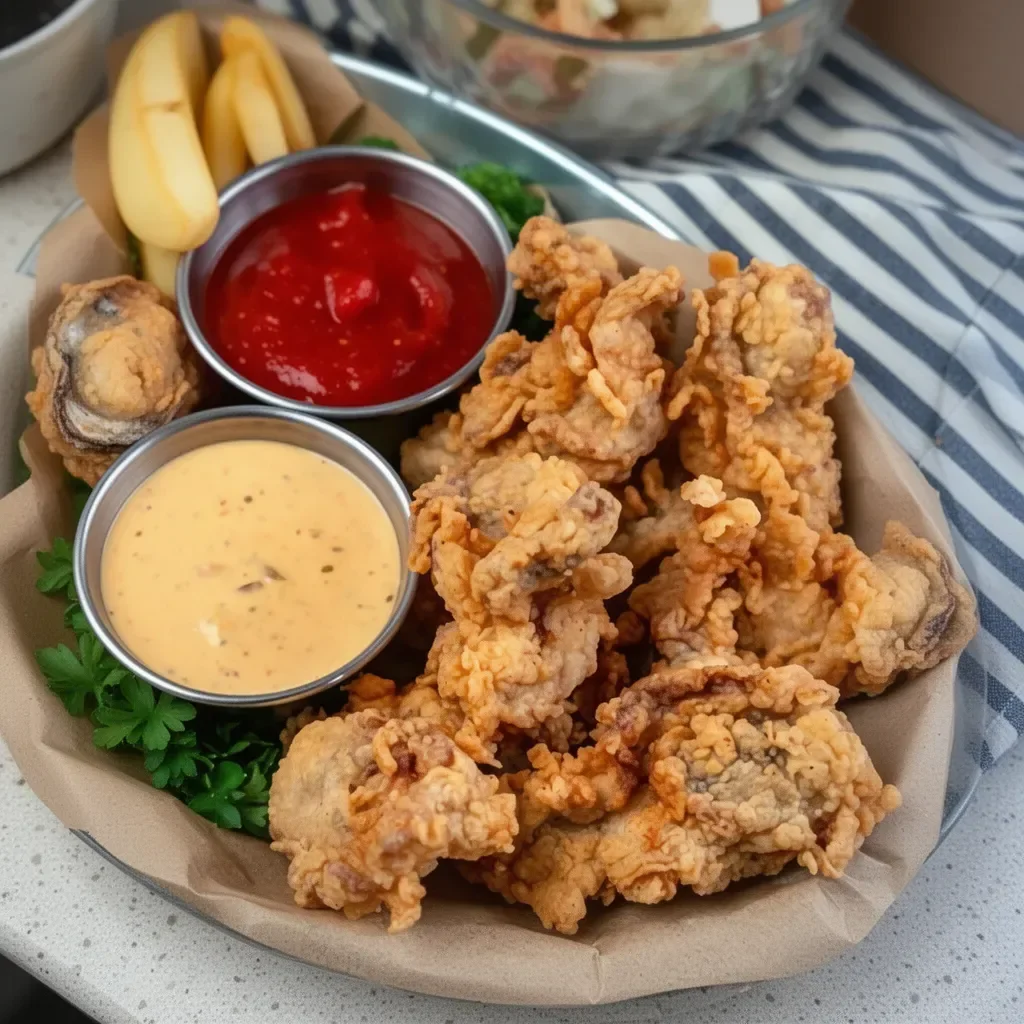
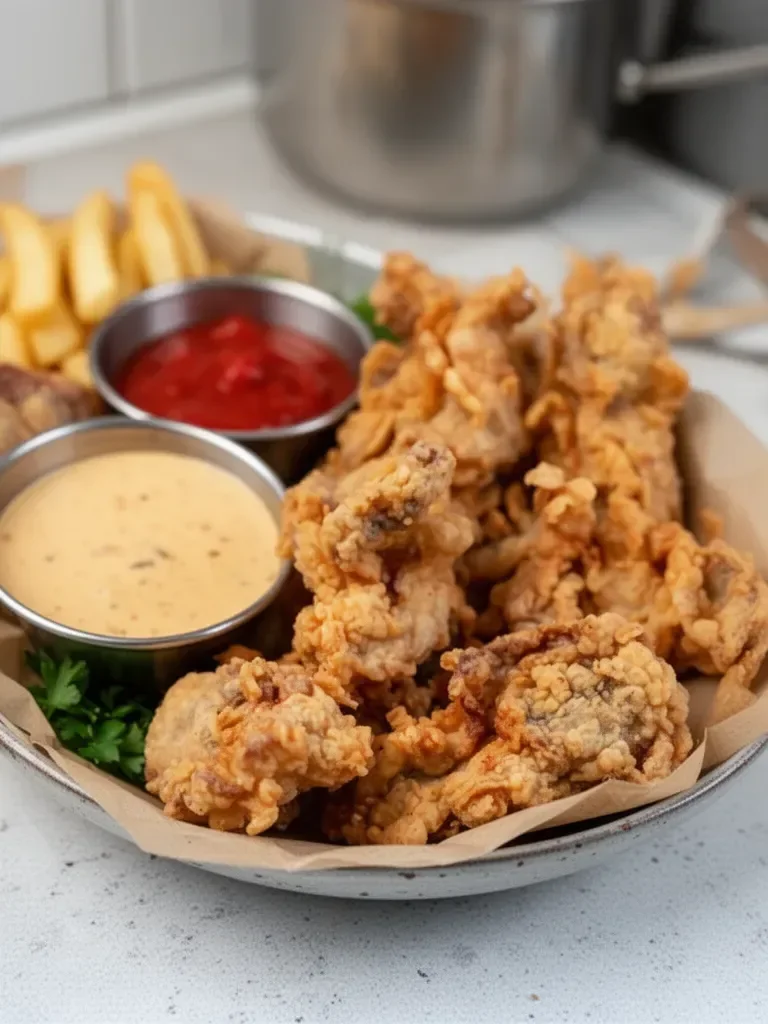
Presentation is an important part of serving deep-fried oysters. Arrange them on a large platter and garnish with parsley and lemon wedges to create an inviting seafood dish. The bright colors of the lemon and herbs contrast wonderfully with the golden-brown oysters.
Serve with your favorite dipping sauces, such as remoulade or a tangy cocktail sauce. These additions not only enhance flavor but also provide a delightful dipping experience that everyone will enjoy.
Pairings/Storage
Pair deep-fried oysters with a fresh salad or coleslaw for a light counterpart to the richness of the fried dish. You can also serve them alongside other seafood appetizers, such as fried calamari or shrimp cocktail, for an appealing seafood platter.
As for storage, deep-fried oysters are best enjoyed fresh. If you have leftovers, store them in an airtight container in the refrigerator for up to one day. To reheat, warm them in the oven rather than the microwave to maintain their crispiness.
Deep-fried oysters can be your next favorite dish to make at home, bringing the taste of the coast straight to your kitchen. With these tips and techniques, your oysters will turn out perfectly crispy every time!
Print
Deep Fried Oysters
- Prep Time: 30 minutes
- Cook Time: 15 minutes
- Total Time: 45 minutes
- Yield: 4 servings
- Category: Appetizer
- Method: Deep Frying
- Cuisine: American
- Diet: Seafood
Description
Crispy, golden deep-fried oysters that bring the coastal flavors to your table. Perfect for entertaining or a special occasion.
Ingredients
- 2 pints raw shucked oysters
- ¾ cup milk
- 1 tbsp hot sauce
- 3 tsp seafood seasoning (divided)
- 2 cups all-purpose flour
- ½ cup cornstarch
- 2-3 qt canola oil (for frying)
- 2 lemons, sliced into wedges
- Fresh parsley for garnish
Instructions
- Remove shucked oysters from their container and drain in a colander.
- Place oysters in a bowl and add milk, hot sauce, and 2 teaspoons of seafood seasoning.
- Gently fold the ingredients, then cover and place the bowl in the fridge for at least 30 minutes, up to 8-10 hours.
- Prepare the dredge by combining all-purpose flour, cornstarch, and 1 tablespoon of seafood seasoning in a wide shallow container. Set aside.
- Heat up the canola oil to around 350 degrees F.
- While waiting for the oil to heat, drain liquid from the marinated oysters.
- Toss oysters in the dredge mixture in small batches to coat completely. Shake off any excess flour and place coated oysters on a tray.
- Carefully drop oysters into the hot oil without overcrowding. As they fry, gently stir with a strainer to prevent sticking.
- Fry oysters until they begin to float, approximately 3-5 minutes, working in batches if needed.
- Scoop fully cooked oysters out of the oil with a strainer and transfer to a tray lined with paper towels. Season immediately with seafood seasoning.
- Serve with lemon wedges and garnish with fresh parsley.
Notes
Fry in small batches to maintain oil temperature and achieve a crispy texture. Use high-quality canola oil for the best results.
