
📑 Table of Contents ▶
Thai Coconut Shrimp Curry
Cooking shrimp has always been a passion that brings vibrant flavors to my kitchen. The first time I tried Thai coconut shrimp curry, it turned my understanding of seafood cuisine upside down. The rich creaminess of coconut milk melded perfectly with the spices, providing a symphony of taste that took me straight to the coasts of Thailand.
Recreating that experience became an essential part of my cooking repertoire. The balance of shrimp sautéed in ginger and garlic, with a touch of heat from red pepper flakes, transports me to that moment every time I make it. Each ingredient in this dish — from the garnish of fresh Thai basil to the bite of lime — plays a vital role in enhancing the natural sweetness of the shrimp.
When hosting a dinner or just whipping up a weeknight meal, this Thai coconut shrimp curry impresses with both its appearance and aroma. That moment when guests take their first bite and their faces light up with delight is what makes cooking so rewarding. This recipe is a go-to, fitting for any occasion, satisfying even the pickiest eaters while remaining incredibly simple to prepare.
Thai Coconut Shrimp Curry: Fundamentals
Embarking on the journey of creating Thai coconut shrimp curry introduces a harmonious blend of ingredients. Understanding the basics ensures success. Shrimp are the star here, perfectly complemented by an array of robust flavors from spices and aromatics.
Choosing fresh shrimp is vital. Opt for peeled and deveined shrimp to make your life easier. Sourcing quality coconut milk — full-fat for creaminess — serves as a base that enriches the dish immensely. This curry’s success relies on the balance between heat, sweetness, and richness.
Beyond the shrimp and coconut, other fundamental ingredients, like Thai red curry paste and fresh aromatics, play critical roles. Each ingredient layers upon the others, creating a comforting yet exotic experience in every bite.
Preparation/Setup
Preparation is key to a streamlined cooking experience. Start with all ingredients prepped — mince the garlic, chop the shallots, and slice the bell pepper. This organization minimizes chaos while cooking and allows you to focus on timing.
Combine shrimp with low-sodium soy sauce, red pepper flakes, turmeric, garlic powder, and white pepper in a bowl to create a flavorful marinade. Allowing the shrimp to absorb these spices enhances their flavor significantly. As you prep, the vibrant aromas start to fill the kitchen, promising a delicious meal ahead.
Setting up your workstation ensures a smooth cooking process. Gather your tools: a large skillet, wooden spoon, and measuring cups. When it comes time to cook, everything flows effortlessly.
Ingredients
For this Thai coconut shrimp curry, gather the following ingredients:
- 1 pound shrimp (peeled and deveined)
- 1 tsp low sodium soy sauce
- ½ tsp red pepper flakes
- ½ tsp turmeric
- 1 tsp garlic powder
- ¼ tsp white pepper
- 1 tbsp vegetable oil
- 1 tbsp unsalted butter
- 1 bell pepper (sliced)
- 4 garlic cloves (grated)
- 1 tbsp freshly grated ginger
- 1 shallot (finely chopped)
- ½ cup chicken broth (or vegetable broth)
- 3 tbsp Thai red curry paste
- 2 tsp brown sugar
- ½ tsp ground cumin
- ½ tsp ground coriander
- 2 tbsp low sodium soy sauce
- 1 tbsp fish sauce
- 1 can (14 oz/400 ml) unsweetened coconut milk (full fat)
- ½ lime (juiced)
- 1 tsp sriracha (optional)
- 1 handful of torn Thai basil
- Garnishes: scallions, fried onions, cilantro, chili pepper
These ingredients combine to create rich textures and deep flavors that will delight anyone at your table.
Directions
- Prepare all ingredients and get them ready for cooking.
- In a bowl, add shrimp, soy sauce, red pepper flakes, turmeric, garlic powder, and white pepper. Stir to combine, then set aside.
- Grate the ginger and garlic cloves. Finely chop the shallot and slice the bell pepper.
- Heat vegetable oil and butter in a large skillet over high heat. Add shrimp in a single layer and sear for 1 minute per side. Once done, remove from skillet and set aside.
- In the same skillet, add the sliced bell pepper. Sauté for 5 minutes until it begins to soften.
- Add the grated garlic, ginger, and shallot to the skillet. Cook until fragrant and soft, about 2 minutes.
- Deglaze the pan with the chicken broth, simmering for 2 minutes while stirring and scraping up the brown bits from the bottom with a wooden spoon.
- Stir in the Thai red curry paste along with brown sugar, remaining turmeric, cumin, coriander, soy sauce, and fish sauce. Cook for 1 minute, stirring frequently.
- Pour in the coconut milk and bring the mixture to a boil. Allow it to simmer for 5 minutes until the sauce thickens.
- Add lime juice, sriracha (if using), and torn Thai basil. Stir to combine, then toss in the shrimp, simmering for no longer than 1 minute.
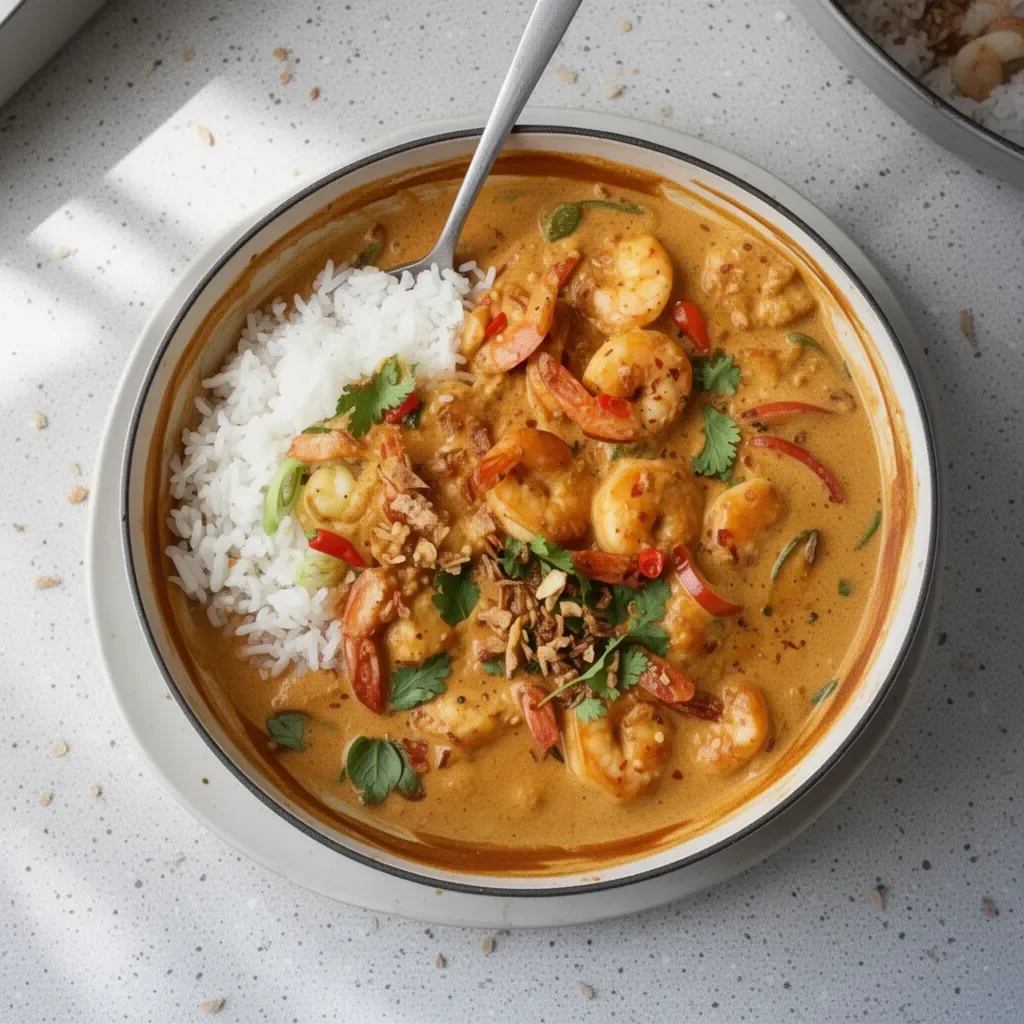
- Top with cilantro leaves, fried onions, and sliced chili pepper before serving alongside steamed rice and a crunchy cucumber salad.
Thai Coconut Shrimp Curry: Technique
Perfecting the technique of creating Thai coconut shrimp curry enhances your culinary skills. Searing the shrimp until just cooked preserves their juiciness, creating a delightful texture.
Using a high heat when sautéing the vegetables maximizes flavor extraction and keeps them vibrant and crisp. This technique is crucial for delivering that satisfying crunch against the creamy sauce.
Focus on timing; overcooked shrimp can turn rubbery. Aim for that perfect sear while ensuring they remain tender and flavorful. Mastering this technique sets the stage for incredible results every time.
Tips/Tricks
-
Fresh Ingredients: Choose fresh vegetables and herbs for the best flavor.
-
Spice Levels: Adjust the red pepper flakes or sriracha to suit your preference.
-
Coconut Milk: Full-fat coconut milk provides that necessary creaminess, but you can opt for reduced fat if preferred.
-
Make Ahead: This curry can be made ahead and reheated, allowing the flavors to meld beautifully overnight.
-
Storage: Leftovers can be stored in an airtight container in the fridge for up to 3 days.
By incorporating these tips, you’ll elevate your cooking and impress your guests with every presentation.
Thai Coconut Shrimp Curry: Perfecting Results
Achieving perfection with Thai coconut shrimp curry requires attention to detail. One significant aspect is ensuring that you balance the curry’s flavors. Taste testing while cooking allows adjustments for sweetness, heat, and saltiness.
Using fresh herbs enhances the dish’s aroma. Finishing with a handful of torn Thai basil and garnishing with cilantro brings a burst of freshness that elevates the presentation.
Troubleshooting/Variations
If the curry turns out too thick, add a splash of broth or water to loosen it up. Should it become too salty, a touch of brown sugar can help cut through the saltiness.
Alternatively, switch up the protein by using chicken or tofu in place of shrimp. Each variation leads to its unique flavor profiles while keeping the dish rich and comforting. Consider also experimenting with vegetables like snap peas or bok choy for added nutrition and crunch.
Thai Coconut Shrimp Curry: Serving and Presentation
Presenting Thai coconut shrimp curry beautifully transforms your meal into an elegant feast. Ladle the curry into shallow bowls, allowing the sauce to pool around the shrimp and vibrant vegetables.
Garnishing with fried onions and slices of chili pepper adds visual intrigue. A sprinkle of chopped scallions or cilantro enhances both the flavor and aesthetic appeal.
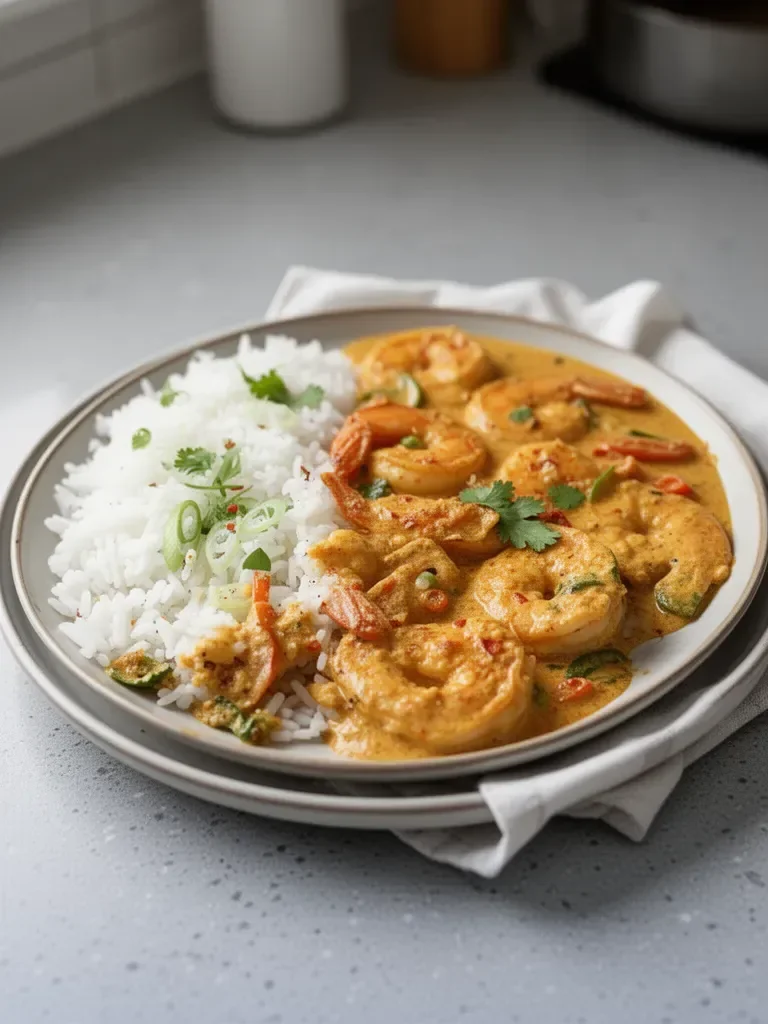
Pairing this curry with steamed rice or a crunchy cucumber salad creates a delightful contrast. The freshness of the salad complements the richness of the curry, ensuring a well-rounded meal.
Pairings/Storage
Serve Thai coconut shrimp curry alongside jasmine rice or rice noodles, soaking up the delicious sauce. For a refreshing contrast, a simple cucumber salad or a Thai-style avocado salad can enhance the experience.
Store leftovers in the refrigerator for up to 3 days in an airtight container. Reheat gently on the stovetop, adding a splash of broth if needed. Enjoy the convenience of having a delightful meal ready at a moment’s notice.
Shrink down all your worries and just relish the flavors of this sensational curry. The extraordinary taste and ease of preparation make it a staple in any home chef’s collection.
Each step brings the vibrant essence of Thai cuisine to your kitchen. Savor the blend of spices that dances on your palate and enjoy the warmth of sharing delicious food with loved ones.
Print
Thai Coconut Shrimp Curry
- Prep Time: 15 minutes
- Cook Time: 20 minutes
- Total Time: 35 minutes
- Yield: 4 servings
- Category: Main Course
- Method: Sautéing
- Cuisine: Thai
- Diet: Seafood
Description
A delicious and creamy Thai coconut shrimp curry featuring fresh shrimp, vibrant spices, and rich coconut milk.
Ingredients
- 1 pound shrimp (peeled and deveined)
- 1 tsp low sodium soy sauce
- ½ tsp red pepper flakes
- ½ tsp turmeric
- 1 tsp garlic powder
- ¼ tsp white pepper
- 1 tbsp vegetable oil
- 1 tbsp unsalted butter
- 1 bell pepper (sliced)
- 4 garlic cloves (grated)
- 1 tbsp freshly grated ginger
- 1 shallot (finely chopped)
- ½ cup chicken broth (or vegetable broth)
- 3 tbsp Thai red curry paste
- 2 tsp brown sugar
- ½ tsp ground cumin
- ½ tsp ground coriander
- 2 tbsp low sodium soy sauce
- 1 tbsp fish sauce
- 1 can (14 oz/400 ml) unsweetened coconut milk (full fat)
- ½ lime (juiced)
- 1 tsp sriracha (optional)
- 1 handful of torn Thai basil
- Garnishes: scallions, fried onions, cilantro, chili pepper
Instructions
- Prepare all ingredients and get them ready for cooking.
- Add shrimp, soy sauce, red pepper flakes, turmeric, garlic powder, and white pepper to a bowl. Stir to combine, then set aside.
- Grate the ginger and garlic cloves. Finely chop the shallot and slice the bell pepper.
- Heat vegetable oil and butter in a large skillet over high heat. Add shrimp in a single layer and sear for 1 minute per side. Once done, remove from skillet and set aside.
- In the same skillet, add the sliced bell pepper. Sauté for 5 minutes until it begins to soften.
- Add the grated garlic, ginger, and shallot to the skillet. Cook until fragrant and soft, about 2 minutes.
- Deglaze the pan with the chicken broth, simmering for 2 minutes while stirring and scraping up the brown bits from the bottom.
- Stir in the Thai red curry paste along with brown sugar, remaining turmeric, cumin, coriander, soy sauce, and fish sauce. Cook for 1 minute, stirring frequently.
- Pour in the coconut milk and bring the mixture to a boil. Allow it to simmer for 5 minutes until the sauce thickens.
- Add lime juice, sriracha (if using), and torn Thai basil. Stir to combine, then toss in the shrimp, simmering for no longer than 1 minute.
- Top with cilantro leaves, fried onions, and sliced chili pepper before serving alongside steamed rice and a crunchy cucumber salad.
Notes
Use fresh ingredients for the best flavor. Adjust spice levels according to your preference.
