
📑 Table of Contents ▶
Making Sushi Easily at Home
Creating sushi at home brings joy and excitement to the kitchen. This beloved Japanese dish holds a special place in many hearts, especially when gathered around the table for a homemade feast. The moment when fresh ingredients transform into beautiful, bite-sized pieces of art can feel like pure magic.
Sushi represents not just a meal, but an experience. Each roll combines a variety of flavors and textures. The sushi rice, with its sticky texture, pairs perfectly with the freshness of raw fish and crisp vegetables. Every ingredient adds its touch, making sushi-making a delightful adventure in culinary creativity.
Through my journey of preparing sushi at home, I discovered that it’s easier than one might think. With the right ingredients and techniques, anyone can become a sushi chef in their own kitchen. Get ready to dive into the art of sushi making, where you can unleash your creativity and treat your taste buds to a fantastic experience.
Making Sushi at Home
Fundamentals
Understanding the basics of sushi is essential before diving into the intricate roll-making process. Sushi generally consists of vinegared rice, seafood, and vegetables, all wrapped in nori, or seaweed. Knowing how to prepare sushi rice sets the foundation for any great sushi roll.
The sushi rice must achieve the perfect balance of stickiness, allowing it to hold its shape while remaining tender. Using sushi-grade fish ensures safety and quality, which is paramount for enjoying raw seafood. Fresh ingredients truly elevate the entire experience, making each bite worth savoring.
Preparation/setup
To kickstart the sushi-making journey, gather your tools and ingredients. Start with a bamboo mat, which aids in rolling the sushi tightly. Have a sharp knife ready for clean cuts, and a bowl of water nearby to wet your hands. Water helps in managing the sticky rice, making the process smoother.
Measure out 1 kg of sushi rice and rinse it until the water runs clear. This step removes excess starch, resulting in firmer rice. Next, cook the rice using 1.2 liters of water in a rice cooker or pot. Once cooked, transfer it into a large bowl and mix in 12 tablespoons of rice vinegar, 4 tablespoons of sugar, and 2 teaspoons of salt. Allow the rice to cool while you prepare the fillings and toppings.
Ingredients
For a fantastic sushi experience, the right ingredients make all the difference. Here’s what you need for your sushi rolls:
- 1 kg sushi rice
- 1.2 liters water
- 12 tablespoons rice vinegar
- 4 tablespoons sugar
- 2 teaspoons salt
- 200 g raw tuna
- 200 g fresh salmon (sushi-quality)
- 150 g cooked shrimp
- 2 avocados
- 1 mango
- 1/2 cucumber
- 1/2 red bell pepper
- 1 carrot
- 100 g cream cheese
- 2 tablespoons finely chopped green onions
- 2 tablespoons crispy onions
- 2 tablespoons black and white sesame seeds
- 2 tablespoons pomegranate seeds
- 8 nori sheets
- Bamboo rolling mat
- 2 tablespoons Sriracha
- 2 tablespoons mayonnaise
- 2 tablespoons unagi sauce
- 1 teaspoon sesame oil
Directions
To start rolling sushi, lay a sheet of nori on the bamboo mat, shiny side down. With wet hands, take a handful of sushi rice and spread it evenly over the nori, leaving a 1-inch border at the top. Press the rice down gently to ensure it sticks.
Select your fillings—raw tuna, salmon, cooked shrimp, or fresh vegetables. Arrange them in a line across the center of the rice. Add sliced avocado, mango, cucumber, and bell pepper for freshness and flavor. Remember to layer the fillings but avoid overstuffing, which can make rolling difficult.
Once your ingredients are ready, it’s time to roll. Lift the bamboo mat and start to roll away from you, applying gentle pressure as you go. Roll tightly until you reach the end of the nori. Use a bit of water on the edge to seal the roll.
After forming the rolls, use a sharp knife to slice them into bite-sized pieces, wiping the knife with a damp cloth between cuts for clean edges. Serve your sushi with Sriracha, mayonnaise, and unagi sauce for added flavor.

Sushi Techniques for Every Home Chef
Technique
Embracing the right techniques enhances the sushi-making process. Practicing your knife skills is crucial. A sharp knife allows for clean cuts that preserve the integrity of the ingredients. Remember, presentation is key in sushi; each slice should look appetizing and inviting.
When dealing with raw fish, always prioritize freshness. Look for sushi-grade fish at a reliable source and keep it cold until you’re ready to assemble. This ensures a safe and enjoyable experience when preparing your rolls.
Another important technique is learning how to properly handle the sushi rice. Wet your hands to prevent sticking, and always work with cooled rice. Mixing the vinegar, sugar, and salt into the rice when it’s warm helps enhance the flavor and texture.
Tips/tricks
Utilizing a few tips can transform average sushi into remarkable culinary creations. Feel free to experiment with the fillings—add herbs like cilantro or mint for a fresh twist. Try other vegetables, such as asparagus or radish, for added crunch.
Involve friends or family in the sushi-making process. Hosting a sushi night allows everyone to create their rolls, fostering a fun and interactive experience. Sharing the task makes the process enjoyable and allows for creativity to flourish.
Finally, don’t hesitate to use sauces and garnishes to elevate your sushi. The combination of unagi sauce, mayonnaise, and Sriracha adds a delightful kick, while garnishing rolls with sesame seeds or pomegranate seeds creates visual appeal.
Perfecting Sushi Rolls
Perfecting results
Achieving perfect sushi rolls takes practice, but it’s worth the effort. The more you roll, the better your technique will become. Begin with simple fillings and gradually incorporate more complex combinations as you gain confidence.
Pay attention to the rice texture; it should be sticky but not mushy. If undercooked, your rolls may fall apart. Conversely, overcooked rice turns gummy and won’t hold its shape. Experiment with cooking times and water ratios to find the perfect balance.
Practice your rolling technique. A sturdy yet gentle hand helps maintain shape without squashing the ingredients. Over time, you will master the art of rolling sushi with style and precision.
Troubleshooting/variations
If your rolls fall apart, check the amount of rice used. Too little rice can cause instability, while too much creates a messy roll. Adjust the balance to find what works best for you.
For those who prefer cooked options, try alternatives like grilled chicken or sautéed vegetables. These variations allow everyone to enjoy homemade sushi, regardless of their preferences. Try using different sauces or seasoning to suit your taste.
Experimenting with different types of nori or rice can also yield unique results. Brown rice can add nutritional value, while flavored nori brings a different taste profile.
Serving and Storing Sushi
Serving/presentation
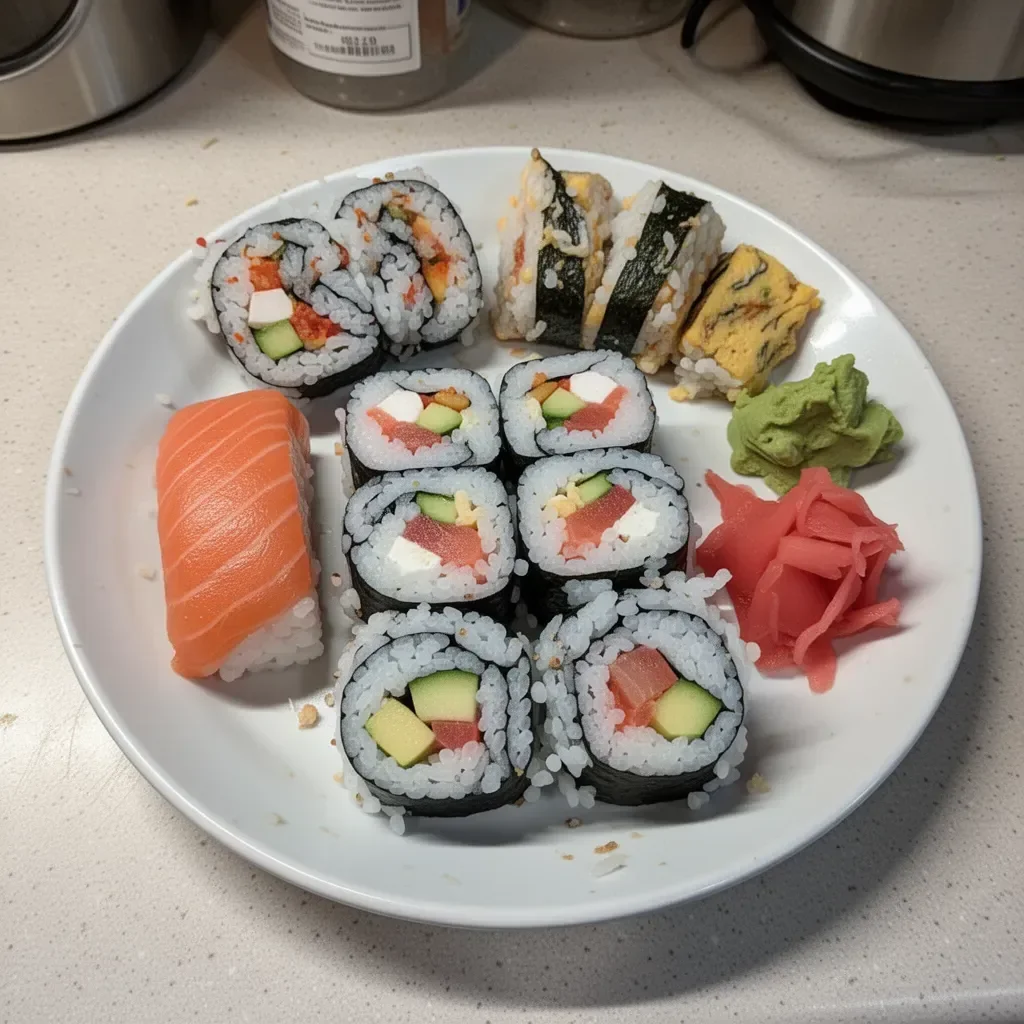
When presenting your sushi, think visually. Arrange the pieces on a platter, showcasing the colors and textures. Use small bowls for dips and garnishes to create an inviting presentation.
Adding garnishes can elevate your dish. Consider topping your sushi with sesame seeds, a sprinkle of chopped green onions, or even a dash of extra unagi sauce. Colorful presentation enhances the entire sushi experience.
Serving sushi with pickled ginger and wasabi gives a traditional touch. Both add depth and complement the flavors of the sushi, making for an authentic dining experience.
Pairings/storage
Pairing sushi with flavorful sides enhances the meal. Light salads or miso soup offer refreshing contrasts to rich sushi flavors. You can serve tea or flavored sparkling water for a delightful beverage accompaniment.
Storing leftover sushi can be tricky. It’s best eaten fresh, but in case of leftovers, wrap rolls tightly in plastic wrap and refrigerate. Consume them within 24 hours for the best quality. Due to the ingredients, reheating is not recommended, as sushi excels when served cold.
Conclusion
Creating sushi at home unravels a world of culinary discovery. Each step—from preparing the rice to rolling the perfect piece—adds joy to the cooking process. With fresh ingredients and a little practice, anyone can craft delicious sushi to impress friends and family.
Dive into the vibrant experience of sushi-making, and let your creativity shine as you experiment with flavors, textures, and presentations. Enjoy the journey through sushi, and savor every delightful bite you create.
Print
Making Sushi Easily at Home
- Prep Time: 30 minutes
- Cook Time: 20 minutes
- Total Time: 50 minutes
- Yield: 4 servings
- Category: Main Course
- Method: Rolling
- Cuisine: Japanese
- Diet: Seafood
Description
Learn how to create delicious sushi rolls at home with fresh ingredients and simple techniques.
Ingredients
- 1 kg sushi rice
- 1.2 liters water
- 12 tablespoons rice vinegar
- 4 tablespoons sugar
- 2 teaspoons salt
- 200 g raw tuna
- 200 g fresh salmon (sushi-quality)
- 150 g cooked shrimp
- 2 avocados
- 1 mango
- 1/2 cucumber
- 1/2 red bell pepper
- 1 carrot
- 100 g cream cheese
- 2 tablespoons finely chopped green onions
- 2 tablespoons crispy onions
- 2 tablespoons black and white sesame seeds
- 2 tablespoons pomegranate seeds
- 8 nori sheets
- Bamboo rolling mat
- 2 tablespoons Sriracha
- 2 tablespoons mayonnaise
- 2 tablespoons unagi sauce
- 1 teaspoon sesame oil
Instructions
- Start rolling sushi by laying a sheet of nori on the bamboo mat, shiny side down.
- With wet hands, take a handful of sushi rice and spread it evenly over the nori, leaving a 1-inch border at the top.
- Press the rice down gently to ensure it sticks.
- Select your fillings: raw tuna, salmon, cooked shrimp, or fresh vegetables.
- Arrange them in a line across the center of the rice.
- Add sliced avocado, mango, cucumber, and bell pepper for freshness and flavor.
- Lift the bamboo mat and start to roll away from you, applying gentle pressure as you go.
- Roll tightly until you reach the end of the nori.
- Use a bit of water on the edge to seal the roll.
- Slice the rolls into bite-sized pieces using a sharp knife.
- Serve your sushi with Sriracha, mayonnaise, and unagi sauce for added flavor.
Notes
Ensure to use sushi-grade fish for safety and quality. Practice makes perfect when it comes to rolling sushi.
