
📑 Table of Contents ▶
Salmon Curry
Cooking has always sparked joy in my life. Growing up near the coast, fresh seafood often graced our dinner table. One standout memory involves the rich and vibrant flavors of salmon curry. The fragrant aroma of spices and garlic dancing through the air always drew me in, making dinnertime feel like a special occasion.
Salmon curry combines simple, wholesome ingredients, transforming them into a flavorful feast. This dish embodies my passion for easy, accessible recipes that are also deeply satisfying. The heartiness of the salmon harmonizes perfectly with the creamy, coconut-infused red curry sauce, creating a dish that feels indulgent without being complicated.
As I prepared this meal, I found myself reminiscing about family gatherings centered around shared meals. Salmon curry symbolizes comfort and connection. I invite you to experience the same joy I find in each bite. Let’s dive into this delightful recipe that can bring warmth to your kitchen and joy to your dinner table.
Part 1 — Salmon Curry Essentials
Fundamentals
Salmon curry stands out as a vibrant and comforting dish. The rich elements of coconut milk and fragrant spices deliver an unforgettable experience with every bite. Understanding the fundamentals behind this dish significantly enhances both flavor and texture, ensuring each ingredient shines.
In creative cooking, balance is crucial. Each ingredient in salmon curry contributes to a harmonious overall flavor. The salmon fillets provide a luscious, flaky texture, while the coconut milk adds creaminess. The red curry paste gives warmth and depth. Sautéing aromatics like onion, garlic, and ginger creates a flavor base from which the dish flourishes.
Preparation/setup
Getting ready to create salmon curry involves simple steps that lay the groundwork for success. Gather all your ingredients before starting. This not only streamlines the process but also keeps your cooking space organized.
Start by preheating your oven to 375°F (190°C). This step ensures your salmon bakes evenly and thoroughly, resulting in a tender texture. Prepare your baking sheet by lining it with parchment paper; this allows for easy cleanup later. With everything set and ready to go, you’ll find preparing your salmon curry a breeze.
Ingredients
Creating salmon curry requires a few key ingredients:
- 2 salmon fillets
- 1 can coconut milk
- 2 tablespoons red curry paste
- 1 onion, chopped
- 2 cloves garlic, minced
- 1 tablespoon ginger, grated
- 1 bell pepper, sliced
- 1 cup spinach
- Salt and pepper to taste
- Lime wedges for serving
- Cooked rice for serving
These ingredients blend beautifully to form a dish that’s both nourishing and flavorful.
Directions
- Preheat the oven to 375°F (190°C).
- Place the salmon fillets on a baking sheet and season with salt and pepper. Bake for 15-20 minutes until cooked through.
- In a large skillet, sauté the onion, garlic, and ginger until fragrant.
- Add the red curry paste and cook for another minute.
- Pour in the coconut milk and bring to a simmer.
- Add the bell pepper and spinach, cooking until the vegetables are tender.
- Serve the salmon over cooked rice, topped with the coconut curry sauce and a squeeze of lime.
Part 2 — Mastering Salmon Curry
Technique
The technique behind a successful salmon curry lies in how you balance cooking time and the order of adding ingredients. Baking the salmon ensures it retains moisture, while sautéing the aromatics infuses the dish with bold flavors. The process unfolds seamlessly when you layer ingredients thoughtfully.
When cooking the vegetables, don’t rush. Allow the onion, garlic, and ginger to sauté long enough to develop a fragrant aroma. Once this base is established, add the red curry paste. It releases its essential oils, elevating the dish to new heights. Following this technique transforms a simple meal into an unforgettable culinary experience.
Tips/tricks
Every great dish has its secrets. For salmon curry, one helpful tip is using fresh ingredients wherever possible. Fresh vegetables amplify flavors, making the dish far superior.
If you prefer a milder curry, consider adjusting the amount of red curry paste. You can also add more coconut milk to soften the flavor without losing richness. Experimenting with the ingredient ratios allows you to customize the dish to suit your palate.
Part 3 — Perfecting Results
Perfecting results
To perfect salmon curry, focus on ensuring a harmonious blend of flavors and aromas. Cooking the salmon to just the right doneness is crucial; overcooking can lead to dryness. Aim for a slightly flaky texture that still holds its shape.
Moreover, balancing the coconut milk and curry paste is essential. The creaminess should enhance the overall dish without overpowering it. Taste-testing during cooking allows you to determine if adjustments are necessary.
Troubleshooting/variations
If issues arise, don’t fret. Undercooked salmon can be returned to the oven for a few minutes, ensuring it cooks through. Conversely, if you find the curry too thick, add a splash of water or broth to achieve your desired consistency.
For variations, consider incorporating different vegetables such as zucchini or broccoli, adding a refreshing twist while enhancing nutritional value. Adjusting your spices provides an opportunity to make the dish align more with your flavor preferences.
Part 4 — Serving Salmon Curry
Serving/presentation
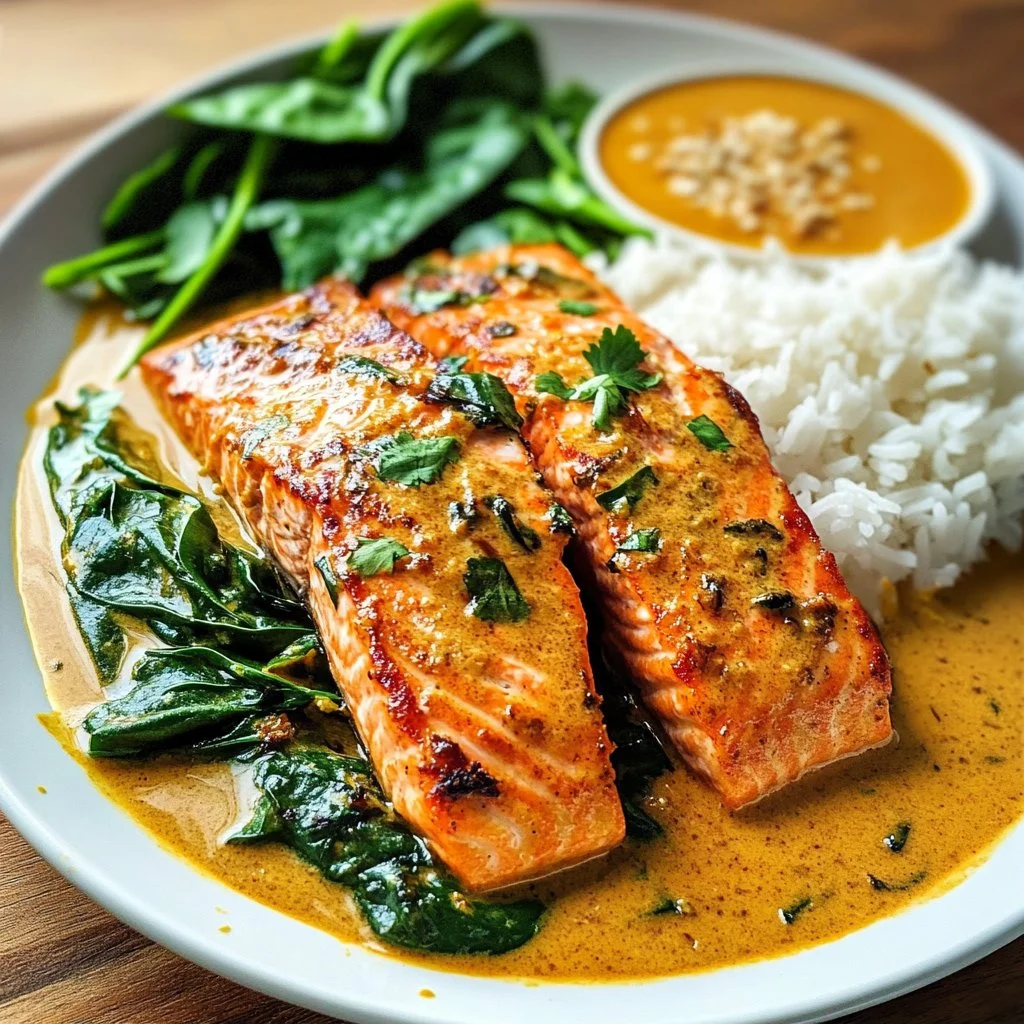
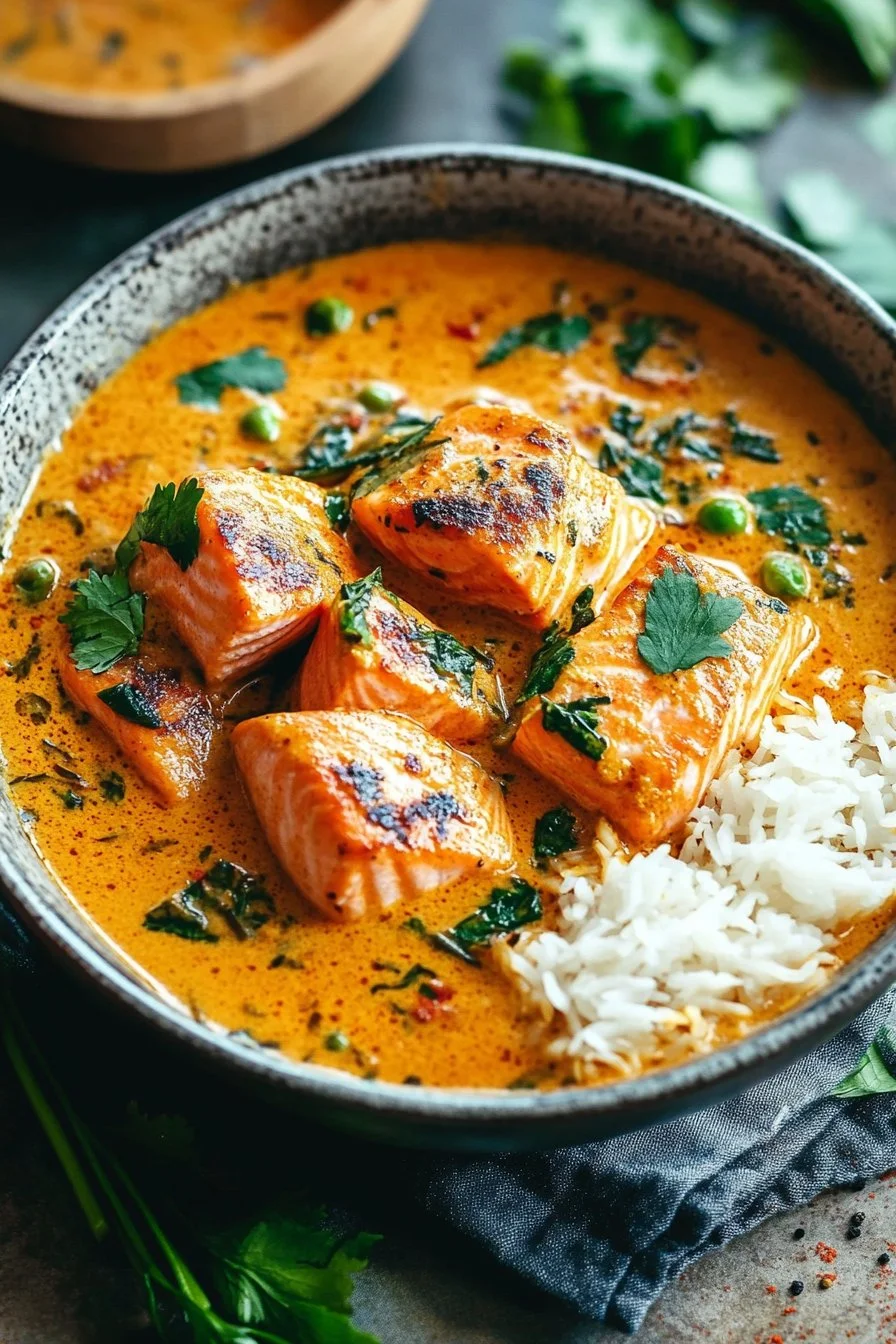
Presentation plays a vital role in the dining experience. Serve your salmon curry over a mound of fluffy cooked rice, allowing the vibrant colors to pop on the plate. Garnish with lime wedges to add a refreshing splash of color and flavor.
Arrange your curry neatly on the plate, ensuring the salmon sits atop the sauce. Arrange a few vibrant spinach leaves or bell pepper slices alongside. This not only enhances the dish’s aesthetic but also invites diners to indulge in the vibrant flavors.
Pairings/storage
For pairings, consider serving salmon curry with a fresh side salad or steamed vegetables. These sides complement the richness of the dish without overpowering it. Fresh herbs, like cilantro or basil, add a burst of brightness.
Store any leftovers in an airtight container in the refrigerator for up to three days. Reheating gently ensures that the salmon and vegetables maintain their texture. With a simple meal like salmon curry, savoring leftovers feels just as delightful as the first serving.
In conclusion, salmon curry encapsulates warmth, comfort, and flavor, making it a delightful addition to any culinary repertoire. The fusion of vibrant ingredients and spices invites joy while cooking and eating. With this guide, creating an exceptional dish is both attainable and rewarding.
Print
Salmon Curry
- Prep Time: 10 minutes
- Cook Time: 30 minutes
- Total Time: 40 minutes
- Yield: 2 servings
- Category: Main Course
- Method: Baking/Sautéing
- Cuisine: Asian
- Diet: Pescatarian
Description
A delightful salmon curry featuring flaky salmon fillets in a creamy coconut-infused red curry sauce, perfect for family dinners.
Ingredients
- 2 salmon fillets
- 1 can coconut milk
- 2 tablespoons red curry paste
- 1 onion, chopped
- 2 cloves garlic, minced
- 1 tablespoon ginger, grated
- 1 bell pepper, sliced
- 1 cup spinach
- Salt and pepper to taste
- Lime wedges for serving
- Cooked rice for serving
Instructions
- Preheat the oven to 375°F (190°C).
- Place the salmon fillets on a baking sheet and season with salt and pepper. Bake for 15-20 minutes until cooked through.
- In a large skillet, sauté the onion, garlic, and ginger until fragrant.
- Add the red curry paste and cook for another minute.
- Pour in the coconut milk and bring to a simmer.
- Add the bell pepper and spinach, cooking until the vegetables are tender.
- Serve the salmon over cooked rice, topped with the coconut curry sauce and a squeeze of lime.
Notes
Use fresh vegetables for enhanced flavors. Adjust red curry paste for a milder taste.
