
📑 Table of Contents ▶
Balsamic Glazed Salmon
Salmon always brings to mind those warm summer evenings by the grill. Picture this: the sun sets, and the enticing aroma of fish sizzling away drifts through the air. Balsamic glazed salmon fills that void perfectly, transforming a simple dish into a savory delight. The marriage of balsamic vinegar and honey creates a glaze that tantalizes the taste buds while enhancing the natural flavors of the salmon.
Every bite of this balsamic glazed salmon captures that sunny nostalgia, evoking memories of family gatherings and laughter around the dinner table. The combination of sweet and savory in this dish makes it a favorite for both casual weeknight dinners and special occasions. You don’t need intricate techniques or hours in the kitchen to serve up a gourmet meal. With just a few readily available ingredients, you can elevate your dinner to a whole new level.
Cooking salmon doesn’t have to be daunting. It’s all about feeling confident with the process and being creative with flavors. Balsamic glazed salmon embodies that spirit, allowing anyone to enjoy a delicious and healthy seafood meal in under thirty minutes.
Balsamic Glazed Salmon Essentials
Fundamentals
Mastering the art of cooking salmon starts with understanding its unique qualities. Salmon is relatively forgiving; its rich, buttery texture makes it hard to mess up. Knowing how to prepare it properly ensures that you achieve a crispy exterior while keeping the inside moist and flaky.
Opt for fresh salmon fillets whenever possible. Look for fish with vibrant color and firm flesh. In our balsamic glazed salmon recipe, the key flavors are the awesome blend of sweetness from the honey and the tanginess from the balsamic vinegar. Together, they create a delectable glaze that coats the salmon, enriching every bite with flavor.
Cooking salmon involves knowing the right temperature and time. Always let the fish come to room temperature before cooking. Cold salmon doesn’t cook evenly and can result in a rubbery or dry texture.
Preparation/setup
Begin your cooking adventure by removing the salmon fillets from the refrigerator around 10 to 15 minutes before cooking. This critical step helps the fish reach room temperature, assisting in even cooking. Cold salmon placed in a hot pan shrinks and doesn’t cook uniformly.
Once your salmon is ready, you’ll want to remove the skin carefully. It’s generally easier to cook the salmon without the skin when making a balsamic glaze, allowing the flavors to penetrate the fish more thoroughly. After skinning, generously season both sides with salt, pepper, and garlic powder.
Now it’s time to create that delicious balsamic mixture. In a small cup, combine three tablespoons of balsamic vinegar with two tablespoons of honey. Stir well to create a smooth glaze that will complement the salmon beautifully.
Ingredients
- 4 small salmon fillets
- 3 tablespoons balsamic vinegar
- 2 tablespoons honey
- Garlic powder (to taste)
- Salt and pepper (to taste)
- Crushed chili flakes (optional)
Directions
- Room Temperature: Start your balsamic glazed salmon recipe by letting the salmon fillets rest out of the fridge for about 10 to 15 minutes.
- Prep the Salmon: Carefully remove the skin from the salmon. Season both sides with salt, pepper, and garlic powder.
- Mix the Glaze: In a small bowl, combine the balsamic vinegar and honey, mixing until fully blended.
- Heat the Pan: Lightly grease a skillet and heat it over medium-high heat.
- Cook the Salmon: Add the seasoned salmon, cooking each side for 1 to 2 minutes until golden brown. The cooking time may vary based on the thickness of the fillets.
- Add the Glaze: Once all sides are nicely browned, pour the balsamic glaze into the pan. It will bubble immediately—mix well and reduce the heat slightly.
- Even Coating: Carefully flip the salmon, ensuring it gets soaked in the glaze on all sides. Continue cooking until the glaze thickens, which should only take a few more minutes.
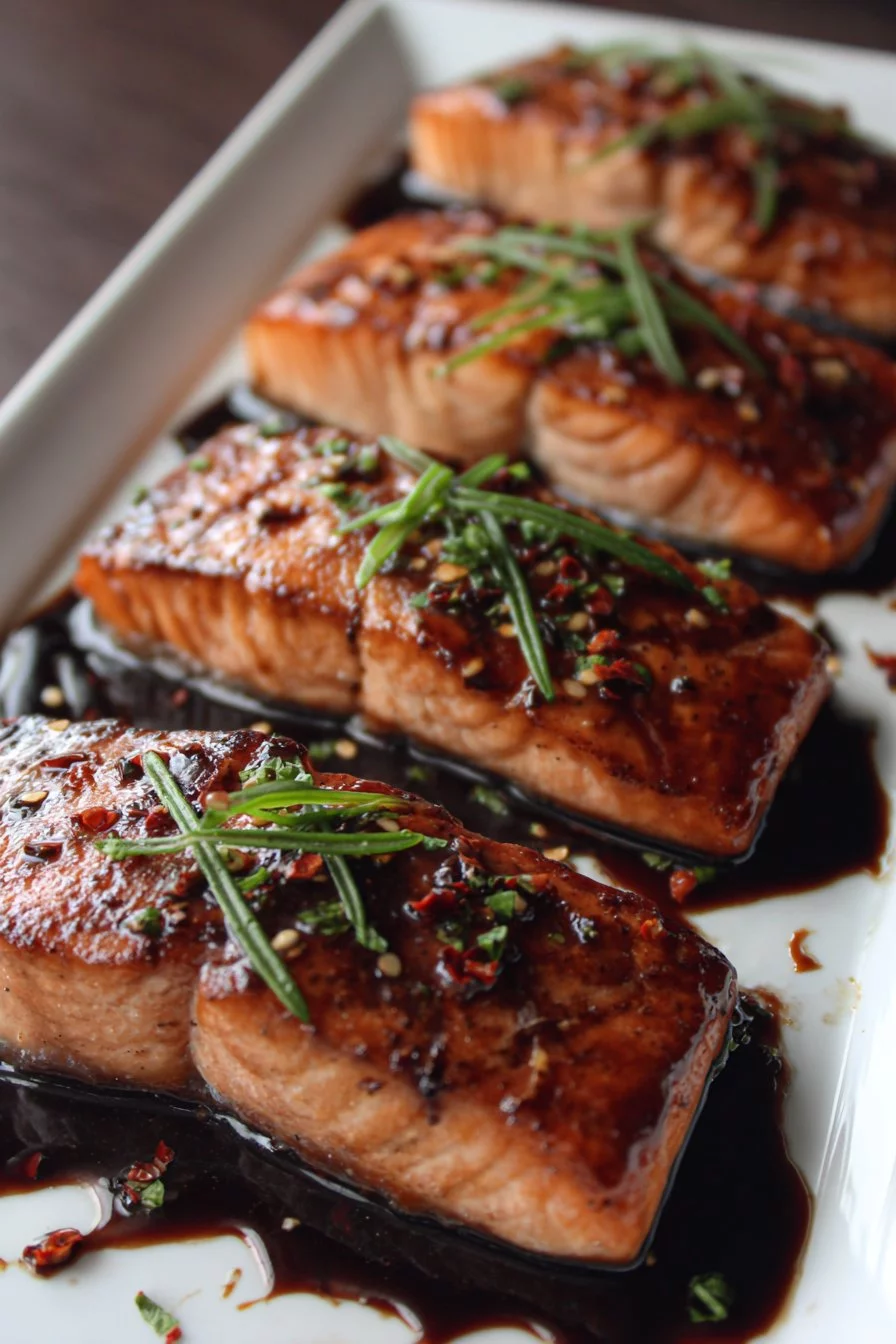
Bringing Out the Best in Balsamic Glazed Salmon
Technique
Getting the technique right can transform your balsamic glazed salmon into a restaurant-worthy dish. Prioritizing even cooking and proper seasoning is essential. Using a non-stick skillet or a well-seasoned cast-iron pan will prevent the fish from sticking and allow for easy flipping.
Keeping an eye on the glaze is also crucial. Since it caramelizes quickly, move swiftly when adding it to the pan to avoid burning. A quick stir and careful flipping ensure that every side gets a proper coating.
Tips/tricks
Don’t hesitate to experiment with the ingredients. If honey isn’t available, maple syrup is a great alternative, adding its own unique sweetness. Adjust the garlic powder according to your taste preference. A pinch of crushed chili can add a delightful heat if you’re feeling adventurous.
Also, cooking the salmon on each side for only 1 to 2 minutes keeps it tender and flaky. Monitor the salmon’s internal temperature. Ideally, you want it to comfortably reach 145°F for optimal doneness.
Perfecting Balsamic Glazed Salmon
Perfecting results
Achieving the perfect balsamic glazed salmon involves understanding your individual kitchen equipment. Stovetops can vary significantly in heat output. If you notice that the salmon is cooking too fast, lower the flame and be patient—all delicious things come in due time.
Letting the glazed salmon rest briefly off the heat allows the juices to settle, promoting more juiciness in every bite.
Troubleshooting/variations
If the salmon cooks too quickly, consider removing it early and letting it rest covered for a few minutes. This can help prevent it from becoming dry.
For variations, consider incorporating other herbs or spices into your glaze, such as thyme or rosemary. Mixing in a touch of Dijon mustard can also add a nice zing to the flavor profile.
Serving Suggestions for Balsamic Glazed Salmon
Serving/presentation
When serving balsamic glazed salmon, presentation matters. Serve the glazed salmon on a large, colorful platter and add fresh herbs or lemon wedges for a pop of color. Pair it with your favorite grain or veggie, which can soak up any extra glaze—think quinoa, rice, or a fresh salad.
Pairings/storage
While pairing up sides, consider roasted veggies or a light pasta dish. The sweet and tangy notes of the glaze match beautifully with simple salads or creamy mashed potatoes.
Storing leftovers is straightforward. Place any uneaten salmon in an airtight container and refrigerate it for up to 2 days. However, try to eat your salmon freshly cooked for the best flavor and texture.
Balsamic glazed salmon makes for a delicious centerpiece, creating lasting memories and delightful flavor profiles that you’ll want to revisit again and again.
Print
Balsamic Glazed Salmon
- Prep Time: 15 minutes
- Cook Time: 10 minutes
- Total Time: 25 minutes
- Yield: 4 servings
- Category: Main Course
- Method: Pan-Frying
- Cuisine: Seafood
- Diet: Gluten-Free
Description
A delicious balsamic glazed salmon that combines the sweetness of honey with the tanginess of balsamic vinegar for a quick gourmet meal.
Ingredients
- 4 small salmon fillets
- 3 tablespoons balsamic vinegar
- 2 tablespoons honey
- Garlic powder (to taste)
- Salt and pepper (to taste)
- Crushed chili flakes (optional)
Instructions
- Let the salmon fillets rest at room temperature for about 10 to 15 minutes.
- Carefully remove the skin from the salmon and season both sides with salt, pepper, and garlic powder.
- In a small bowl, combine the balsamic vinegar and honey, mixing until fully blended.
- Lightly grease a skillet and heat it over medium-high heat.
- Add the seasoned salmon, cooking each side for 1 to 2 minutes until golden brown.
- Pour the balsamic glaze into the pan, mix well, and reduce the heat slightly.
- Carefully flip the salmon to ensure it gets coated in the glaze on all sides and continue cooking until the glaze thickens.
Notes
Experiment with sweeteners like maple syrup if honey isn’t available. Monitor the salmon’s internal temperature for perfect doneness.
