
📑 Table of Contents ▶
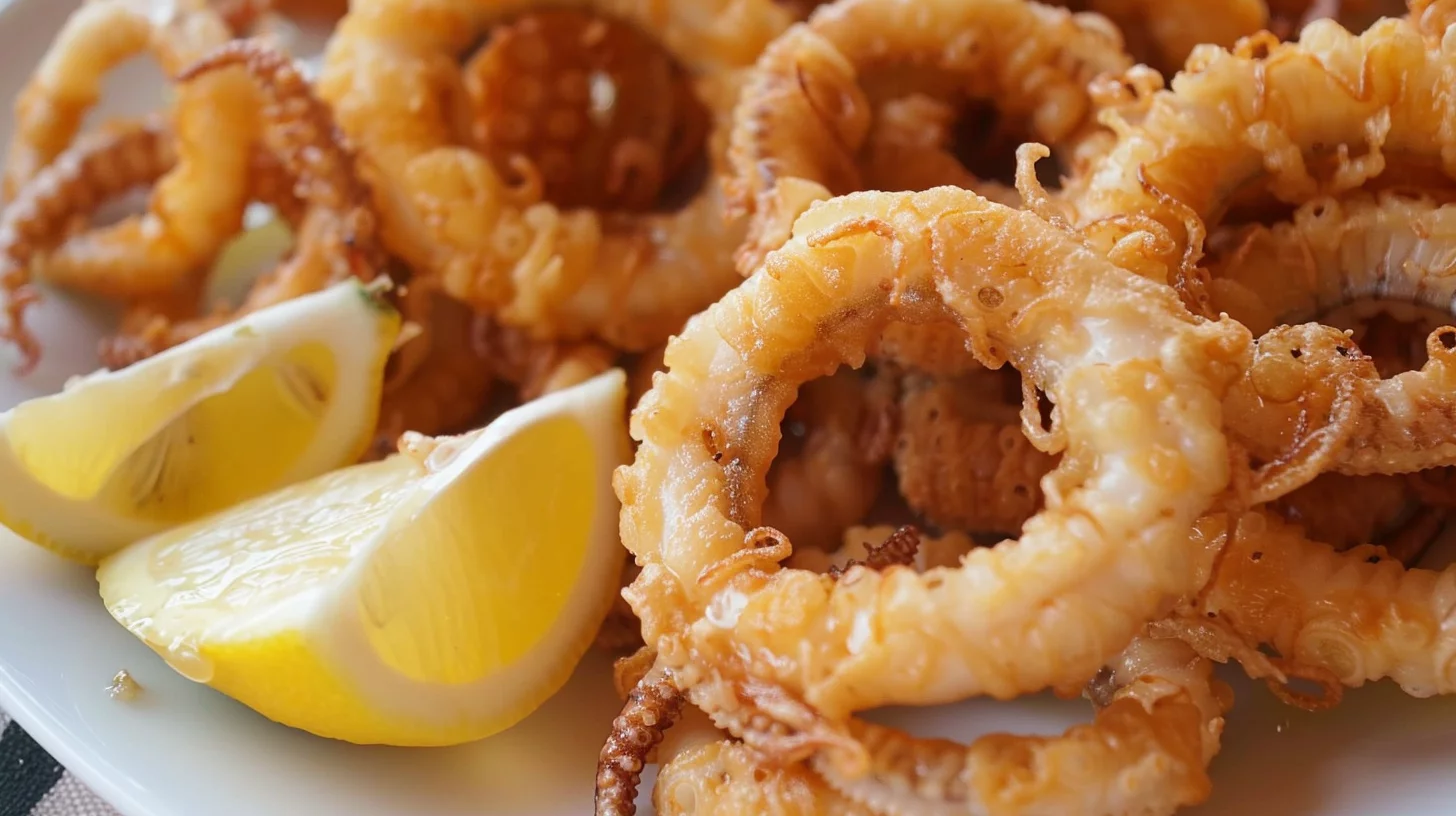
Welcome to a seaside journey where the ocean’s bounty meets a sizzling hot pan. Growing up along the coast, calamari quickly became a dish that evoked cherished memories of sun-drenched days and laughter-filled evenings. The first time I tasted calamari, I was hooked by its crispy exterior and tender inside, a delightful contrast that has kept me returning for more.
Calamari, with its delicate yet robust flavor, has become a staple in my kitchen. Whether it’s a casual family gathering or a special occasion, this dish always manages to steal the spotlight. Over the years, I’ve learned the ins and outs of making perfect calamari, from selecting the freshest squid to mastering the art of frying.
With a few simple ingredients and a touch of patience, anyone can whip up this seafood classic. In this guide, I’ll share the secrets behind flawless calamari, ensuring you achieve the perfect golden crunch every time. So, if you’re ready to dive in, let’s explore the magic of calamari together!
Print
calamari
- Prep Time: 15 minutes
- Cook Time: 5 minutes
- Total Time: 20 minutes
- Yield: 4 servings
- Category: Appetizer
- Method: Frying
- Cuisine: International
Description
Discover how to make the perfect calamari at home with our easy-to-follow recipe. Learn the secrets to achieving crispy, tender calamari every time!
Ingredients
- 3 cups vegetable oil (710 ml)
- 1/4 cup all-purpose flour (30 g)
- 1 teaspoon (5 ml) salt
- 1 teaspoon (5 ml) dried oregano
- 1/2 teaspoon (3 ml) ground black pepper
- 12 squid, cleaned and sliced into rings
- 1 lemon – cut into wedges, for garnish
Instructions
- Warm the vegetable oil in a deep fryer or large pan until it reaches 350°F (175°C).
- In a medium-sized bowl, combine the all-purpose flour, salt, dried oregano, and ground black pepper. Coat the squid rings thoroughly with this flour mixture.
- Place the coated squid into the hot oil and cook them until they achieve a light golden color, which should take about 2 to 3 minutes. Avoid overcooking to prevent toughness.
- Remove the squid and let them drain on a plate lined with paper towels. Present them with lemon wedges on the side.
Notes
- Thoroughly coat squid rings in flour mixture for a crispy texture when fried.
- Monitor oil temperature closely to prevent squid from becoming greasy.
- Avoid overcrowding the pan to maintain oil temperature and prevent soggy rings.
Mastering Calamari: A Coastal Delight
Fundamentals
The foundation of any great calamari dish begins with choosing the right ingredients. Freshness is key; always opt for squid that is firm to the touch, with a mild sea aroma. When it comes to frying, maintaining the oil temperature at 350°F (175°C) is crucial for achieving that signature crispy texture without overcooking.
Vegetable oil is the ideal choice for frying calamari due to its high smoke point and neutral flavor. This allows the natural taste of the squid to shine through. Combining flour, salt, oregano, and black pepper creates a simple yet flavorful coating that complements the squid’s natural sweetness.
Preparation/setup
Before diving into the frying process, ensure all your ingredients are prepped and ready. Pat the squid rings dry with paper towels to remove excess moisture, which helps the flour coating adhere better. In a medium-sized bowl, mix the flour, salt, oregano, and black pepper thoroughly to ensure even seasoning.
Warm the vegetable oil in a deep fryer or large pan, using a kitchen thermometer to monitor the temperature accurately. Once the oil reaches the desired temperature, coat the squid rings in the flour mixture, ensuring an even layer for optimal crispiness.
Calamari Cooking Techniques
Technique
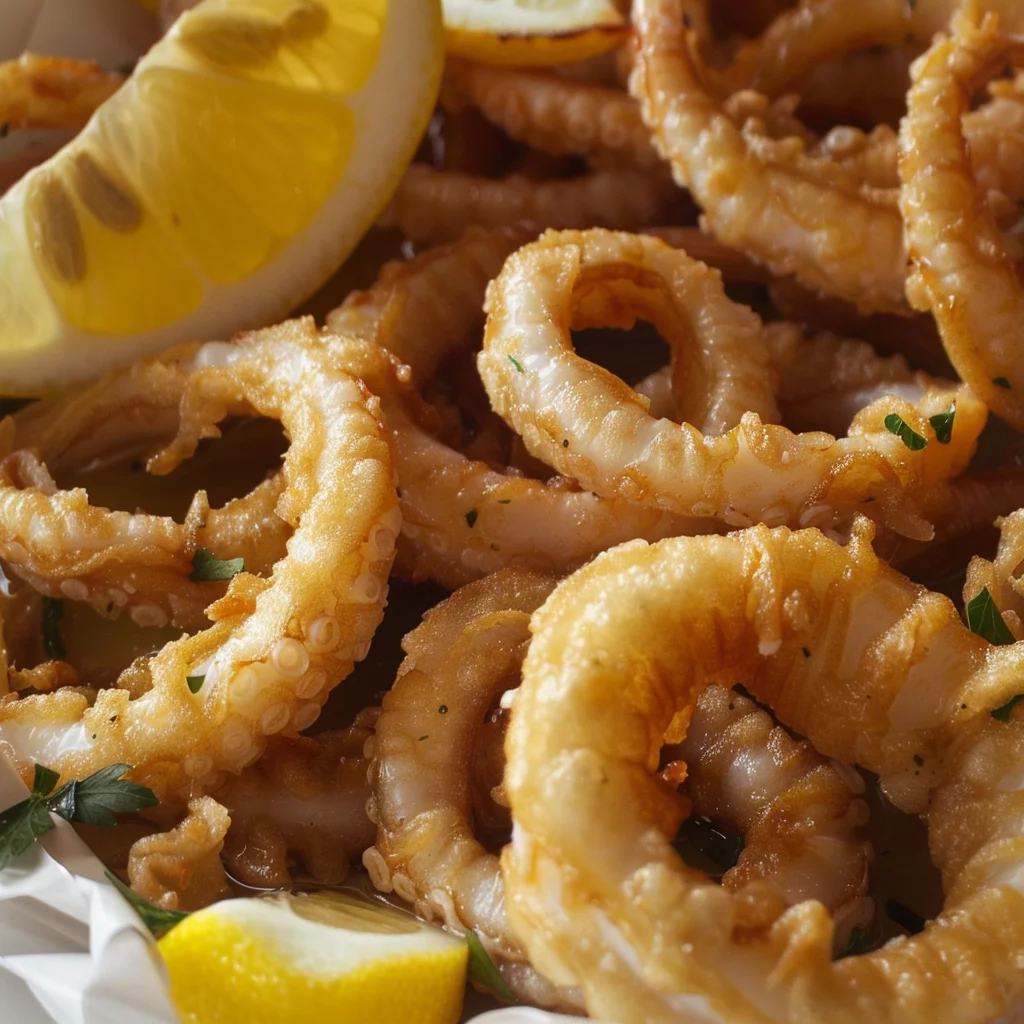
Frying calamari requires a gentle touch and attentive timing. Drop the flour-coated squid rings into the hot oil, taking care not to overcrowd the pan. This allows each piece to cook evenly and develop a golden brown crust. Fry the calamari for 2 to 3 minutes, keeping an eye on the color and texture.
Once the calamari reaches a light golden hue, remove it promptly to prevent overcooking, which can lead to a rubbery texture. Allow the calamari to drain on a plate lined with paper towels, ensuring any excess oil is absorbed, leaving you with perfectly crispy results.
calamari
Tips/tricks
For the best results, fry the calamari in small batches. This prevents the oil temperature from dropping too low, which can lead to greasy, soggy calamari. Always maintain a consistent oil temperature for uniform cooking.
If you’re new to cooking calamari, it might be helpful to test a single piece to gauge the cooking time and adjust as needed. Also, don’t underestimate the power of lemon wedges as a garnish. Their acidity balances the dish, enhancing the calamari’s flavors.
Perfecting Your Calamari
Perfecting results
Achieving the perfect calamari involves balancing flavor, texture, and presentation. Focus on developing a crispy coating that locks in moisture, ensuring the squid remains tender inside. The oregano and pepper in the flour mix add a subtle, aromatic kick.
Consistency in preparation is key. By following the same steps each time, you’ll refine your technique, resulting in calamari that impresses every time. Remember, practice makes perfect, so don’t be discouraged by initial attempts.
Troubleshooting/variations
If your calamari turns out tough, it’s likely been overcooked. Timing is crucial, so always keep a close watch on the frying process. On the other hand, if it’s not crispy enough, consider adjusting the oil temperature or the thickness of the flour coating.
Feel free to experiment with different seasonings in the flour mixture. A pinch of smoked paprika or cayenne pepper can introduce new flavor dimensions, adding a personal touch to this classic seafood dish.
Serving and Storing Calamari
Serving/presentation
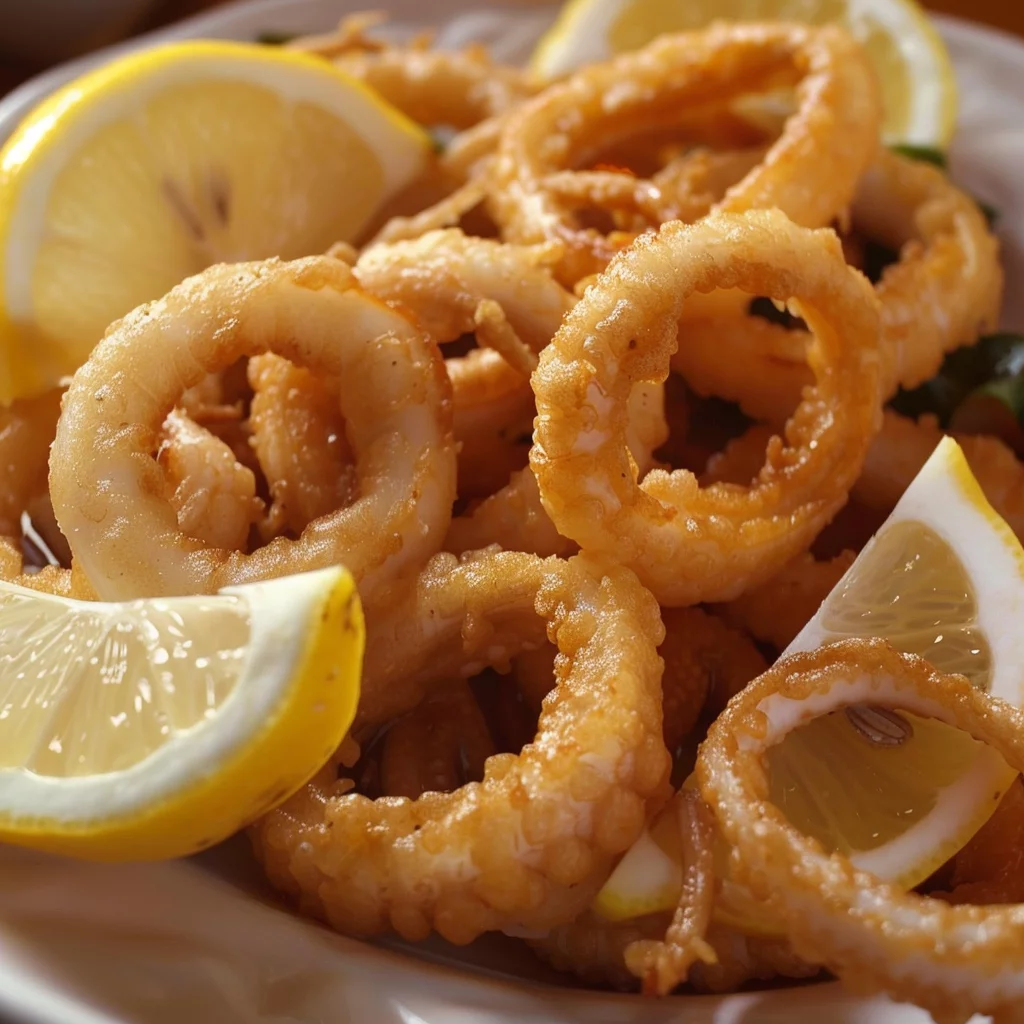
Presentation elevates your calamari from a simple dish to a culinary masterpiece. Serve the calamari on a platter with lemon wedges, adding a splash of color and a hint of freshness. For an extra touch, arrange the squid rings neatly, showcasing their golden crust.
The simplicity of calamari makes it a versatile dish, suitable for various occasions. Whether paired with a light salad or served as an appetizer, its appeal is universal. The lemon’s acidity cuts through the richness, providing a balanced flavor profile.
calamari
Pairings/storage
While best enjoyed fresh, calamari can be stored in an airtight container in the refrigerator for up to two days. To reheat, use an oven or air fryer to maintain its crispiness. Avoid microwaving, as it can lead to a soggy texture.
Consider pairing calamari with a light, tangy dip or sauce. A simple garlic aioli or marinara complements the dish beautifully, enhancing its natural flavors without overpowering them.
Conclusion
Calamari is more than just a dish; it’s a celebration of flavors and textures. From selecting fresh ingredients to mastering the frying technique, every step contributes to the perfect plate of calamari. Its crispy exterior and tender interior make it a favorite among seafood enthusiasts.
This guide offers a comprehensive approach to preparing calamari at home, ensuring delicious results every time. With practice and attention to detail, you can create a dish that rivals any restaurant offering. Embrace the simplicity and enjoy the rewarding experience of cooking calamari.
